
India’s Agricultural Renaissance: Cultivating a Sustainable Future for 1.4 Billion
Overcoming Challenges, Embracing Innovation, and Powering India’s Food Security

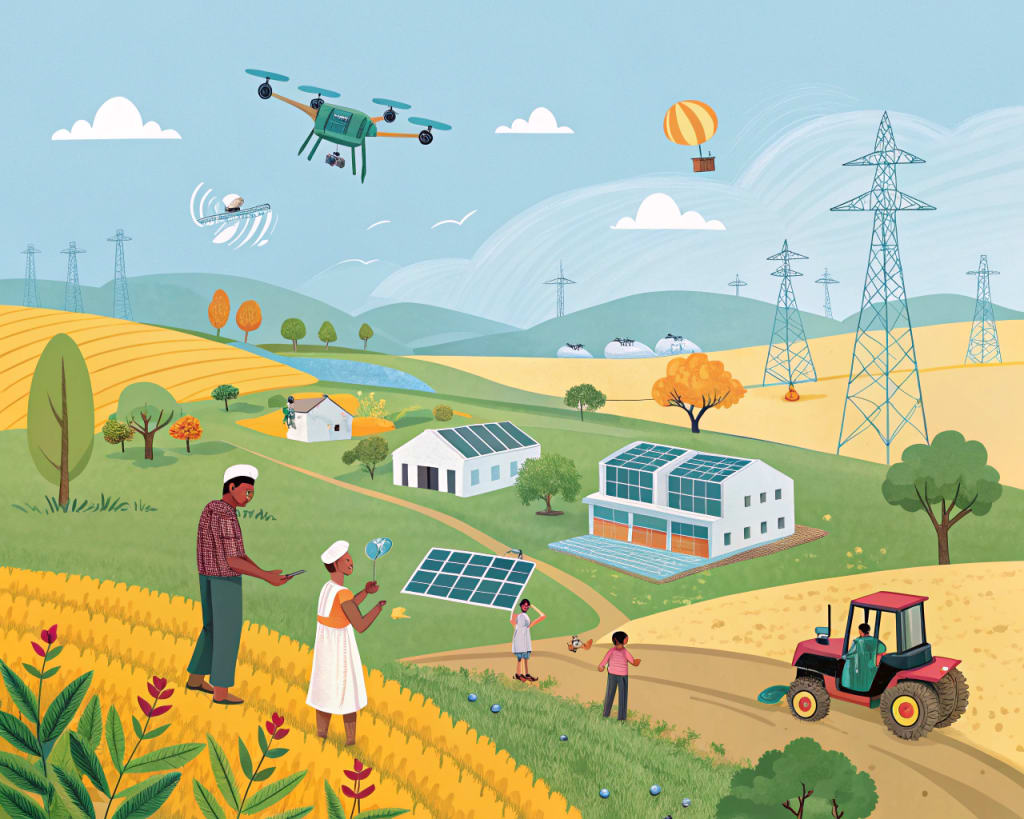
India, the world’s second-largest agricultural producer, feeds 1.4 billion people while shaping global food systems. Contributing 18% to GDP and employing 44% of the workforce, agriculture is the nation’s backbone. Yet, climate change, resource constraints, and systemic inefficiencies threaten its potential. Through cutting-edge technology, policy reforms, and sustainable practices, India is poised for an agricultural revolution. Let’s explore the challenges, impacts, and transformative solutions driving this vital sector forward.
Challenges Facing Indian Agriculture
India’s agricultural landscape faces daunting hurdles. Climate change, with 50% of farmland rain-fed, reduces yields by 6% per degree of warming, per a 2023 ICAR study. Monsoon variability affects 60% of crops, with droughts costing $1.5 billion annually. Soil degradation impacts 30% of arable land, with 5.3 billion tons of topsoil lost yearly due to erosion and overuse of fertilizers, which India consumes at 165 kg per hectare—double the global average.
Smallholder farmers, numbering 120 million and holding 86% of farmland, struggle with low incomes, earning $1,200 annually on average. Only 15% access formal credit, limiting mechanization and modernization. Post-harvest losses, at 10% of production (₹1.5 lakh crore yearly), stem from inadequate storage and supply chains. Water scarcity, with agriculture using 80% of freshwater, is acute in states like Punjab, where groundwater depletion threatens 70% of wells by 2030.
Impacts on Society and Economy
The consequences are profound. Food insecurity affects 195 million Indians, with 43% of children under five malnourished, per NFHS-5. Low yields—India’s rice yield is 2.4 tons per hectare compared to China’s 4.7—limit farmer incomes, trapping 22% in poverty. Economically, inefficiencies cost 4% of agricultural GDP, while pesticide overuse, linked to 10,000 farmer health issues annually, strains public health systems.
Environmentally, agriculture contributes 14% of India’s greenhouse gas emissions, with methane from rice paddies and livestock significant. Stubble burning in Punjab and Haryana, producing 20 million tons of residue yearly, worsens air pollution, contributing to 1.2 million deaths. Water-intensive crops like sugarcane deplete aquifers, threatening long-term sustainability. These challenges underscore the need for systemic change to ensure food security and environmental health.
Innovative Solutions and Progress
India is revolutionizing agriculture through technology and policy. Precision farming, adopted by 10 million farmers, uses drones and IoT to boost yields by 15% while cutting water use by 20%. The eNAM platform connects 1,000 mandis, benefiting 18 million farmers with better prices. Initiatives like the PM-KISAN scheme, disbursing ₹6,000 annually to 120 million farmers, enhance financial security. Zero-budget natural farming, promoted in Andhra Pradesh, reduces chemical use, improving soil health for 8 million farmers.
The Indian Agricultural Research Institute’s climate-resilient seeds, covering 40% of wheat and rice, increase yields by 10-15%. Micro-irrigation, expanded to 12 million hectares under the PMKSY, saves 30% of water. Agri-tech startups, valued at $5 billion in 2024, offer solutions like DeHaat’s market linkages for 1.5 million farmers. The National Mission for Sustainable Agriculture promotes organic farming, with Sikkim as a fully organic state. Post-harvest infrastructure, with 70,000 new cold storage units, cuts losses by 5%.
A Call to Action
India’s agricultural future demands bold action. Doubling public investment to 1% of GDP, as recommended by FAO, can scale mechanization and R&D. Training 50 million farmers in digital tools and sustainable practices is critical. Strengthening cooperatives and FPOs, now 10,000 strong, can empower smallholders. Consumers must support organic and local produce to reduce environmental impact.
Global partnerships, like India’s role in the CGIAR, can enhance seed technology transfers. By prioritizing climate-smart agriculture, equitable access to resources, and tech-driven efficiency, India can ensure food security and prosperity. The time is now to transform agriculture into a sustainable powerhouse, nourishing the nation and inspiring the world for generations to come.
About the Creator
Arjun. S. Gaikwad
Truth Writing unveils reality beyond illusion, power, and propaganda words that awaken conscience and challenge comfort. Fearless, honest, and thought-provoking, it explores politics, humanity, and spirit to inspire awareness and change.
Keep reading
More stories from Arjun. S. Gaikwad and writers in Earth and other communities.
The Future of Agriculture: Feeding the World Through Innovation and Sustainability
Agriculture, the backbone of human civilization, faces unprecedented challenges in feeding a global population projected to reach 9.7 billion by 2050. As climate change, resource scarcity, and urbanization reshape the landscape, innovative solutions and sustainable practices are transforming the sector. From precision farming to regenerative techniques, agriculture is poised for a revolution. Let’s explore the challenges, impacts, and visionary strategies driving the future of global food production.
By Arjun. S. Gaikwad6 months ago in Earth
Microbiota, microbiome or microflora: how to speak correctly and why it is for health.
You've probably heard the phrase, "We are what we eat." But modern science says more precisely: we are also those who live in us. Until 2016, it was believed that there are many times more bacteria in our body than our own cells. The latest calculations by mathematicians show that we divide the body with our microorganisms by about 50/50: about 30 trillion of our cells versus 38 trillion bacterial ones.
By Yaroslav Gorohov3 days ago in Earth
Chinese EVs Closing In on America After Canadian Tariffs Deal
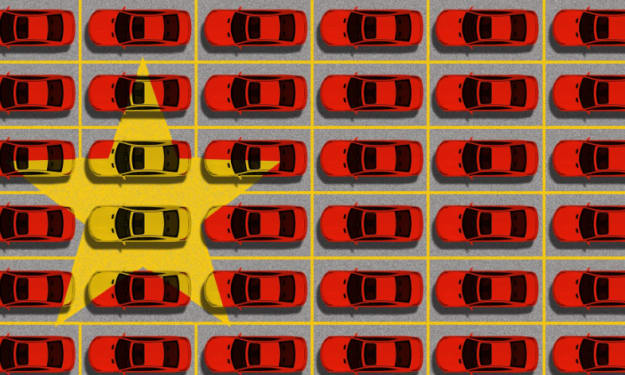
The electric vehicle race is no longer just about climate goals or consumer choice — it has become a geopolitical contest. And in early 2026, a subtle but powerful move by Canada may have tilted the board. By agreeing to sharply reduce tariffs on Chinese electric vehicles, Canada has opened a door that the United States has worked hard to keep shut. While Chinese EVs are still largely barred from the American market, they are now edging closer than ever — not by crossing the border directly, but by entering through Canada. This development raises a pressing question: Are Chinese EVs closing in on America, and what does that mean for the future of North American auto markets? The Deal That Changed the Game Canada’s new agreement with China allows up to 49,000 Chinese-made electric vehicles per year to enter the Canadian market at a tariff rate of just over 6%, a dramatic drop from the previous 100% tariff that effectively blocked them. On paper, the quota seems small. In reality, it carries enormous symbolic and strategic weight. For years, both Canada and the United States aligned closely on keeping Chinese EVs out, citing concerns over unfair subsidies, national security, and the protection of domestic auto industries. This new deal marks a clear shift — and a divergence from U.S. policy. Canada didn’t make the decision in isolation. The EV tariff reduction was part of a broader trade reset with China, tied to agricultural exports such as canola and efforts to stabilize a strained economic relationship. Why Chinese EVs Matter So Much China is the undisputed leader of the global electric vehicle industry. Its manufacturers produce EVs at scale, often at prices Western automakers struggle to match. Brands like BYD, Nio, and Xpeng have already expanded aggressively into Europe, Southeast Asia, and parts of the Middle East. North America has remained one of the final fortified markets — until now. Chinese EVs are appealing not just because they’re cheaper, but because they’ve rapidly improved in quality, range, and technology. For consumers priced out of North American and European EV models, Chinese vehicles offer something rare: affordability without sacrificing features. Canada’s decision gives Chinese automakers their first legitimate foothold in North America — and footholds tend to grow. Why the U.S. Is Nervous The United States still enforces a 100% tariff on Chinese EV imports, making them effectively unsellable in the American market. But Canada’s move has triggered concern in Washington. U.S. officials argue that Chinese EVs entering Canada could indirectly pressure American markets, influence supply chains, and weaken Washington’s leverage in future trade negotiations. There’s also a political dimension. Both major U.S. parties have framed Chinese dominance in EVs as a strategic threat — not just to auto jobs, but to technological leadership. Modern EVs collect vast amounts of data, and lawmakers have raised concerns about cybersecurity and foreign data access. While Chinese EVs aren’t rolling onto American roads yet, their presence just across the border changes the conversation. Canada’s Risk — and Opportunity Inside Canada, the reaction has been mixed. Automotive hubs like Ontario worry that opening the market could undermine domestic manufacturing and strain relations with the U.S., Canada’s largest trading partner. Some leaders have called the deal “lopsided,” warning it could cost jobs if American retaliation follows. Others see opportunity. A more competitive EV market could lower prices for Canadian consumers and accelerate EV adoption. It may also attract Chinese investment into Canada itself — including factories, battery plants, and supply chain partnerships. If Chinese automakers choose to build in Canada rather than simply export to it, the country could position itself as a bridge between Chinese EV innovation and North American demand. That balancing act — between economic opportunity and political risk — defines Canada’s strategy. Are Chinese EVs Really ‘Closing In’ on America? For now, the answer is: not directly — but strategically, yes. Chinese EVs sold in Canada won’t automatically flood the U.S. market. Regulations, trade rules, and tariffs still stand in the way. But proximity matters. Supply chains overlap. Consumer awareness spreads. Manufacturing footprints expand. There’s also the possibility of a workaround: Chinese companies could eventually build EVs in North America to bypass tariffs altogether. This idea has already been floated — but it faces fierce resistance from U.S. lawmakers and unions. Still, history shows that once a global industry leader gains regional access, momentum often follows. What This Means for Consumers For Canadian buyers, the impact could be immediate: more choice and lower prices in an EV market that has long been criticized for being expensive and limited. For American consumers, the effect will be indirect — at least at first. But increased competition could eventually pressure U.S. automakers to reduce prices, improve features, and accelerate innovation. The larger question is whether North America wants competition or insulation — and how long insulation can realistically last in a globalized EV economy. The Bigger Picture: A Global EV Power Shift Canada’s tariff deal reflects a broader reality: China’s dominance in electric vehicles is reshaping global trade, whether governments like it or not. Europe is already grappling with an influx of Chinese EVs. Emerging markets are embracing them. And now, North America has its first real crack in the wall. This isn’t just about cars. It’s about who controls the future of clean transportation, supply chains, and industrial policy. Final Thoughts Chinese EVs aren’t driving down American highways yet — but after Canada’s tariff deal, they’re closer than ever. This move doesn’t spell immediate disruption, but it does signal a shift. One country has decided that economic pragmatism outweighs political alignment. And in doing so, Canada may have opened the door to a new phase of EV competition in North America. Whether that door swings wider — or slams shut — will depend on how the U.S., automakers, and consumers respond. One thing is certain: the EV race just entered a new chapter.
By Muhammad Hassana day ago in Earth



Comments
There are no comments for this story
Be the first to respond and start the conversation.