
I Think I Saw a Pussycat
Some of the most amazing big cats in the wild


Caracals
Caracals are graceful, slender cats. They have short thick coats and are known for their long black-tufted ears. Their fur can range from tawny gray to reddish-brown. These cats have distinctive narrow black stripes that run from their eyes to their noses and down the middle of their foreheads.
Caracals make their home from Africa through the Arabian and Anatolian Peninsula. They can be found in southwestern and central Asia to Kazakhstan and central India.
Caracals inhabit forests, woodlands, savannas, grasslands, semi-deserts, and scrub forests.
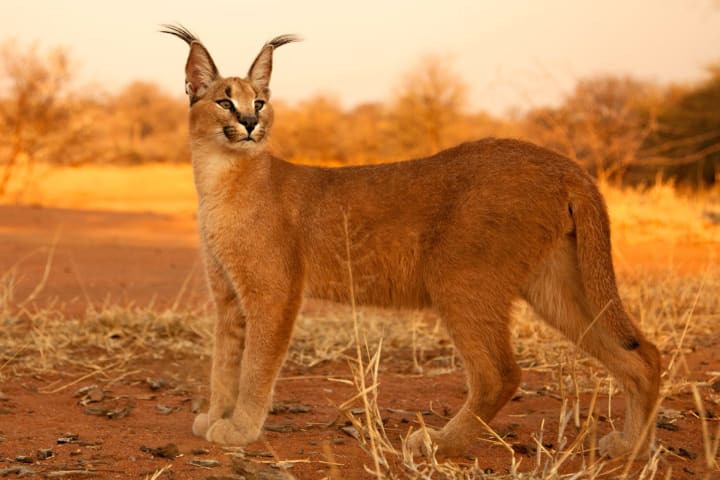
They’re solitary animals except during mating and rearing of kittens. Caracals are nocturnal but can be seen during the day. Mostly they hunt by night and have very good sight and hearing.
Caracals are carnivores and their diets include hyraxes, hares, antelope, rodents, small monkeys, and birds.
Cheetahs
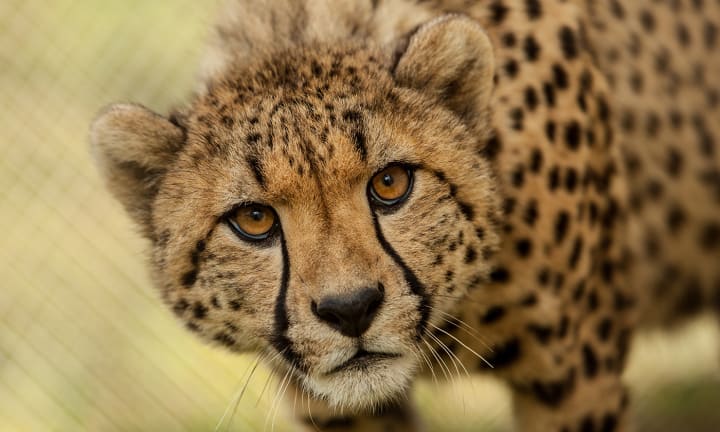
Cheetahs are identified by black marks known as “tear marks” running down from the inner eye along the nose to the outside of the mouth. They are very agile animals with powerful hind legs and flexible muscle spines. Their long and slender bodies are covered with yellowish fur with small black markings. Their tails are spotted with ringed markings and have a black tip. They’re the fastest land animals digging their claws into the ground to enhance their grip at high speeds.
Cheetahs make their homes in eastern and southern Africa and the Middle East.
They inhabit grasslands and savannahs but can also be found in mountainous areas and valleys.
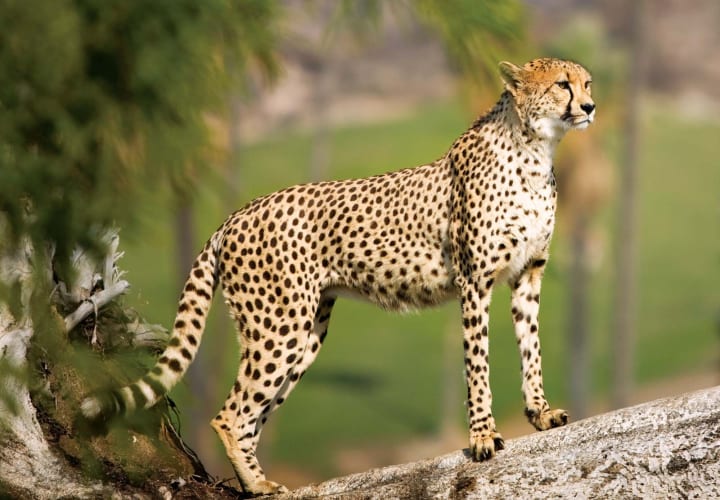
Cheetahs live in three main social groups – females and cubs, male “coalitions”, and solitary males. Females lead a nomadic life searching for prey. Males are more sedentary and establish smaller territories with plentiful prey.
They’re carnivores feeding on gazelles as well as impalas. When food is in short supply they take on smaller species like hares and birds.
Cloud Leopards
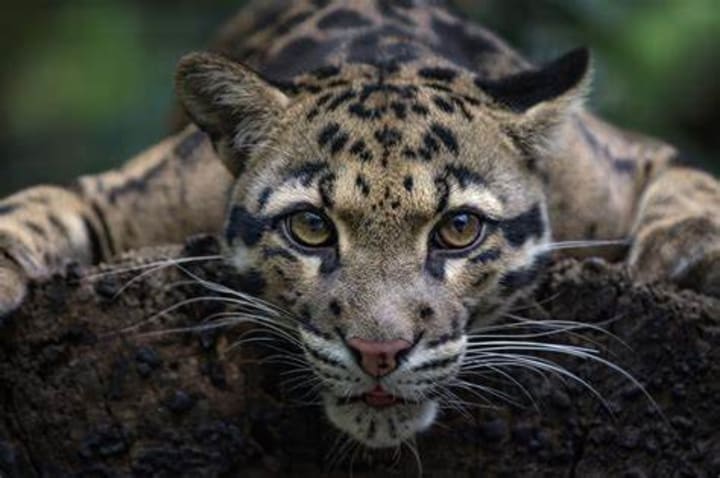
Cloud leopards have dark gray or ground-colored fur which is obliterated by a black and dark dusky-gray blotched pattern. They have black spots on their heads and their ears are black. Broken-up stripes run from the corner of their eyes over their cheeks, from the corner of their mouths to their necks, and along the napes of their shoulders. They have powerful stout legs and long, strong tails. These cats are among the best climbers in the cat family.
Cloud leopards live in the Himalayas, the south of China, and from Taiwan to the Malaysian Peninsula.
These cats inhabit primary evergreen tropical forests, secondary forests, logged forests, dry tropical forests, grassland, mangrove swamps, scrubland, and coastal hardwood forests.
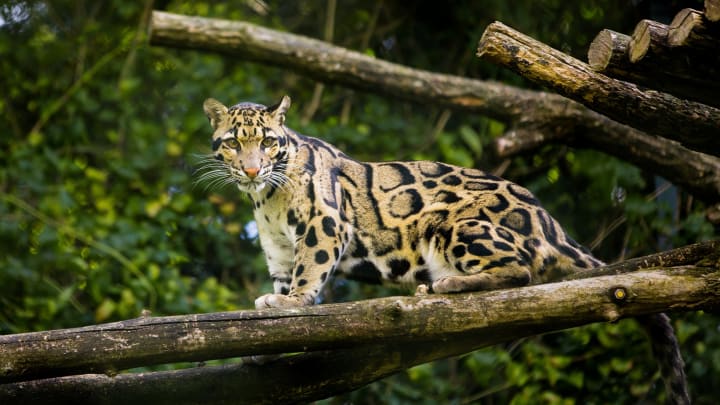
Cloud leopards are solitary animals except during breeding and when with their cubs, They are shy and elusive animals resting in high trees during the day, They hunt actively during the night. Cloud leopards are agile climbers and can run up tree trunks and climb among the branches. They can also run head-first down tree trunks.
These cats are carnivores dining on birds, monkeys, porcupines, deer, pigs, wild boar, young buffalo, and domestic animals.
Cougars
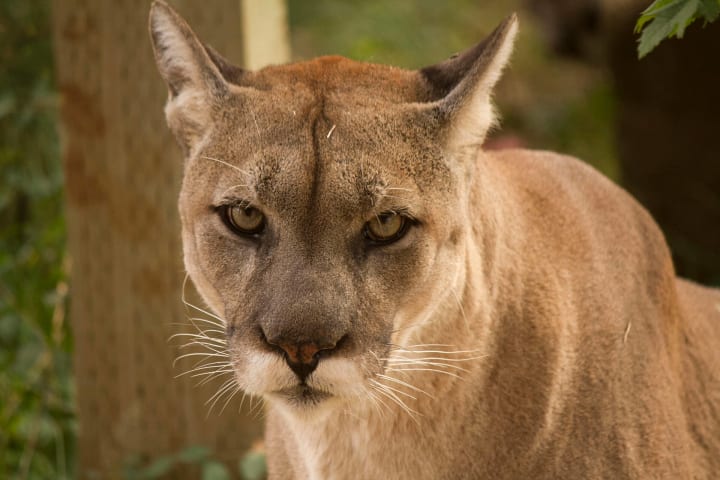
Cougars are large slender cats with short coarse coats. Their fur ranges in color from yellowish to grayish brown with whitish coloring on their chests and throats, There are black stripes on their muzzles and the tips of their tails are black.
Cougars are found in the Western Hemisphere, from the Canadian Yukon through the US, Central, and South America to the southern tip of Chile.
They make their homes in coniferous forests, grasslands, swamps, lowland tropical forests, and dry brush country.
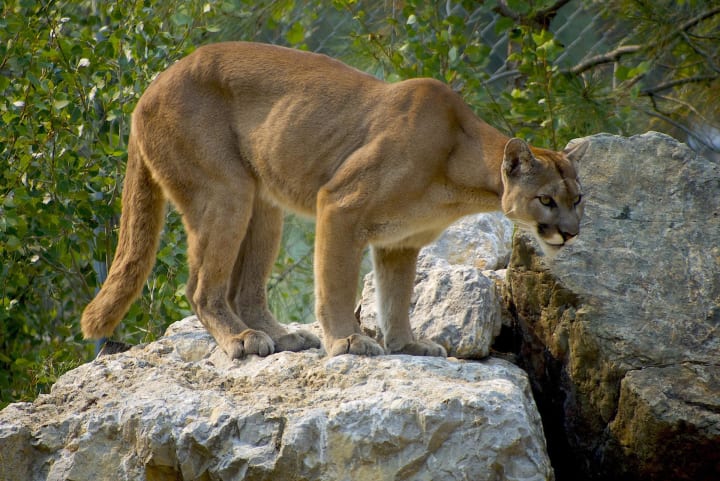
Cougars are solitary animals and are primarily nocturnal,
These cats are hypercarnivores. They mainly diet on large mammals like deer but will also eat coyotes, beavers, porcupines, mice, marmots, raccoons, hares, and birds. If they are close enough they will prey on domestic livestock,
Eurasian Lynx
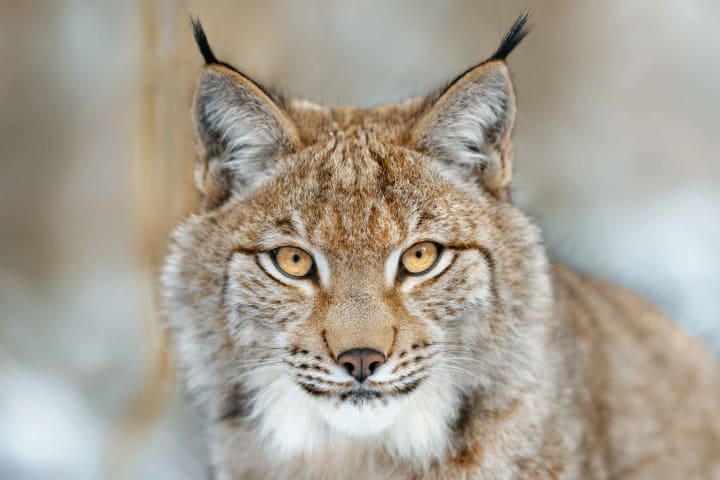
Eurasian lynxes have shot bodies and long legs with large feet. Their ears have distinctive black tufts at the tips. They have long, dense coats that can be brownish or reddish and in the wintertime silver-gray.
They make their homes from Western Europe to Russia and Central Asia.
Eurasian lynxes live in temperate broadleaf boreal or mixed forests with lots of undergrowth. They also inhabit the Himalayas' northern slopes, the alpine tundra, and mountains in the central Asian desert area and all of the Tibetan Plateau.
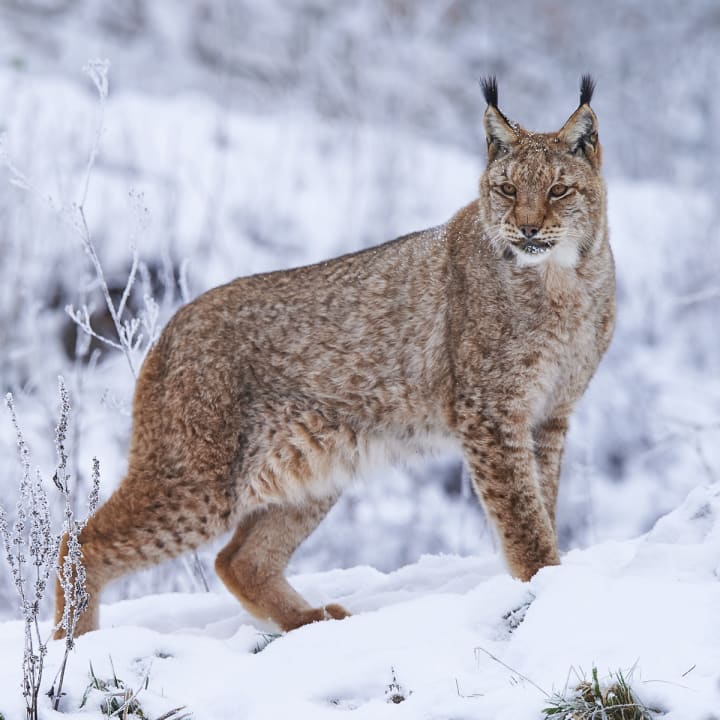
They are nocturnal and mainly active at dawn and dusk while sleeping during the day in thickets. They’re good climbers and can be found lying in trees and on high rocks. Mostly they’re solitary animals except during breeding season.
Eurasian lynxes are carnivores. They feed on musk deer, roe deer, and chamois. They will also dine on red foxes, hares, rabbits, rodents, and birds.
Jaguars
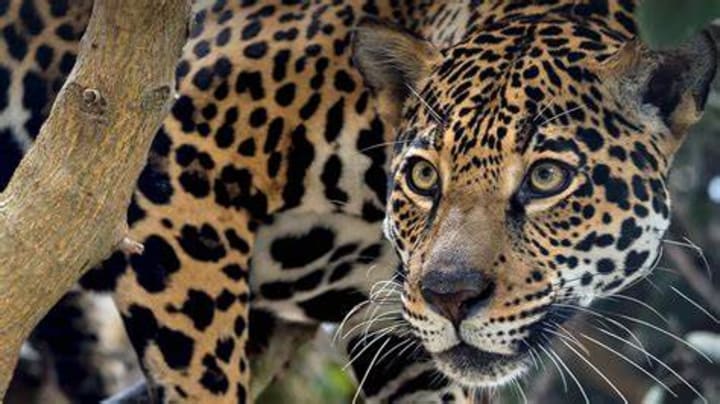
Jaguars have compact bodies, wide heads, and powerful jaws. Their fur is usually yellow or tan but can range from black to reddish brown. There is black on their heads and necks and larger rosette-shaped patterns on their sides and back.
They are widely ranged inhabiting New Mexico and southern Arizona in the US and toward northeastern Brazil and Northern Argentina in South America.
They make their homes in reed thickets, scrubland, coastal forests, and swamps. Jaguars are great swimmers and can be found near water sources.

Jaguars are solitary animals and males are very territorial. They’re dependent on water especially during the dry season to get relief from heat. These cats are good at climbing trees and are most active near dusk and dawn. They rest during mid-morning and afternoon under thick vegetation or under large rocks or in caves.
Jaguars are carnivores eating medium-sized mammals like deer, capybara, tapirs, and peccaries, In water, they hunt fish, turtles, and small caiman.
Leopards

Leopards are medium-sized cats with slim, long bodies and short, sturdy legs, They have long tails that help them balance in trees. Their heads are broad and ears are small and round. The cats have long whiskers and dark markings over all of their bodies.
They can be found from sub-Saharan Africa to West Asia and the Middle East and as far as South and Southeast Asia and Siberia.

Leopards live in various habitats among them savannas, rainforests, grasslands, deserts, and semi-desert regions. In Java, they inhabit dense tropical rainforests and dry deciduous forests in mountainous areas. In the Russian Far East, they live in temperate coniferous forests with very low winter temperatures.
They’re asocial animals, living solitarily and avoiding other leopards. Encountering one another they engage in fighting. Home ranges overlap with each other so a male leopard can overlap within territories of multiple females. They’re active mainly from dusk till dawn and rest during the day among rocks or on tree branches.
Leopards are carnivores feeding on many different animals like jackals, antelopes, gazelles, monkeys, impalas, and others. Smaller prey include birds, hyraxes, hares, snakes, sheep, and goats.
Lions

Lions are wild cats with short, tawny-colored fur and white underparts. Their tails end in black tufts, Male lions have distinctive manes covering their heads ranging from black to blond.
These big cats are found across the sub-Saharan region of Africa and in Gir Forest in the Gujarat State of India. They can also be found in the tropical moist forests in West Africa and montane forests in East Africa.
Lions make their homes in grassy plains and savannas, scrub bordering rivers, and open woodlands.
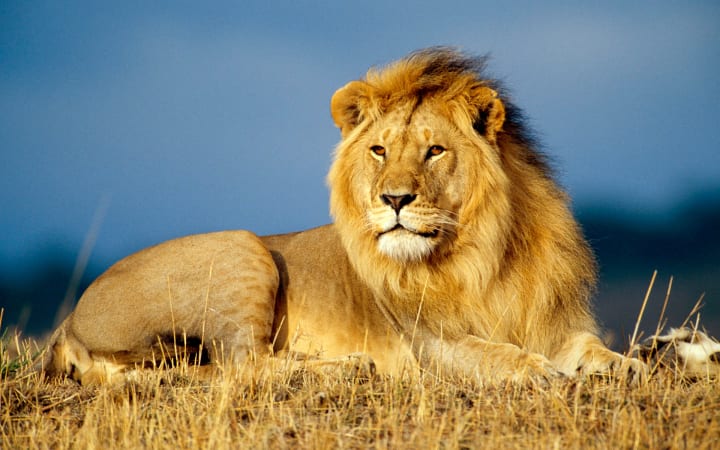
They can be active at any time during the day but their activity mostly peaks after dusk and most hunting is done at that time. They are highly social animals gathering in prides or groups of up to three male lions and multiple lionesses.
Lions are hypercarnivores and hunt down zebras, antelopes, gazelles, deer, buffalo, young giraffes, warthogs, wildebeests, and others. At times they will dine on hares and birds. If necessary they will scavenge on carrion.
Ocelots
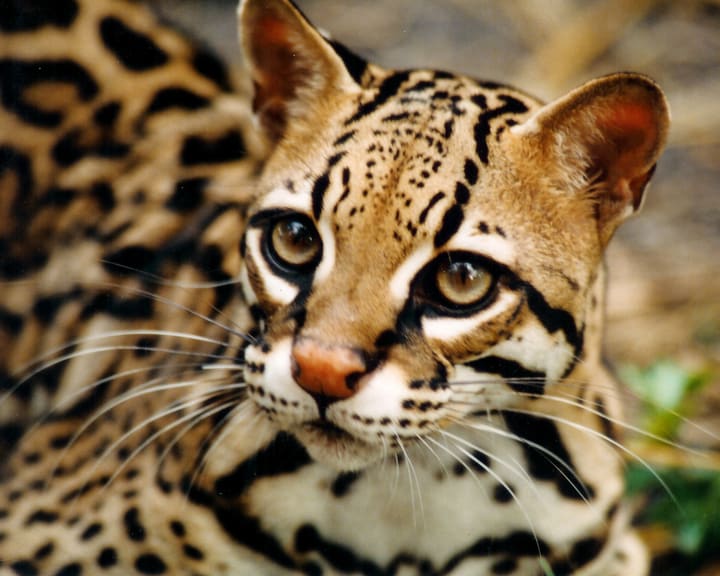
Ocelots are the biggest of the small spotted cat species. They have short, sleek fur ranging in color from reddish to tawny yellow to gray and have open dark-centered rosettes and solid black spots.
These cats have a wide distribution from the southern tip of the US to Central and South America. They’re found in every South American country except Chile. In the US ocelots can be found in southern Texas and at times cross into Arizona from Mexico.
Ocelots make their homes in tropical forests, mangrove forests, savannas, grasslands, coastal marshes, and thorn scrubs.
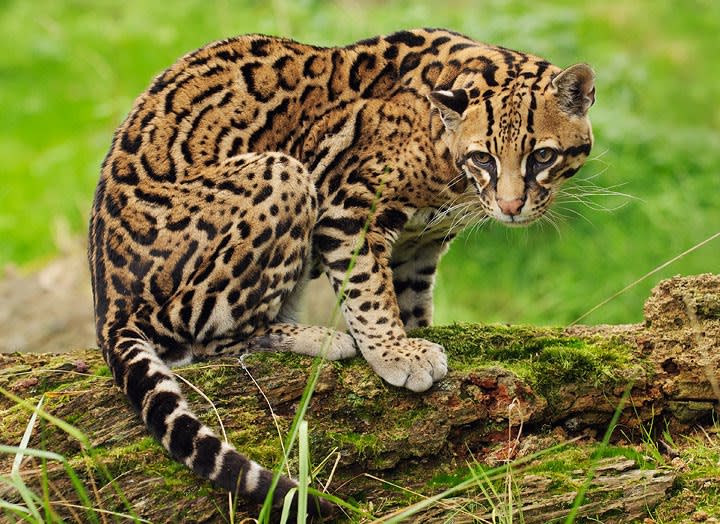
They are solitary and active mainly during twilight and at night. During the day they lie in trees, in dens below large trees or in cool sheltered spots on the ground. Ocelots are agile climbers and leapers. They are also great swimmers.
Ocelots are carnivores and indulge in armadillos, rodents, and opossums as well as fish, crustaceans, reptiles, and birds.
Tigers

Tigers are known for their reddish-orange fur and vertical black stripes. Their muzzles, throats, chests, bellies, and undersides of the limbs are white or light, Above their eyes is a white color extending to the cheeks.
These beautiful cats make their homes in South Asia, Southeast Asia, the Russian Far East, and China. They can also be found on the Indian subcontinent.
Tigers inhabit pine and temperate broadleaf and mixed forests, tropical dry forests, and swamp forests.

They are solitary animals except during mating season, They roam large territories searching for prey. Tigers mark their territories with secretions and scratch marks on trees. Those sharing the same area are aware of each other’s movements and activities. Tigers can be active at any time during the day and also hunt at night.
Tigers are carnivores, eating mainly sambar deer, water buffalo, wild pigs, and antelope. At times they’ll hunt sloth bears, dogs, monkeys, hares, leopards, pythons, and crocodiles.
About the Creator
Rasma Raisters
My passions are writing and creating poetry. I write for several sites online and have four themed blogs on Wordpress. Please follow me on Twitter.
Reader insights
Outstanding
Excellent work. Looking forward to reading more!
Top insights
Compelling and original writing
Creative use of language & vocab
Easy to read and follow
Well-structured & engaging content
Expert insights and opinions
Arguments were carefully researched and presented
Masterful proofreading
Zero grammar & spelling mistakes
On-point and relevant
Writing reflected the title & theme
Keep reading
More stories from Rasma Raisters and writers in Earth and other communities.
European Animals Hungary and Iceland
Wildlife of Hungary Hungary is a small landlocked central European country. It shares its borders with Austria to the west, Ukraine and Romania to the east, Slovakia to the north, and Serbia, Croatia, and Slovenia to the south or southwest. Hungary is dominated by the great lowland expanses called the Little Hungarian Plain and the Great Hungarian Plain. The Danube River cuts through the center of the country from north to south.
By Rasma Raistersabout a year ago in Earth
UAE Weather Tomorrow: Rains Likely; Temperatures to Rise
The United Arab Emirates is preparing for a change in its weather conditions as forecasters predict rain and rising temperatures across the country tomorrow. Residents and travelers are advised to stay updated with local weather alerts, as the shift could affect daily activities, traffic, and outdoor events. Meteorologists have noted that this weather pattern is part of a seasonal transition, bringing a mix of showers, mild winds, and warmer daytime temperatures. The change comes after several days of relatively dry and moderate weather across the UAE. Expected Weather Conditions According to the National Centre of Meteorology (NCM), the UAE will experience partly cloudy skies in most areas, with chances of scattered rain showers in some regions. Temperatures are expected to rise slightly, reaching maximums higher than the recent average for this time of year. Specific forecasts for major cities include: Abu Dhabi: Cloudy periods with isolated showers; temperatures between 22°C and 30°C Dubai: Sunny to partly cloudy with chances of light rain; temperatures around 24°C–31°C Sharjah: Light rain expected in some areas; highs of 30°C Northern Emirates (Ras Al Khaimah, Fujairah): Increased cloud cover with scattered showers; temperatures between 20°C and 29°C The NCM has also issued a notice for occasional gusty winds, particularly along coastal areas, which may affect marine activities and beachgoers. Causes of the Weather Change Meteorologists explain that the predicted rains and temperature rise are linked to: Shifting air masses: Cooler air from the north interacting with the warmer Gulf air is causing cloud formation and occasional rain. Seasonal transition: As the UAE moves towards its warmer months, temperatures naturally rise, even as intermittent rain falls in some areas. Regional atmospheric disturbances: Occasional low-pressure systems over the Arabian Peninsula bring moisture from surrounding seas, increasing rain potential. While the rain is expected to be light to moderate, it can temporarily affect visibility and road conditions, especially in areas prone to water accumulation. Impact on Daily Life Residents and visitors are advised to consider the following due to the changing weather: Road Safety: Rain may make roads slippery. Drivers are encouraged to maintain safe speeds and keep a safe distance from other vehicles. Travel Plans: Flight schedules may experience minor delays due to weather-related air traffic adjustments. Outdoor Activities: Those planning outdoor events, picnics, or beach visits should check local forecasts and be prepared for sudden showers. Marine Conditions: Boating and fishing enthusiasts should note choppy seas due to gusty winds, particularly along the UAE coastline. Temperature Trends While rain is expected, temperatures are forecasted to rise slightly across the country. Daytime highs will generally reach 30°C to 31°C in major cities, with cooler early mornings between 20°C and 24°C. Meteorologists emphasize that even with rain, the overall trend points toward warmer daytime conditions, marking a transition into the pre-summer period. Nights may remain slightly cooler, offering relief from the daytime heat. Preparation and Precautionary Measures Weather experts advise the public to take simple precautionary measures: Carry umbrellas or raincoats when moving outdoors. Check local weather apps and official NCM updates regularly. Drive cautiously on wet roads and follow traffic advisories. Secure outdoor items such as furniture, tents, or decorations that could be affected by gusty winds. Stay informed about marine weather updates if engaging in boating or fishing activities. By taking these precautions, residents can safely navigate the changes in weather without significant disruption to daily life. Regional Weather Patterns The UAE’s weather is influenced by its desert climate, but seasonal shifts and occasional regional disturbances often bring short-term rainfall and temperature variations. Northern Emirates: More likely to receive rain due to proximity to the Hajar Mountains, which can trap moist air and cause showers. Central and Southern Emirates: Rain is usually less frequent, but isolated showers can occur, particularly near coastal regions. Coastal Areas: Experience higher humidity and occasional gusty winds, especially when rain systems pass through. Expert Advice Experts from the NCM stress that such weather changes are normal and seasonal. While heavy rains are unlikely, even light showers can temporarily affect commuting, outdoor plans, and local businesses. Meteorologists also advise keeping an eye on short-term forecasts, as local weather can shift rapidly due to regional atmospheric changes. Conclusion Tomorrow, the UAE can expect a mix of rain showers and rising temperatures, signaling a shift in the seasonal weather pattern. Residents are encouraged to stay informed, take necessary precautions, and plan outdoor activities carefully. While the rain may be light and scattered, its presence reminds everyone that even in a predominantly arid country, weather conditions can change quickly, affecting roads, travel, and daily life. With proper awareness and preparation, the UAE’s residents and visitors can navigate these weather changes safely while enjoying the mild rainfall and warmer daytime temperatures.
By Fiaz Ahmed 3 days ago in Earth
Man Shot Dead Was 37-Year-Old US Citizen, Minneapolis Police Chief Says
For many residents of Minneapolis, the news landed like a heavy blow. Authorities confirmed that a man shot dead during a law enforcement operation was a 37-year-old U.S. citizen, a detail that immediately intensified public reaction. What began as a breaking news alert quickly became a broader conversation about policing, federal authority, and community trust.
By Muhammad Hassan2 days ago in Earth




Comments (2)
This was great to learn about!
This is a very well-written piece Rasma. I enjoyed learning more about the fascinating big cats out there, and you gave lots of interesting information and plenty of insights into their lives.