
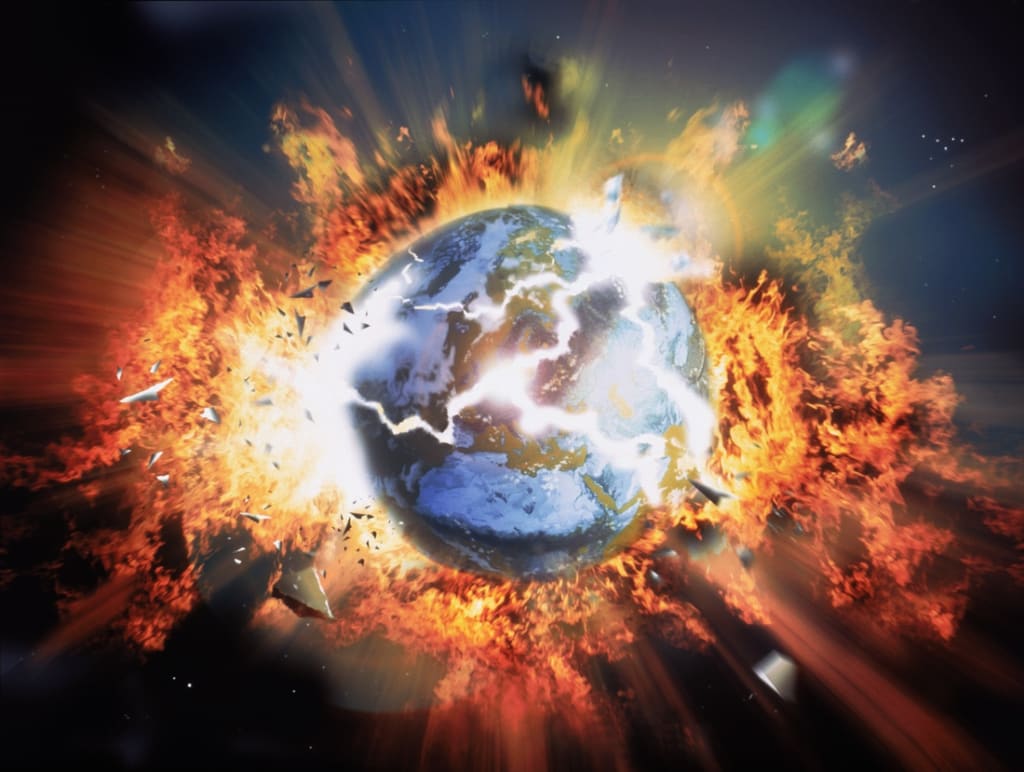
As a born Christian, when the word ‘the world is coming to an end’ comes up in the church or just anywhere; I am frightened because I know I didn’t follow the whole10 commandment in the bible. So, hell fire is a threat that I am going straight to hell.
Growing up now I have been hearing for the past 4 decades that the world will be over but we are still pretty much here having lots and lots of dreams and aspiration with no worries apart from the politics propagandas everywhere.
Drastic climate change, extreme weather events, rising sea levels, and widespread natural disasters are some occasions that gets people to believe that the world is coming to an end.
Escalation of armed conflicts, tensions between nations, or the threat of nuclear warfare. Widespread disease outbreaks: The emergence of highly contagious or incurable diseases that pose a significant threat to global health.
Large-scale asteroid impacts, super volcano eruptions, or other natural disasters that could cause widespread devastation. Rapid decline and extinction of numerous plant and animal species, disrupting ecosystems and causing imbalances in the natural world.
It's important to note that while these signs may be concerning, they do not necessarily mean that the world is coming to an end. Humans have faced and overcome challenges throughout history, and collective action can help mitigate these issues and build a better future.
TV news often covers global warming and raises awareness about its impacts and the need for action. They may feature stories on climate change-related events, such as extreme weather events, melting glaciers, rising sea levels, and their consequences on ecosystems and communities.
News outlets may also report on initiatives, policies, and scientific research aimed at mitigating and adapting to climate change. They may interview experts, scientists, activists, and policymakers to provide insights and analysis on the issue. The coverage aims to inform viewers about the urgency of addressing global warming and the importance of sustainable practices and policies.
Rocket launches and missile blasting contribute to air pollution in several ways. Whereby if these missiles get in wrong hands or not managed well it could end part of the world. Rocket engines use propellants, such as liquid or solid fuels, which release various gases and particulate matter into the atmosphere upon ignition. These emissions can contribute to air pollution.
During a rocket launch, the intense heat and combustion processes can cause chemical reactions between rocket exhaust and atmospheric compounds, leading to the formation of additional pollutants, such as nitrogen oxides (NOx) and ozone-depleting substances. Rockets that reach the upper atmosphere or enter into orbit can release emissions directly into the stratosphere. Certain chemicals used in rocket propellants, such as chlorine compounds, have the potential to deplete the ozone layer.
During the covid-19 lockdown, people saw several helicopters releasing gas into the atmosphere. It is rumored that the chemical that were released to the air is to keep the spread of the covid-19 pandemic. Over a long time, powerful people of the world have used tactics like this to get people sick for the agenda that make them a lot of money.
It's worth noting that rocket launches, while contributing to air pollution, currently represent a relatively small fraction of global emissions compared to other human activities. However, as space exploration and commercial launches increase, it becomes important to consider the environmental impacts and work towards developing more environmentally friendly propulsion systems and practices.
Like I said, I do not believe the world is coming to an end. I believe we have one world; one earth and it has been in existed ever since. The world will be here forever, we the humans and the animals in it that will die and reproduce. This is the only recreation and continuous living that will happen.
There is no scientific consensus or credible prediction indicating an exact date or timeframe for the end of the world. While there are various challenges and risks facing humanity, such as climate change, environmental degradation, and geopolitical tensions, it is important to approach these issues with a focus on finding solutions and taking action rather than speculating about the end of the world. The future of our planet depends on the collective efforts of individuals, communities, governments, and organizations to address these challenges and strive for a sustainable and prosperous future.
Thanks for reading
About the Creator
Keep reading
More stories from Michael Alake and writers in Earth and other communities.
"The Odds of Two Suns in the Sky: Is it even possible"
First of all, growing up I have heard of two twin suns but the idea is moronic because these twos Suns are going to worn each other out if lived side by side all these centuries. Have you ever looked up at the sky and wondered what it would be like to have two Sun. It may seem like a surreal thought, but it's not entirely impossible. Scientists have actually discovered exoplanets that orbit binary stars, and some of these stars are visible from Earth.
By Michael Alake3 years ago in Proof
Time Out Market to Close in Fulton Market
After years of drawing locals and tourists alike to Fulton Market, Time Out Market Chicago is set to close its doors. The popular food hall, known for bringing together some of the city’s best chefs, artisans, and culinary experiences under one roof, has announced that it will cease operations later this year. The closure marks the end of an era for one of Chicago’s most vibrant dining destinations and reflects broader trends in the restaurant and hospitality industry that have reshaped urban dining spaces over the past decade. The Rise of Time Out Market in Fulton Market Time Out Market first opened in Chicago’s Fulton Market District in 2019, quickly gaining a reputation as a destination where visitors could sample some of the city’s most celebrated chefs and street‑food vendors all in one place. The market followed a model that had already been successful in cities like Lisbon and New York: a curated collection of high-quality, chef-driven eateries, communal seating areas, and a lively atmosphere that combined dining with culture and entertainment. Located in a district already famous for its mix of historic meatpacking warehouses and trendy loft conversions, Time Out Market quickly became a hub for both food lovers and tourists seeking an authentic Chicago experience. (timeoutmarket.com) Why the Closure Is Happening While the exact reasons behind the closure are complex, several key factors appear to have contributed: 📉 Shifting Consumer Behavior The COVID-19 pandemic dramatically changed dining habits, with many customers moving toward delivery, takeout, and smaller neighborhood restaurants rather than large food halls. Even as in-person dining rebounded, some communal spaces struggled to maintain consistent foot traffic. 💰 Operational Costs Maintaining a high-quality, multi-vendor space in Fulton Market comes with significant overhead, from leasing costs to staffing and compliance with city regulations. Rising costs for ingredients, labor, and real estate have challenged profitability. 🌆 Urban Development Trends Fulton Market has evolved rapidly, attracting corporate offices, luxury condos, and boutique hotels. While the area’s growth has been positive for real estate, it has also intensified competition for dining options and raised expectations for commercial spaces, putting additional pressure on large-scale food halls. Impact on Local Vendors and Chefs One of the hallmarks of Time Out Market was its curated roster of local vendors. From acclaimed pastry chefs to innovative street-food vendors, many found a platform at Time Out Market that allowed them to reach a wide audience without the overhead of opening a standalone restaurant. The closure will leave dozens of small business owners seeking new spaces or alternative ways to reach their customers. While some may move to other neighborhoods or pop-up concepts, others may struggle to find affordable options in the city’s increasingly expensive food scene. For food lovers, the market’s closure means the loss of a one-stop destination to sample a variety of Chicago’s culinary talent in a single, vibrant location. The Cultural Significance Time Out Market was more than just a food hall—it was a social and cultural gathering place. Its communal tables encouraged interaction, its events showcased local music and arts, and its central location made it a natural meeting point for tourists and locals alike. For many, it represented the spirit of Chicago’s Fulton Market district: a place where history, innovation, and creativity intersected. Its closure will leave a gap not only in dining options but in the neighborhood’s cultural fabric. Industry Experts Weigh In Analysts note that the closure of Time Out Market is part of a broader trend affecting large-scale food halls across the U.S.. While some continue to thrive, particularly in cities with high tourist traffic or strong corporate sponsorship, others have struggled to adapt to post-pandemic consumer habits. In interviews with hospitality experts, several key points emerged: Adaptability Is Key: Food halls that survive often offer flexible layouts, hybrid dining and retail options, or smaller-footprint satellite locations. Experience Still Matters: While convenience and takeout are important, consumers continue to seek memorable experiences. Large markets must find ways to balance these two priorities. Local Partnerships Help: Collaboration with local businesses, breweries, and cultural institutions can drive consistent traffic and community engagement. What’s Next for Fulton Market? The closure of Time Out Market opens up opportunities for other businesses. Fulton Market remains a hotspot for culinary innovation, with new restaurants, bars, and pop-up venues continuing to open each year. Some industry insiders speculate that the space may be repurposed for smaller, boutique eateries, event spaces, or mixed-use commercial developments that cater to the neighborhood’s evolving demographics. Others believe the closure may inspire new concepts that combine food, culture, and technology in innovative ways. Reflections from Visitors For regular patrons, the news is bittersweet. Many recall their first visits to Time Out Market—sampling different cuisines, sharing tables with strangers, or attending weekend events. Social media posts following the announcement highlighted memories of birthday celebrations, first dates, and casual gatherings, underscoring the market’s role in the city’s social life. “It was our go-to spot for trying new chefs,” one visitor commented. “It’s sad to see it go, but we’re hoping whatever comes next keeps that spirit alive.” Conclusion: The End of an Era, and the Beginning of Something New The closure of Time Out Market in Fulton Market represents the end of a significant chapter in Chicago’s food and cultural scene. While it may be disappointing for fans and vendors alike, it also reflects broader trends shaping urban dining, commercial real estate, and consumer behavior. As the neighborhood continues to grow and evolve, there’s hope that new concepts will emerge, preserving the community-focused, culinary-driven spirit that made Time Out Market special. In the meantime, Chicagoans and visitors alike will treasure the memories and flavors that the market brought to Fulton Market, even as the city’s food scene moves forward into a new chapter.
By Muhammad Hassanabout 18 hours ago in Earth
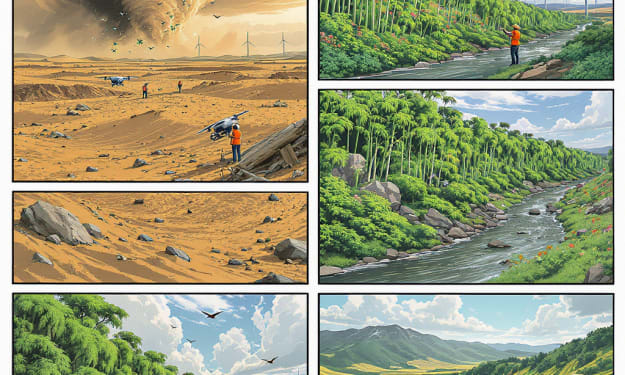
Chinese Planetary Engineering: The Great Green Wall and the Reclamation of Climate
There are junctures in history where a civilization no longer chooses between comfort and progress, but between adaptation and extinction. At the dawn of the new millennium, China hit one of those silent thresholds where geography ceases to be a backdrop and becomes an adversary. The desert was advancing, not as a metaphor for decay, but as a physical, methodical, and relentless force. Sand was devouring the horizon, winds grew heavy with dust, and the soil lost its fertile memory, taking with it the promise of social stability.
By Laurenceau Porte2 days ago in Earth



Comments
There are no comments for this story
Be the first to respond and start the conversation.