
How Will Our Universe End? Exploring the Big Crunch Theory
The vast expanse of the universe has fascinated humanity for centuries, and one of the most perplexing questions we ponder is how it will ultimately meet its end. While several theories exist, the Big Crunch theory presents a captivating possibility. According to this theory, our expanding universe may eventually reverse its course, collapsing in on itself due to the influence of gravity. In this article, we will delve into the intriguing concept of the Big Crunch, examining its origins, potential implications, and the current scientific understanding surrounding this cosmic fate.
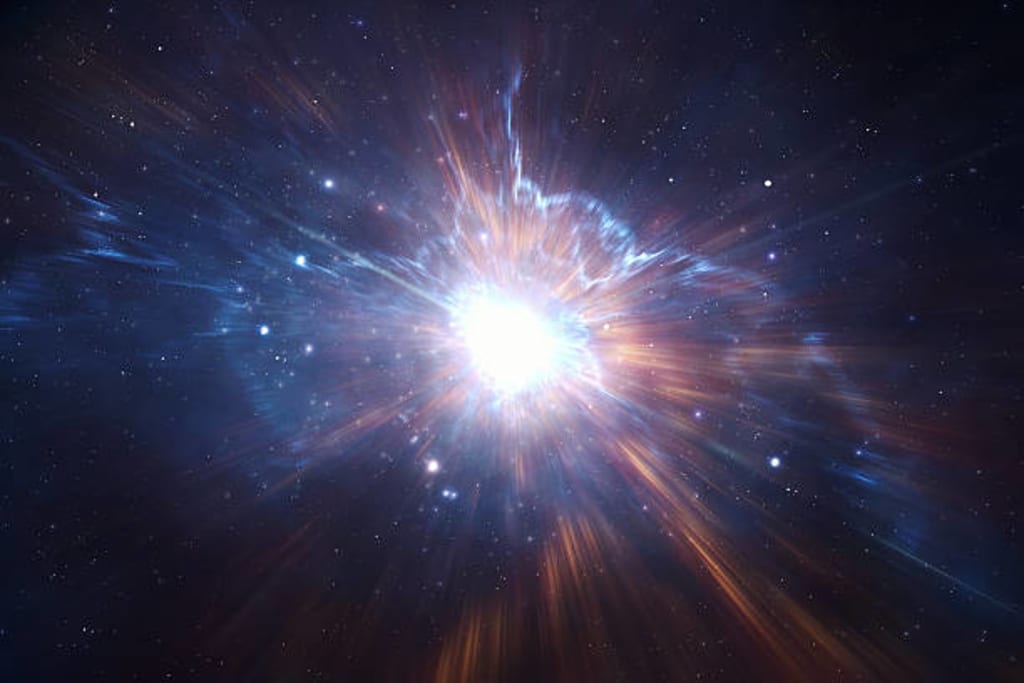
The Expanding Universe: To comprehend the Big Crunch theory, we must first understand the prevailing notion of an expanding universe. Over the last century, scientific observations, particularly those made by Edwin Hubble, have revealed that galaxies are moving away from one another. This discovery led to the formulation of the Big Bang theory, suggesting that the universe originated from an incredibly dense and hot state nearly 13.8 billion years ago. Since then, the universe has been continuously expanding.
The Big Crunch theory proposes that our expanding universe will eventually reverse its course and collapse in on itself due to the overwhelming influence of gravity. This concept suggests that the density of matter in the universe is sufficient to halt the expansion, leading to a cataclysmic event known as the Big Crunch.
According to the prevailing model of the universe's evolution, the Big Bang theory, the universe originated from an incredibly dense and hot state approximately 13.8 billion years ago. Since then, it has been expanding, with galaxies moving away from one another. The force responsible for this expansion is believed to be dark energy, a mysterious form of energy that permeates space and acts as a repulsive force.
The Role of Gravity: Gravity, a fundamental force governing the behavior of matter, plays a critical role in the evolution of the universe. As galaxies move away from one another, their mutual gravitational attraction tends to slow down this expansion. However, for decades, it was uncertain whether gravity would be strong enough to halt the expansion entirely, leading to the concept of a Big Crunch.
The Big Crunch Theory: The Big Crunch theory postulates that if the density of matter in the universe exceeds a certain critical value, the expansion will eventually halt and be reversed. As galaxies draw closer together, their gravitational interaction intensifies. This gravitational pull acts as a cosmic brake, gradually slowing down and eventually reversing the expansion. Consequently, all matter in the universe would be compressed into a singularity, a state of infinite density and temperature akin to the conditions at the beginning of the universe.
Implications and Challenges: The idea of a Big Crunch raises fascinating implications for the fate of our universe. If this scenario were to occur, it would resemble a cosmic cycle, with a Big Bang followed by a Big Crunch, creating an endless series of expansion and contraction. However, several challenges and observations have cast doubt on the likelihood of a Big Crunch. Recent cosmological measurements indicate that the expansion of the universe is accelerating, driven by a mysterious force known as dark energy. This phenomenon suggests that the density of matter is not sufficient to halt the expansion, thereby challenging the plausibility of a Big Crunch.
Alternatives to the Big Crunch: In light of the challenges posed to the Big Crunch theory, scientists have explored alternative scenarios for the universe's fate. One possibility is the "Big Freeze" or "Heat Death," where the universe continues to expand indefinitely, gradually losing energy and cooling down until it reaches a state of maximum entropy. Another hypothesis is the "Big Rip," where the expansion accelerates to such an extent that it eventually tears apart all cosmic structures, including galaxies, stars, and even atoms.
Conclusion: The question of how our universe will ultimately meet its end captivates our imagination, and the Big Crunch theory presents an intriguing possibility. While the idea of a cosmic collapse fueled by gravity is captivating, recent observations have challenged the plausibility of this scenario. Alternatives such as the Big Freeze and Big Rip offer different outcomes, each with its own implications for the future of our universe. As our understanding of the cosmos deepens, scientists continue to investigate these theories and search for new insights into the ultimate fate of our expansive cosmos.
About the Creator
Keep reading
More stories from Ravi Tyagi and writers in Earth and other communities.
Unveiling the Secrets: Extracting 4 Million Fossils from the Tar at La Brea Tar Pits
1. The Formation of the Tar Pits ________________________________________ The formation of the La Brea Tar Pits began approximately 40,000 years ago when crude oil seeped through fissures in the earth's crust, forming pools of asphalt. These pools acted as natural traps, ensnaring unsuspecting animals that came into contact with the sticky tar. Over time, the remains of these unfortunate creatures, as well as other organic matter, were gradually preserved and fossilized.
By Ravi Tyagi3 years ago in Earth
Polar Vortex Collapse Forecast: What It Really Means and Why Experts Are Watching Closely
As winter settles in, a term that always seems to capture the attention of meteorologists and the public alike is the "polar vortex." And when experts talk about a polar vortex collapse, it's not just another weather pattern to be dismissed. In fact, the forecast of a potential collapse of the polar vortex is a serious matter that can have significant consequences on weather around the globe. But what exactly does this phenomenon mean, and why are so many experts paying close attention? Let’s break it down.
By Ayesha Lashariabout 19 hours ago in Earth



Comments
There are no comments for this story
Be the first to respond and start the conversation.