
Unveiling the Secrets: Extracting 4 Million Fossils from the Tar at La Brea Tar Pits
The La Brea Tar Pits in Los Angeles, California, have captivated scientists and visitors alike for centuries with their rich deposits of ancient fossils. Over the years, this site has yielded an astonishing collection of more than four million fossils, providing invaluable insights into the prehistoric world. This article delves into the fascinating process of extracting fossils from the tar pits and sheds light on the meticulous efforts undertaken by paleontologists to uncover the hidden treasures trapped within the viscous tar.
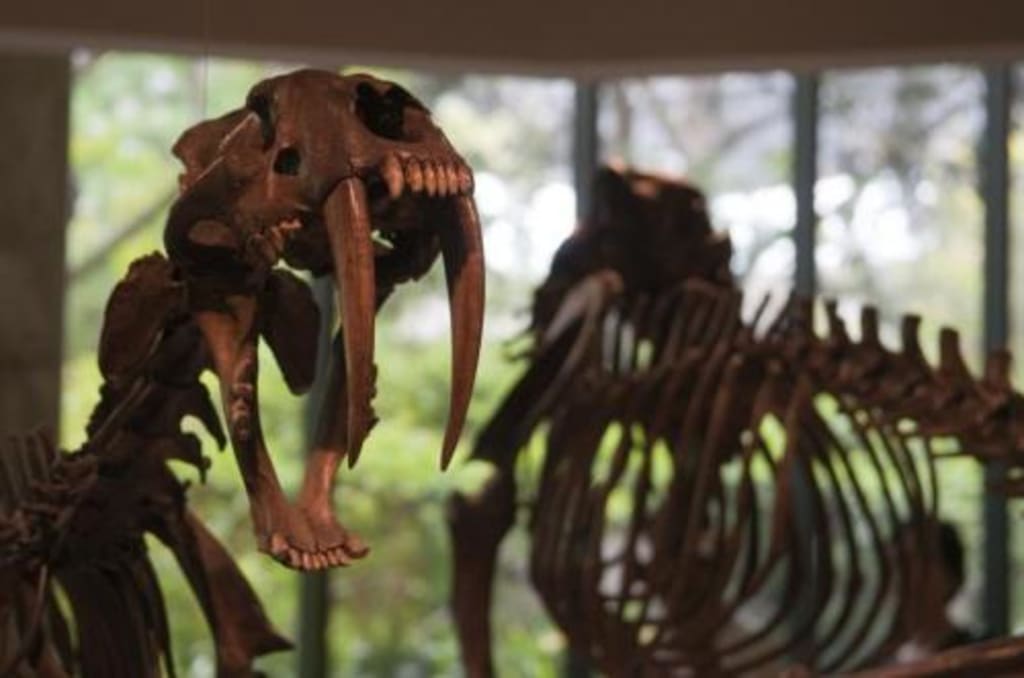
1. The Formation of the Tar Pits
________________________________________
The formation of the La Brea Tar Pits began approximately 40,000 years ago when crude oil seeped through fissures in the earth's crust, forming pools of asphalt. These pools acted as natural traps, ensnaring unsuspecting animals that came into contact with the sticky tar. Over time, the remains of these unfortunate creatures, as well as other organic matter, were gradually preserved and fossilized.
2. The Discovery of Fossil Riches
________________________________________
In the early 20th century, the significance of the La Brea Tar Pits as a fossil treasure trove was recognized. Excavations and scientific studies commenced under the supervision of the Natural History Museum of Los Angeles County. These efforts have been ongoing ever since, uncovering a vast array of fossils and enlightening researchers about the diverse fauna that once roamed the area.
3. The Extraction Process
________________________________________
The extraction of fossils from the tar pits is a meticulous and time-consuming process. Before the extraction begins, researchers must locate potential fossil deposits within the tar. They use a combination of satellite imagery, ground-penetrating radar, and exploratory drilling to identify areas of interest.
Once a site is selected, the extraction process begins with the construction of a large excavation pit around the tar deposit. The pit is lined with a protective barrier to prevent groundwater contamination and to maintain the structural integrity of the excavation.
Next, skilled paleontologists and volunteers meticulously remove the tar layer by layer, using tools such as shovels, brushes, and pneumatic drills. This painstaking technique allows the recovery of even the most delicate specimens without causing damage. As the excavation progresses, fossil-bearing sediments are carefully separated from the tar and transported to a laboratory for further study.
4. The Fossil Diversity
________________________________________
The La Brea Tar Pits have yielded an unparalleled diversity of fossils, providing a remarkable snapshot of prehistoric life. The most commonly found fossils are from large mammals like dire wolves, saber-toothed cats, giant sloths, and mammoths. However, the tar pits have also revealed a wealth of other species, including birds, reptiles, insects, and plants.
These fossils not only offer insights into the anatomy, behavior, and ecology of these ancient creatures but also shed light on the ecological conditions and climate of the past. They have significantly contributed to our understanding of the Pleistocene epoch, spanning from approximately 2.6 million to 11,700 years ago.
5. Preservation Challenges
________________________________________
The tar pits provide a unique preservation environment, which has contributed to the exceptional fossil record. However, this same environment poses challenges for extraction and preservation. The tar's viscous nature and the preservation of soft tissues make extracting fossils a delicate process. Fragile bones, delicate plant material, and even insect wings can be easily damaged during extraction.
To mitigate these challenges, modern extraction techniques utilize a combination of manual labor, specialized tools, and chemical treatments. Careful documentation and digital imaging are employed to capture every detail
of the fossils before and during extraction. Additionally, scientists collaborate closely with conservation experts to ensure the long-term preservation of the fossils once they are removed from the tar.
6. The Significance of the Fossil Discoveries
________________________________________
The fossil discoveries at the La Brea Tar Pits have had a profound impact on our understanding of prehistoric life. The sheer number and diversity of fossils found in the tar provide an unprecedented glimpse into the ecosystem of ancient Los Angeles.
Scientists have been able to reconstruct the food webs, migration patterns, and interactions between different species that inhabited the region thousands of years ago. These findings have also challenged previous assumptions about the distribution and behavior of certain species, contributing to the ongoing study of paleoecology.
Moreover, the fossils from the tar pits have been instrumental in shaping our knowledge of the Pleistocene epoch and its climatic fluctuations. By analyzing the isotopic composition of the fossils, researchers can deduce information about the climate and environmental conditions of the time, providing vital data for understanding past climate change and its implications for the future.
7. The Role of Public Engagement
________________________________________
The La Brea Tar Pits not only serve as a significant scientific site but also as a hub for public engagement and education. The Natural History Museum of Los Angeles County, in collaboration with other organizations, offers visitors the opportunity to witness the fossil extraction process, participate in guided tours, and explore interactive exhibits.
This unique blend of scientific research and public outreach fosters curiosity, ignites a passion for paleontology, and encourages a deeper appreciation for Earth's history. By involving the public in the exploration and interpretation of the tar pits, scientists aim to inspire the next generation of researchers and foster a broader understanding of our planet's past.
Conclusion
The extraction of four million fossils from the La Brea Tar Pits stands as a testament to the unwavering dedication and expertise of the scientists and volunteers involved in this remarkable endeavor. Through their meticulous efforts, we have gained invaluable insights into the prehistoric world and expanded our understanding of ancient ecosystems and climatic conditions.
The ongoing discoveries and research at the tar pits continue to shape our understanding of Earth's history and provide a glimpse into the rich tapestry of life that existed thousands of years ago. The La Brea Tar Pits stand as a testament to the power of fossils in unraveling the mysteries of our planet's past and inspiring future generations of scientists and enthusiasts alike.
About the Creator
Keep reading
More stories from Ravi Tyagi and writers in Earth and other communities.
5 Most AMAZING Scientific Discoveries of the Decade
Gravitational Waves: One of the most significant scientific breakthroughs of the decade was the direct detection of gravitational waves, confirming a major prediction of Albert Einstein's theory of general relativity. In 2015, the Laser Interferometer Gravitational-Wave Observatory (LIGO) made history by detecting ripples in the fabric of spacetime caused by the collision of two black holes. This groundbreaking discovery not only provided direct evidence for the existence of gravitational waves but also opened up a new window to observe the cosmos, allowing scientists to probe events such as the merger of neutron stars and gain insights into the early universe.
By Ravi Tyagi3 years ago in Earth
Australia Agricultural Biologicals Market 2026: Sustainable Farming, Crop Protection & Biological Innovation
Australia Agricultural Biologicals Market Overview The Australia agricultural biologicals market is gaining steady momentum as farmers, agribusinesses and policymakers increasingly focus on sustainable crop production and environmentally responsible farming practices. Agricultural biologicals include products derived from natural sources such as microorganisms, beneficial insects, plant extracts and naturally occurring compounds. These products are used for crop protection, soil enhancement and plant growth promotion, offering alternatives or complements to conventional chemical inputs. According to IMARC Group, the Australia agricultural biologicals market size reached USD 218 Million in 2025. Looking forward, IMARC Group expects the market to reach USD 680 Million by 2034, exhibiting a growth rate (CAGR) of 13.5% during 2026-2034. This growth reflects increasing adoption of integrated pest management, rising demand for residue-free produce and expanding organic and regenerative farming practices.
By Amyra Singh2 days ago in Earth
‘Ransom Note’ for Kidnapped Mother of Today Show Host Sent to TMZ
A disturbing development has emerged in a high-profile kidnapping case after a ransom note allegedly connected to the kidnapped mother of a Today Show host was reportedly sent to celebrity news outlet TMZ. The situation has sparked widespread public concern, media scrutiny, and renewed debate about the ethics of reporting on sensitive criminal cases involving victims and their families.
By Aarif Lasharia day ago in Earth
Self Help: Grifters' Gospel
On Self-Help, Snake Oil, and the Illusion of Change Psychology professionals and students can be imagined on two opposite sides of a line called self-help books: likely a larger group opposes pop-science and step-by-step manuals filled with talk of success, journaling, and not giving a f**k; others love them, but they aren’t many.
By Avocado Nunzella BSc (Psych) -- M.A.P 4 days ago in BookClub




Comments
There are no comments for this story
Be the first to respond and start the conversation.