
How To Take Great Photos Of The Leonid Meteor Shower
Capturing the perfect photo is just a matter of timing and luck.

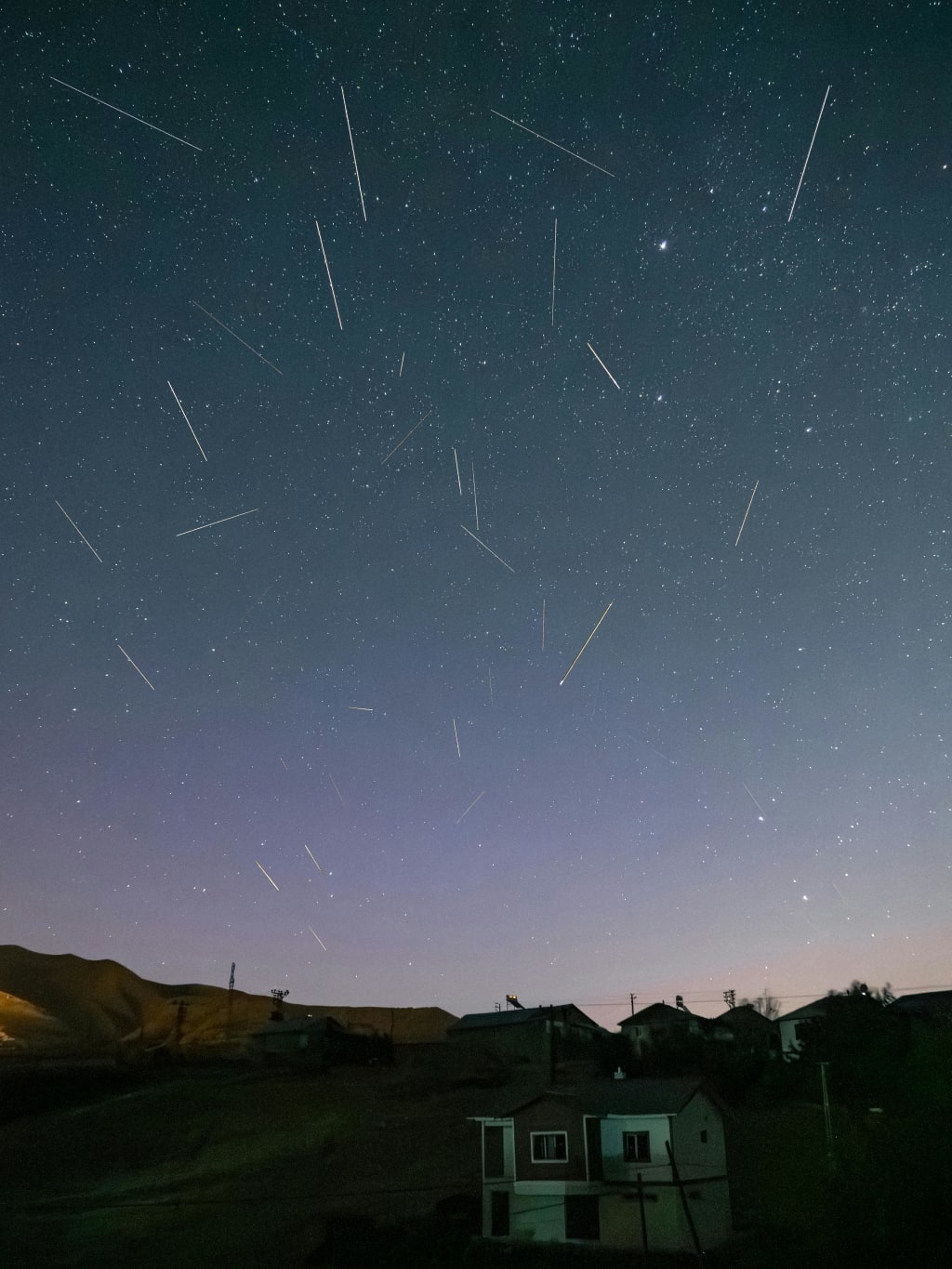
Taking photos of a meteor shower can be an exercise in patience as meteors streak across the sky quickly and without warning, but with these tips (and a little good luck) you can be rewarded with a great photo.
These tips are intended for a DSLR or mirrorless camera, but some compact cameras with manual controls can also be used.
Use a tripod.
Meteor photography requires long exposures and even the steadiest hands can't hold the camera still enough to get a sharp image. Heavier tripods help reduce shaking from wind and footsteps, but even a lightweight tripod will do the trick. You can always place sandbags against the tripod legs to add weight and stability. If you don't have a tripod, you may be able to prop the camera up on something around you but be sure to secure it.
Use a cable release or the camera's built-in timer.
A tripod is very helpful in reducing most camera shake, but even the act of pressing the shutter button can blur long exposures. Using the self-timer gives you several seconds for any shaking that occurs when you press the shutter button to stop before the shutter is released. A cable release (without a self-timer) eliminates the need to touch the camera. And if your camera has Wi-Fi capabilities, you may be able to trigger the shutter from a mobile device.
Point your camera.
While we don't know when or where a single meteor will appear, we do know the general area from which it will originate.
Meteor showers are named for the point in the sky from which they appear to radiate. In the case of the Leonids, at their peak, they appear to come from the direction of the constellation Leo in the eastern sky.
Choose your photo opportunity
Typically, several meteors can be seen per hour on a given night. When there are many more meteors, you're seeing a meteor shower. Some meteor showers occur annually or at regular intervals when the Earth passes through the trail of dusty debris left behind by a comet (and, in some cases, asteroids). Meteor showers are usually named for a star or constellation that is near where the meteors appear to originate in the sky. Be sure to check the weather and the moon phase before you head out. Clouds or a bright moon can cloud even the best meteor shower.
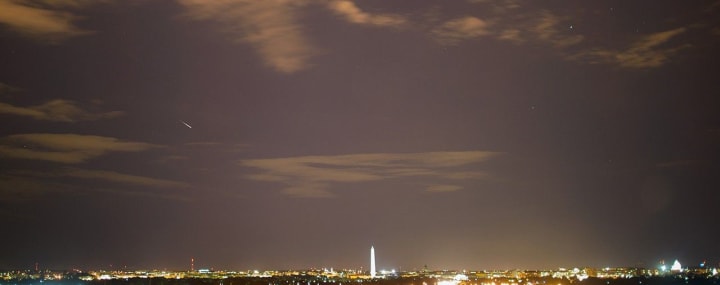
Get away from city lights and find a place with dark skies.
If there's too much light, it will be difficult for your eyes to see the fainter meteors, plus your image will be washed out by the glare of the light. Lowering the brightness of your camera's LCD screen will help your eyes adjust to the darkness. The peak of the 2018 Leonid meteor shower occurs just after the new moon, meaning the waxing gibbous moon will have set by 3 a.m., leaving skywatchers hoping for a moonless sky!
Use a wide-angle lens.
A wide-angle lens will capture more of the sky and give you a higher chance of capturing a meteor in your photo, while a telephoto lens captures a smaller area of the sky. The chances of a meteor passing through that small area are lower.
Manually focus your lens.
At night, the autofocus will have a hard time finding something to focus on. If you set the focus to infinity, you'll be able to get close, but you'll likely have to take a few test images and make some adjustments. With the camera on a tripod, take a test image that lasts a few seconds, and then use the camera's screen to review the image. Zoom in on a star to see how sharp the focus is. If the stars look like blurry spots, make small adjustments to the focus and take another test image.
Repeat until you're happy with the result.
If your camera has a zoomable electronic viewfinder or a live view option, you may be able to zoom in on a star and focus without having to take a test image.
Enjoy the show.
Once you’ve adjusted your camera settings, capturing the perfect photo is just a matter of timing and luck. The highest number of visible meteors per hour occurs in the hours after midnight and before dawn. Set up your camera next to a lounge chair or blanket to witness the wonder of a meteor shower for yourself—and with a little luck, you’ll take home some envy-inducing photos, too!
Thanks for reading!
About the Creator
Ahamed Thousif
🌟 Welcome to the realm of exploration, where communities come alive through the power of words! 📚✨ Join me as we embark on a journey to discover the vibrant tapestry of stories and Poems.
VISIT - "MY FOOD BLOG"
Keep reading
More stories from Ahamed Thousif and writers in Earth and other communities.
The World's Largest Surviving Lizard Species
The world is home to an amazing diversity of lizards, excluding the lounge lizard. These natural performers perform in a variety of settings and waters while dressed in odd and vibrant garments. They use their dazzling display to frighten or draw visitors to the woodlands. The most terrifying prowl the planet like resurrected dinosaurs. 🐉🐉🦎🐊
By Ahamed Thousif3 years ago in Earth



Comments (1)
Hey, just wanna let you know that this is more suitable to be posted in the Photography community 😊