
How to Ensure Quality and Soil Improvement with Straw Charcoal Making Machine
Turn Agricultural Straw into Biochar
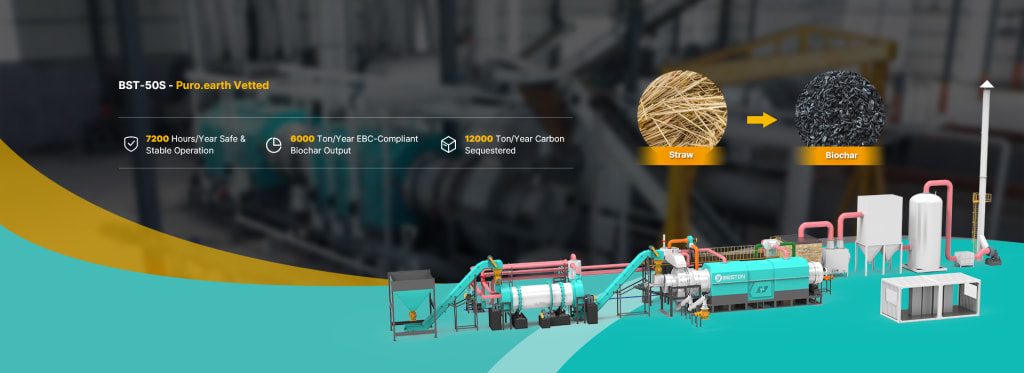
Every year, millions of tons of agricultural straw—from crops like rice, wheat, corn, and others—are either burned in fields or left to decompose, releasing greenhouse gases and wasting a valuable resource. Enter biochar: a carbon-rich material created by heating organic matter (like straw) in low-oxygen conditions. It's known for its ability to lock away carbon, improve soil health, and even capture pollutants. But turning straw into high-quality biochar isn’t just about burning it—it requires precision, the right tools, and an understanding of how quality directly impacts soil outcomes. At the heart of this process is the straw charcoal making machine, a game-changer for farmers, eco-entrepreneurs, and climate advocates alike. Let’s dive into how this technology can help maximize the benefits of biochar.
Why Biochar Quality Matters (and How Straw Affects It)
Biochar's value depends on three key characteristics: carbon stability, porosity, and a contaminant-free composition. Low-quality biochar—such as undercooked, ash-heavy, or heavy-metal-laden biochar—fails to deliver the expected results. For soil, poor biochar could even harm fertility by altering pH levels drastically or introducing toxins.
Straw itself can be quite variable. While it’s rich in cellulose and lignin (which are great for carbon retention), its moisture content, nutrient levels (e.g., potassium in rice straw, silica in wheat straw), and potential contaminants (like pesticides or heavy metals from the soil) can skew results if not carefully managed. This is where the straw charcoal making machine steps in: it standardizes the process, reducing human error and ensuring consistency.
The Role of Straw Charcoal Making Machines in Quality Control
Modern straw charcoal making machines are far more advanced than traditional kilns. They use controlled pyrolysis (heating without oxygen) to optimize biochar properties. Here's how they maintain quality:
Precision Temperature Control: The temperature during pyrolysis dictates the structure of the biochar. For straw, ideal temperatures range from 300–700°C. Below 300°C, biochar retains too much volatile matter, making it unstable and prone to decomposing in soil. Above 700°C, excessive ash forms, reducing porosity. Advanced machines use sensors and automated systems to keep temperature ranges tightly controlled, ensuring consistent carbonization.
Oxygen Level Management: Even small amounts of oxygen during pyrolysis can trigger combustion, burning off carbon and creating ash instead of biochar. High-end machines seal chambers and manage airflow, keeping oxygen levels below 5%, which is critical for preserving carbon and maximizing pore space.
Contaminant Removal: Some machines integrate filtration systems to capture particulates and volatile organic compounds (VOCs) released during pyrolysis. Additionally, pre-screening the straw for debris (like plastic or metal) and testing for heavy metals (using XRF scanners) ensures the final biochar is safe for soil application.
Beyond Just “Making Biochar”: How to Ensure Soil Improvement
Even high-quality biochar won’t improve soil if misapplied. Here’s how to match biochar production to soil improvement goals:
Match Biochar Traits to Soil Needs: Porosity-rich biochar (produced at temperatures between 500–600°C) improves water retention in sandy soils but may need to be blended with compost in clay soils to avoid drainage issues. Alkaline biochar (made from high-lignin straw like corn stover) can help neutralize acidic soils, while neutral biochar is best for already balanced soils. Soil tests can guide machine settings (e.g., adjusting temperature to modify pH).
Charge Biochar Before Use: Fresh biochar acts like a sponge, absorbing nutrients from the soil before releasing them. “Charging” biochar with compost, manure, or fertilizer (a process called activation) fills its pores and makes nutrients available immediately. Some machines even include activation chambers, streamlining this process.
Mind the Application Rate: Overapplying biochar (e.g., more than 10% by volume) can disrupt soil microbial communities. Start with 2–5% blends, monitor plant growth, and adjust based on results.
Conclusion: Quality Starts with the Right Machine
Turning straw into biochar isn’t magic—it’s science powered by smart technology. A reliable straw charcoal making machine ensures consistent quality, while understanding soil needs transforms biochar from a byproduct into a powerful tool for soil health. As we face climate change and food security challenges, scaling this process is not just about improving farming; it’s about closing the loop between agriculture and sustainability. So, if you're ready to turn straw into soil gold, start by choosing a machine that prioritizes quality. Your land—and the planet—will thank you.
About the Creator
The Fiery Circle: Understanding the Pacific Ring of Fire
The **Pacific Ring of Fire** is not a literal ring of flames, but it is undoubtedly the most geologically volatile region on Earth. Stretching approximately 40,000 kilometers (25,000 miles) in a massive horseshoe shape, it traces the coasts of the Pacific Ocean—from the southern tip of South America, up along the coast of North America, across the Bering Strait, down through Japan, and into Southeast Asia and New Zealand.
By Irshad Abbasi 7 days ago in Earth


Comments
There are no comments for this story
Be the first to respond and start the conversation.