
Imagine life without the internet. Some of us actually remember a time when everything wasn't connected. The idea of living without smartphones, maps, and search engines at our fingertips now feels completely alien. However, our increasing reliance on the online world is profoundly affecting our relationships, sources of information, and the way we interact with each other. Notably, there are even noticeable effects occurring within our brains.
With more and more devices relying on the internet, it's no surprise that worldwide access is continually increasing. In 2016, an estimated 3.5 billion people across the world accessed online services. The top three countries were China with 721 million users, followed by India and then the US with 290 million users. English is by far the most common language used online, followed by Chinese and Spanish.
The reliance on the internet is evidently changing across generations, mainly depending on those who had to adapt to the new technology or those who grew up with it being readily accessible. Generation X Internet users, born between the mid-1960s and early 1980s, logged an average of 110 minutes of mobile internet usage each day. Millennials, born from the early '80s onward and growing up with the internet, logged an average of 185 minutes per day.
Social media and messaging apps have become crucial to how we live our lives and communicate, with more than a billion people regularly using apps like WhatsApp, and even more using platforms such as Facebook and Twitter. As Internet services see increasing use, our behavior is changing as well. Communication through these platforms is more common, leading to a decline in phone calls and text messages. Moreover, the rise of online shopping and services has caused traditional high street stores to decline, reshaping our towns and cities compared to a few decades ago.
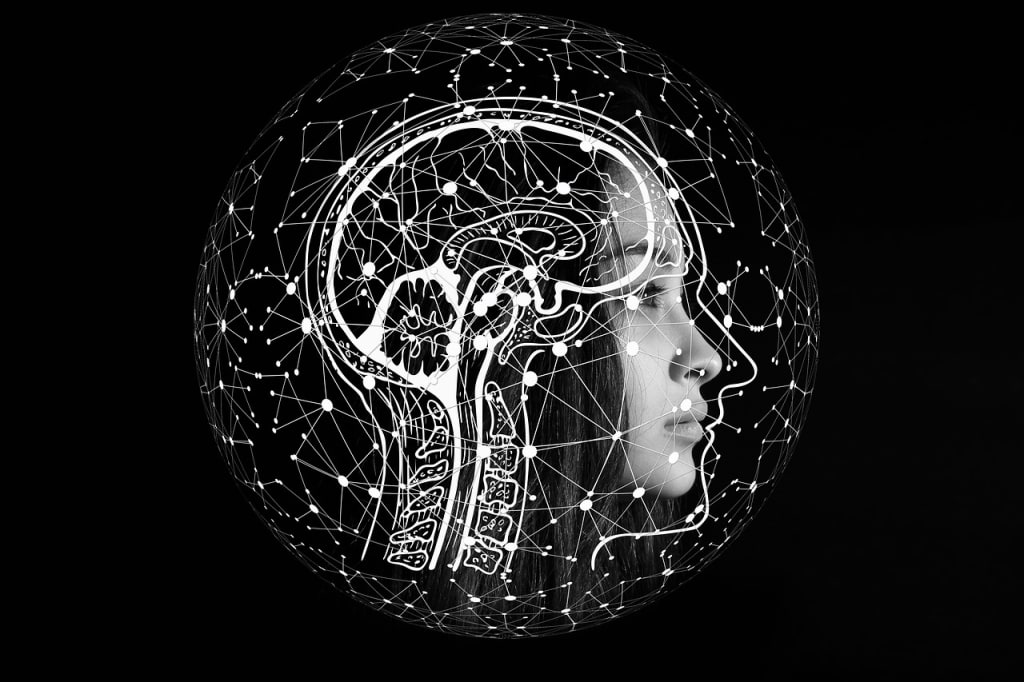
Now, let's consider how all of this is impacting our brains. With an abundance of information at our fingertips, the prevalence of the Internet is changing the way our brains function. Millennials, for example, have been found to be far more forgetful than previous generations due to constant distractions brought about by connectivity. The basic principle behind memory is repetition and thoughtful processing, but constant new information hinders this process, resulting in less information being permanently stored.
Furthermore, knowing that information is readily available online makes us less likely to form memories. Previous generations would memorize directions on a map, while now we rely on GPS apps on our phones. The constant addiction to smartphones, the habit of being distracted, and the reduced ability to transition into deeper modes of thinking have all been observed.
Research suggests that the continuous flow of information is leading to a loss of cognitive control, making it harder to determine what's essential to focus on. We are becoming increasingly concerned with new information rather than what truly matters.
Despite the negative effects, technology's influence on our brains is not all bad. Throughout history, inventions have enabled us to focus less on certain tasks, freeing up time for other activities. Just like washing machines reduced the time spent on cleaning clothes, the ability to communicate and find information faster online creates extra mental capacity for other processes.
Nevertheless, it's crucial to reduce screen time to keep our brains more active and malleable. Being aware of how much time we spend on distractions each day and occasionally unplugging can be beneficial.
In conclusion, while the internet has revolutionized the way we live, it's essential to strike a balance in its usage to maintain healthy cognitive function. So, my advice is to keep track of your online time, unplug occasionally, and nurture your mind with varied activities.
About the Creator
Keep reading
More stories from Eloisa Schiroli and writers in Earth and other communities.
The travel tips you need to know!
If you're going on vacation, I'm certain you might have overlooked a few essential items like a crayon or a pillowcase. I have gathered some top-notch travel tips for your ultimate vacation planning. Consider these carefully when deciding on your destination. If you have some flexibility, it's best to avoid traveling in July due to high costs and crowded places. Opt for the shoulder season, like April and May or September and October in Greece, when the weather is still pleasant, but there are fewer tourists, and accommodations are more affordable.
By Eloisa Schiroli2 years ago in Education
Tea of Silence
The snow had covered the hills for days, turning the land into a quiet white world where sound seemed afraid to exist. On the highest of these hills, beneath a dry, leafless tree, a young man sat alone. The tree had long ago lost its strength, its branches thin and broken, but it still stood, as if refusing to disappear. The young man chose this place often, not because it was comfortable, but because it was honest.
By Bilal Mohammadi7 days ago in Earth
Microbiota, microbiome or microflora: how to speak correctly and why it is for health.
You've probably heard the phrase, "We are what we eat." But modern science says more precisely: we are also those who live in us. Until 2016, it was believed that there are many times more bacteria in our body than our own cells. The latest calculations by mathematicians show that we divide the body with our microorganisms by about 50/50: about 30 trillion of our cells versus 38 trillion bacterial ones.
By Yaroslav Gorohov2 days ago in Earth




Comments (1)
Nice advice for sure. Get out and get some sunshine . 🥰🌞