
How terrible is reproductive isolation in nature?
Reproductive isolation isn't scary


The history of life on Earth is 4 billion years old, and countless species have evolved during this long evolutionary history of life. Due to genetic mutation, chromosomal variation, and genetic recombination, the original life has been differentiated into various branches on the path of evolution, resulting in new species and gradually forming a variety of creatures.
In such a wide range of species, there is a common phenomenon that only organisms of the same species can normally reproduce and continue the species; and reproductive isolation between different species. Reproductive isolation means that under natural conditions, different species are either unable to mate or are unable to produce offspring after mating, or the offspring that are born are unable to reproduce properly. For example, although a horse and a donkey can give birth to a mule, the mule is incapable of reproduction.
Reproductive isolation exists between all species, whether human or animal. Reproductive isolation prevents the exchange of genes between different species, ensuring the stability and diversity of the species. So, why can't different species combine? Why do some people say that reproductive isolation is terrible? Is there reproductive isolation between humans and all living things?
Why do some people say reproductive isolation is scary
Most of the species are very different from each other in many aspects, such as physiology, geographic distribution, and behavior. It is obvious that mating between species in this case is impossible, and reproductive isolation is created before fertilization.
And some species can mate with each other behaviorally, but due to chromosomal differences, it will result in the sperm and eggs of both not being able to combine to form fertilized eggs, and will not be able to produce offspring.
And two species with close kinship and high similarity, due to similar chromosome number, chromosome structure, chromosome shape, and size, crossbreeding under artificial intervention, there is a certain chance to produce hybrid species. However, even if the hybrid offspring can be born successfully, the hybridization leads to genetic defects that make their survival rate low, and they can no longer continue to mate to produce new offspring. This type of situation is reproductive isolation after fertilization, and the offspring produced will be hybrid sterility, hybrid decay, or even hybrid non-viability. This is perhaps the scary part of reproductive isolation.
For example, the combination of horse and donkey produces a mule that grows up healthy, but the mule is infertile. This is because the horse's chromosomes are 64, while the donkey's chromosomes are 62, even if the combination of horse and donkey can produce offspring "mule", but the number of chromosomes of the mule is only 63, and if the number of chromosomes is odd, the germ cells can not carry out normal mitosis, there is no way to reproduce the next generation, and the combination of horse and donkey process It is also very difficult to combine horse and donkey, and the success rate is low, so until now mule has not formed its independent species.
For example, male lions and female tigers can crossbreed to give birth to lion-tiger beasts; male tigers and female lions can crossbreed to produce tiger-lion beasts. But even in captivity, the successful conception rate of lions and tigers is only 1% to 2%, and even successful conception survival rate is extremely low, there will be low immunity, disease, and early death of the problem. Because of genetic defects, lions and tigers are often too large and overwhelming; tigers and lions are smaller but have more genetic defects.
From the genetic level, both lions and tigers have 38 chromosomes, and the offspring of these two crosses also have 38 chromosomes, so lions and tigers are fertile. However, the chromosome match between lions and tigers is not high, resulting in unstable genetic traits in the offspring lions and tigers, so there will be low immunity and a short life span. Moreover, both male lions and tigers are not fertile, and only female individuals have some fertility, thus occasionally producing hybrid second-generation lions and tigers (father: lion, mother: lion and tiger) or tigers and tigers (father: tiger, mother: lion and tiger), but the second-generation beasts that give birth have genetic defects and have a short life span and cannot give birth. Therefore, since the offspring born to lions and tigers are also not fertile, there is also reproductive isolation between the two.
The next generation of any cross-species breeding is either physically defective or unable to reproduce offspring, and humans are currently unable to break this boundary.
Is there reproductive isolation between humans and all living things?
All humans currently existing in the world, whether black, white, yellow, or other kinds of skin color, belong to the same species, and the only species existing under the genus Homo sapiens.
Humans and chimpanzees belong to the same primate family Hominid, a genus of humans and a genus of chimpanzees, both evolved separately on the path of evolution only about 6 million years ago.
In the 1820s, before the discovery of genes, Soviet biologist Ila Ivan tried to secretly conduct "human-ape hybrid" experiments at the Soviet Summit ape breeding base, wanting to try to remove sperm from chimpanzees, and through artificial insemination, making chimpanzee sperm and human female The volunteers were then kept in strict isolation after the experiment. However, for a variety of reasons, the experiment did not go ahead and ended in vain!

Such an experiment not only violates the biological laws of nature, but is also ethically and morally intolerable. The reason why Ivan was able to carry out such crazy research is rumored to be because the Soviet Union at that time wanted to obtain a group of strong and controllable "soldiers" like apes, to improve their combat power and secure their "great power status". So it was hoped that through "human-ape hybridization", a new species of "ape-man" would be created that had both human intelligence and the strong physique of a chimpanzee.
However, we now know that, from a genetic point of view, although the two species have a genetic similarity of up to 99%, humans have 46 chromosomes, and chimpanzees have 48 chromosomes, it is conceivable that if they can mate, even if they can produce offspring, it is also a hybrid with 47 chromosomes, chromosomes are odd, so do not have the ability to reproduce. So there reproductive isolation between humans and chimpanzees is obvious.
And in the process of human evolution, a human genus in addition to our homo sapiens, there have been very many human species, such as Neanderthals, Slovenians, Heidelberg, etc.. Some of these human species had existed on Earth at the same time as Homo sapiens for some time, and there was a certain overlap of living space. At that time, the reproductive isolation between Homo sapiens and other species had not been fully formed.
The results of genetic sequencing show that, so far, the majority of European and Asian people still have about 1% to 2% of the genes from Neanderthals. Although the Neanderthals have been extinct for a long time, the influence of this part of the gene on modern man is difficult to remove. Some modern research, that many modern human diseases, such as depression, type 2 diabetes, smoking more addictive, obesity, and other health problems, are related to the Neanderthal genes left in our bodies.
Conclusion
The purpose of reproductive isolation is to retain good genes so that the offspring of each species can survive and develop more healthily and stably and this natural protection mechanism guarantees genetic stability and diversity. Imagine if there was no reproductive isolation among all species, the world would be in chaos, and all species could mate with each other, which would lead to a series of problems and break the biological chain. In this way, reproductive isolation is not terrible, no reproductive isolation is really "terrible".
About the Creator
Baudamolova
Science is the graveyard of buried faded the various ideas。
Keep reading
More stories from Baudamolova and writers in Earth and other communities.
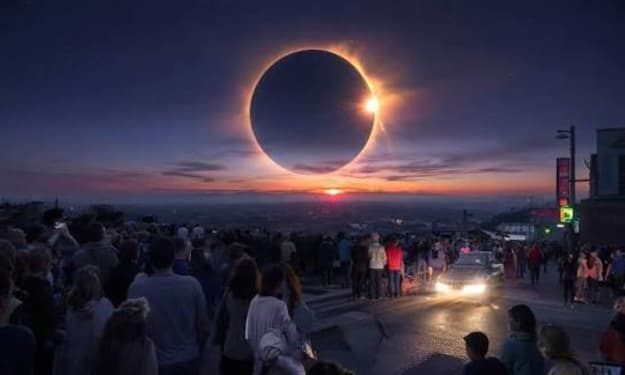
Day Will Turn to Night: Astronomers Officially Confirm the Date of the Longest Solar Eclipse of the Century
For stargazers, astronomers, and casual skywatchers alike, 2026 promises an astronomical event that will be remembered for a lifetime. Scientists have officially confirmed the date of the longest solar eclipse of the 21st century, a celestial phenomenon that will turn day into night for several minutes across parts of the globe. The announcement has sent excitement rippling through the scientific community and among enthusiasts who have long awaited a solar spectacle of this magnitude. The Science Behind the Eclipse A solar eclipse occurs when the Moon passes between the Earth and the Sun, casting a shadow on our planet and temporarily blocking the Sun’s light. While solar eclipses happen somewhere on Earth approximately every 18 months, total eclipses—where the Sun is completely obscured by the Moon—are far less common. What sets the 2026 eclipse apart is its duration. Astronomers predict that the eclipse will last for over six minutes in its longest phase, making it the longest total solar eclipse of the century. The phenomenon is a result of the precise alignment of the Sun, Moon, and Earth, as well as the Moon’s elliptical orbit, which causes slight variations in apparent size. Dr. Elena Morales, an astrophysicist at the European Southern Observatory, explains: "This eclipse is remarkable not just for its length but for its visibility. For several regions, the Sun will disappear completely, creating a surreal twilight in the middle of the day. It's an excellent opportunity to study the Sun’s corona, which is usually obscured by its brightness." Where and When to Watch The path of totality—the narrow band where the eclipse will be fully visible—stretches across several countries, including parts of the Arctic, Greenland, Iceland, and Spain. Millions of people living along this corridor will experience the full majesty of the eclipse, while a partial eclipse will be visible across much of Europe, northern Africa, and North America. Astronomers recommend planning travel in advance, as areas within the path of totality are expected to see a significant influx of visitors. Hotels, camping grounds, and viewing points are already reporting high demand, as enthusiasts from around the world seek to witness the once-in-a-lifetime event. Safety First: Protecting Your Eyes Viewing a solar eclipse can be dangerous if proper precautions are not taken. Staring directly at the Sun without specialized glasses can cause permanent eye damage. Experts emphasize the use of ISO-certified eclipse glasses or solar viewers for safe observation. Pinhole projectors, telescopes equipped with solar filters, and projection methods can also provide safe and magnified views of the eclipse. Many educational institutions and astronomical societies are planning public viewing events, combining safety with expert commentary to enhance the experience for attendees. Cultural and Scientific Significance Throughout history, solar eclipses have held deep cultural significance. Ancient civilizations often interpreted eclipses as omens or messages from the gods. Today, eclipses continue to captivate human imagination, blending scientific intrigue with awe-inspiring natural beauty. From a scientific perspective, total solar eclipses offer rare opportunities to study the Sun’s outer atmosphere, the corona, which is invisible during regular daylight. Researchers can observe solar flares, prominences, and other phenomena, gaining insights that contribute to our understanding of solar physics, space weather, and even the impact of solar activity on Earth’s climate and satellite communications. Preparing for the Experience For those planning to witness the eclipse, preparation is key. Many enthusiasts are setting up travel plans, packing eclipse glasses, cameras, and telescopes, and coordinating with local astronomy clubs for guided viewing. Timing is crucial—the totality phase, though extended in 2026, still lasts just a few minutes, making precise observation essential for both enjoyment and scientific study. Communities along the path of totality are also preparing for the influx of visitors. Local authorities are coordinating traffic management, accommodation, and public safety measures to ensure that the event remains enjoyable and safe for everyone involved. A Rare and Awe-Inspiring Event The 2026 solar eclipse is more than just a scientific event; it is a once-in-a-generation experience that reminds humanity of the vastness and beauty of the cosmos. For a brief moment, day will turn to night, and millions of people across the globe will share in the wonder of the universe’s intricate dance. Whether you are a professional astronomer or a curious skywatcher, this eclipse offers an unforgettable spectacle. It’s a moment to pause, look up, and marvel at the universe—a reminder that even in our modern, digital age, the natural world continues to inspire awe and wonder. Prepare your glasses, mark your calendars, and get ready for the longest solar eclipse of the century. For those lucky enough to witness it, it will be a memory etched in time, a celestial marvel that will be talked about for decades to come.
By Fiazahmedbrohi 5 days ago in Earth
United States Lawn Mowers Market Size and Forecast 2025–2033
The United States Lawn Mowers Market is expected to reach US$ 15.91 billion by 2033, rising from US$ 9.64 billion in 2024, registering a CAGR of 5.73% during 2025–2033. This strong growth trajectory reflects changing lifestyles, increased spending on home improvement, and rapid technological innovation across outdoor equipment. From battery-powered walk-behind models to autonomous robotic mowers guided by GPS and artificial intelligence, the industry is undergoing a structural shift toward efficiency, sustainability, and user convenience.
By Renub Research6 days ago in Earth
Miss Persephone's Manual to a Seemingly Ordinary Life
Miss Persephone was found at the dining table, her blue eyes swollen, her tears arriving and retreating like the tides of the ocean. Earlier that day, her family had visited her in the retirement home where she had lived for eight years. It was her eightieth birthday.
By Imola Tótha day ago in Fiction



Comments
There are no comments for this story
Be the first to respond and start the conversation.