
How Pyrolysis is Turning Plastic Waste into a Circular Economy
Beyond the Landfill

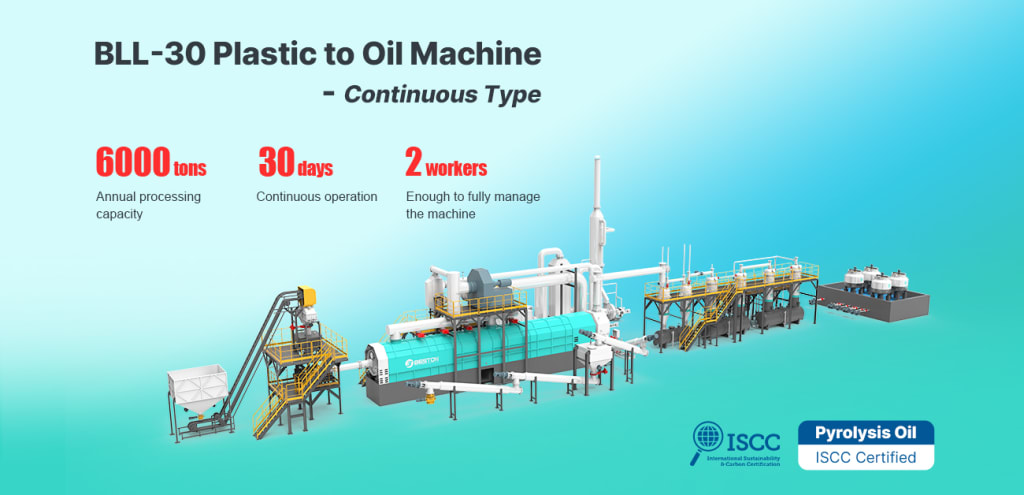
We are drowning in plastic. Images of ocean gyres choked with debris and landfills swelling with single-use packaging have become the stark symbols of our modern consumption. While reduction and reuse are the undisputed heroes of the sustainability movement, a sophisticated thermal technology is emerging from the shadows, not as a silver bullet, but as a critical player in closing the loop: plastic-to-oil pyrolysis.
Forget the simplistic idea of just melting plastic into a crude substance. Advanced pyrolysis is a precise and controlled process of thermal decomposition in the absence of oxygen. In specially designed reactors, shredded plastic waste is heated to temperatures between 400-600°C. Without oxygen to fuel combustion, the long-chain polymer molecules of plastic don’t burn. Instead, they vibrate and break apart into smaller molecules, vaporizing into a synthetic gas. These gases are then condensed through a sophisticated cooling system, yielding a range of valuable products.
The output isn't just one homogenous oil. A modern plant produces a suite of hydrocarbons:
- Pyrolysis Oil: A synthetic crude oil that can be further refined into diesel, gasoline, or even serve as feedstock for new plastics.
- Syngas: A combustible mixture of hydrogen, methane, and carbon monoxide, often used to power the pyrolysis reactor itself, making the process increasingly energy self-sufficient.
- Char: A solid residue with potential applications as a carbon black substitute or as a reinforcing agent in new products.
The true innovation lies not just in the process, but in its potential to redefine "waste." The linear "take-make-dispose" model is breaking. Pyrolysis offers a pathway to a circular economy, where plastic waste is not an endpoint but a feedstock. Imagine a future where a discarded water bottle, through pyrolysis, becomes the diesel fuel that powers the collection truck for the next round of recycling—a powerful, almost poetic, closed loop.
However, the road is not without its bumps. Critics rightly point out that converting plastic back to oil creates a fossil fuel, which, when burned, still emits carbon. This is a valid concern. The key is to view pyrolysis oil not as a destination fuel, but as a transitional and circular feedstock. Its highest and best use is to be cracked back into the monomers for new, virgin-quality plastics, drastically reducing our need to extract new crude oil from the ground.
The other major challenge is feedstock contamination. Food residues, PVC plastics, and other impurities can hinder the process and contaminate the output. This is where the story gets even more interesting. The success of pyrolysis is inextricably linked to the success of upstream sorting and washing innovations. AI-powered sorting robots and advanced chemical recycling are becoming its essential partners, creating a symbiotic ecosystem for waste management.
The narrative around plastic-to-oil is shifting. It is no longer just a novel waste disposal method; it is a crucial conversion technology for a world struggling with its plastic legacy. It doesn't absolve us of our responsibility to reduce consumption, but it provides a powerful tool to manage the waste that already exists and is yet to be created. By transforming a pervasive pollutant into a valuable resource, pyrolysis is moving us beyond the landfill and towards a more circular, and smarter, future.
In conclusion, converting plastic waste into oil represents a significant breakthrough in both waste management and energy production. It offers a cleaner, more sustainable way to deal with plastic pollution while creating economic opportunities. With continued development and investment, plastic to oil machine has the potential to play a crucial role in solving two of the world’s biggest challenges: waste management and the transition to renewable energy.
About the Creator
Bestonpyrolysis
Engaged in waste plastic/tyre/rubber recycling, oil sludge treatment, biomass recycling, sewage sludge management and paper recycling…
https://bestonpyrolysisplant.com/
Keep reading
More stories from Bestonpyrolysis and writers in Earth and other communities.
Turning Plastic Waste into Fuel: The Role of Plastic Pyrolysis Oil
The world is facing an ever-growing plastic waste crisis. With millions of tons of plastic ending up in landfills, oceans, and waterways every year, the environmental impact is undeniable. Traditional waste management methods are no longer sufficient to tackle this global issue, which has led to the rise of innovative technologies that can recycle plastic waste into valuable resources.
By Bestonpyrolysis6 months ago in Earth
Nuclear Transmutation: The Accidental Dream of Making Gold
Picture a laboratory humming with quiet intensity, banks of instruments blinking in the low light, and somewhere inside a shielded reactor chamber, something almost magical is happening. An element is changing. One thing is becoming another. What was mercury is now, atom by atom, becoming gold.
By CurlsAndCommas2 days ago in Earth
Hottest in the Office
Dear Rafi, You’re very distracting to work around. For the first second I saw you the other day, I thought you were some type of executive. It took a moment to realize no, you were just the new guy, dressed up for the job he wants. Be still, my heart.
By Gabriel Shames2 days ago in Pride



Comments
There are no comments for this story
Be the first to respond and start the conversation.