
How high you can leap on various planets
Gravitational overview of the Solar system

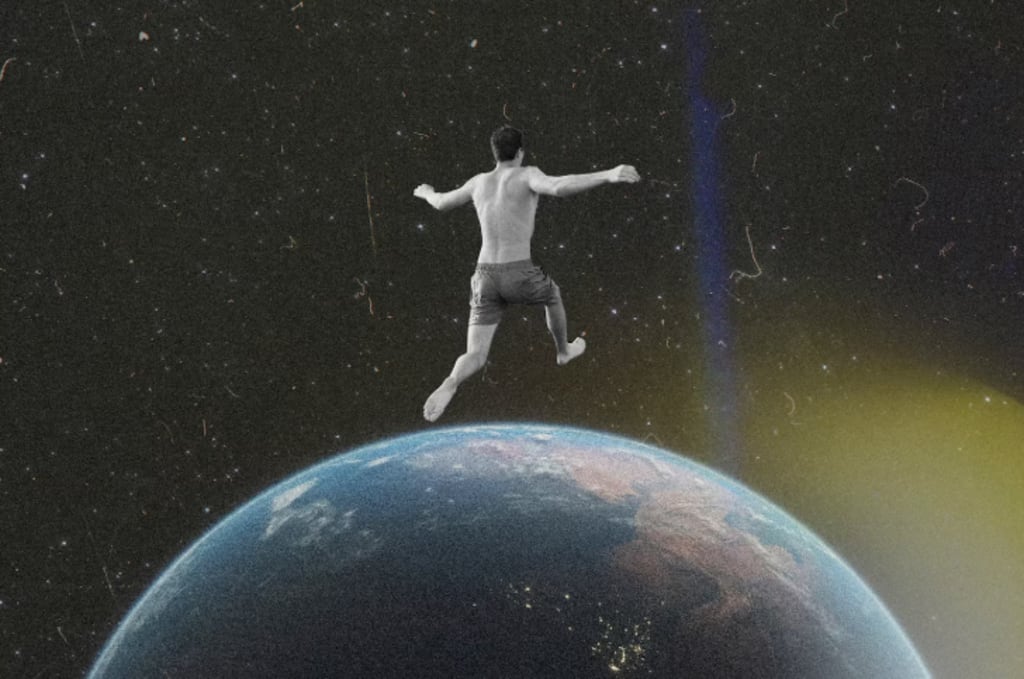
Gravity is what keeps your feet firmly planted on the ground. On Earth, the average person can jump straight up to about one and a half feet. But what if we had to live on another planet, say Venus or Saturn? Let’s explore the challenges we’d face there.
Let’s start with Mercury, the closest planet to the Sun. Mercury’s gravity is less than half of Earth’s, so you could jump nearly four feet high—if you could withstand the heat. On the sunlit side, temperatures soar to 800°F, as if you were standing on molten lava cascading down a volcano. At night, the heat vanishes, plunging to a bone-chilling -280°F. Patience would also be essential, as one day on Mercury lasts 176 Earth days.
Next, we head to an even less hospitable place: Venus. From there, you might catch a glimpse of Earth—if not for the swirling, opaque clouds overhead. These clouds create an extreme greenhouse effect and immense atmospheric pressure. On Venus, you’d only manage a jump of 1.7 feet, as its mass and size are close to Earth’s, though slightly smaller. The ever-present oven-like heat would make things unbearable, and any rainfall would be acid rain, as the clouds are composed of sulfuric acid.
Let’s hop to our Moon, also called Luna. Here, gravity is less than one-fifth of Earth’s, so you could leap nearly nine feet high, staying airborne for several seconds before touching the ground. It’s hard to believe that this barren rock influences Earth’s tides. If you stayed on the Moon for millions of years, you’d notice it drifting farther away from Earth.
Our next stop is Mars, the Red Planet. Here, you could leap about four feet high—if only there were breathable air. Mars has an atmosphere, but it’s much thinner than Earth’s. Stay until sunset, and you’ll witness a beautiful blue sky tinged with orange as the Sun sets. In the distance, you might see Olympus Mons, the tallest mountain in the solar system. It’s three times taller than Everest and also a dormant volcano.
Now, we jump to Phobos, one of Mars’ two tiny moons. Be cautious about leaping here—its gravity is so weak that you might not return to the surface. Phobos is small, more like an asteroid than a traditional moon. One day, Mars will pull it apart, creating a ring system similar to Saturn’s.
Quickly, let’s move on to Jupiter. As a gas giant, Jupiter lacks a solid surface, so jumping is meaningless here. If you could attempt it, you’d only rise about six inches due to its immense gravity. Jupiter is over ten times larger and 300 times more massive than Earth, giving it an incredible gravitational pull. Its iconic Great Red Spot is a massive storm that’s been raging for at least 400 years, large enough to engulf the entire Earth.
Next is Saturn, the second-largest gas giant. Slightly smaller than Jupiter, it could fit nine and a half Earth-sized objects within it, yet it’s far less dense. If Saturn had a solid surface, you’d jump about 1.4 feet—similar to Earth. Saturn’s most famous feature is its stunning rings, made of ice and rock debris from ancient collisions. The planet’s rapid rotation causes it to flatten noticeably at its poles.
Onward to Uranus, a distant ice giant. Like Jupiter and Saturn, it lacks a solid surface, but its atmosphere and mantle contain more ice. You’d manage a jump of about 1.7 feet here. Uranus holds the record for the coldest temperatures in the solar system: -377°F, colder than liquid nitrogen.
Continuing our journey, we arrive at Neptune, Uranus’s twin. Slightly smaller but denser, Neptune’s stronger gravity means you’d only jump 1.3 feet. A year on Neptune lasts nearly 165 Earth years, as it’s 30 times farther from the Sun than Earth.
Finally, we reach Pluto, the solitary and distant dwarf planet. Once considered the ninth planet, Pluto’s weaker gravity would let you leap over 25 feet high. Too small to qualify as a full-fledged planet, it’s smaller than many moons, including ours. Its thin atmosphere appears and disappears depending on its proximity to the Sun.
And as the universe seems to remind us: it doesn’t really care what we label as a planet or moon—it’s busy with far more important things. 😊
About the Creator
Gothic Gardening: Embracing Drama with Dark Foliage and Flowers
There is a garden aesthetic that rejects the bright and cheerful in favor of the mysterious and dramatic. It embraces shadows rather than sunlight, depth rather than dazzle. It finds beauty in darkness—in leaves the color of aged wine, in flowers so deep purple they appear black, in forms that suggest ancient forests and moonlit mysteries.
By Emma Wallace3 days ago in Earth



Comments