
How Drones are Revolutionizing Industries from Agriculture to Filmmaking
The Future of Drones: Expanding Applications and Potential Impacts
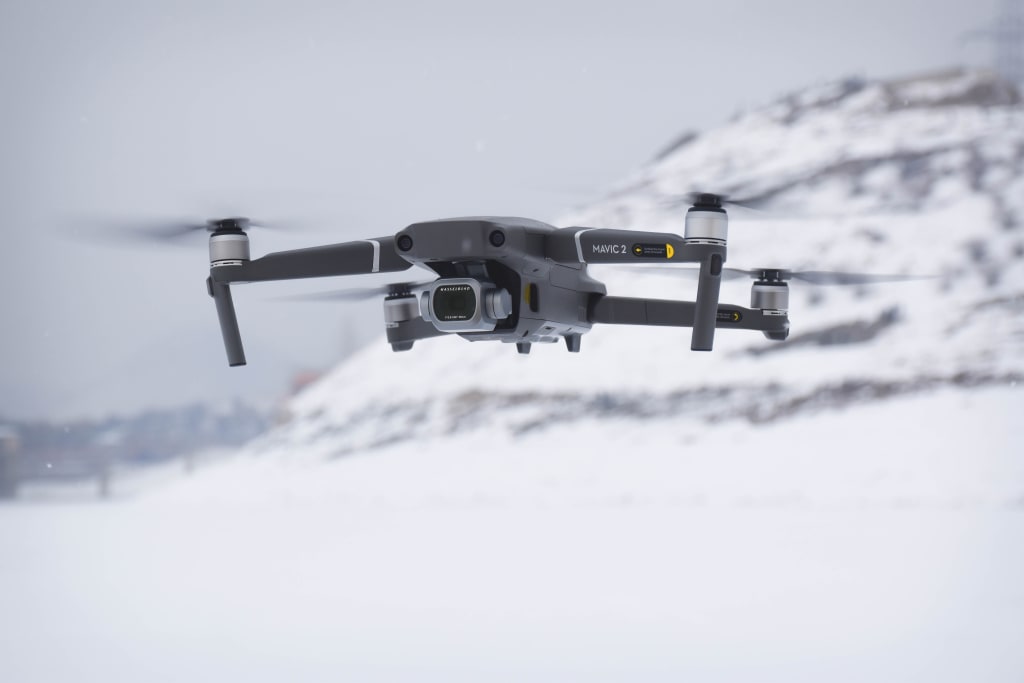
In recent years, drones have emerged as one of the most remarkable technological advancements with the potential to revolutionize various industries. Originally developed for military purposes, drones, also known as unmanned aerial vehicles (UAVs), have found their way into diverse sectors, from agriculture to filmmaking. These versatile flying machines offer unique capabilities that are transforming the way tasks are performed, providing unprecedented efficiency, accuracy, and creativity. In this article, we will explore how drones are revolutionizing industries, and delve into their applications in agriculture and filmmaking.
Drones in Agriculture
Traditional farming methods have long relied on manual labor and visual inspections to assess crops, livestock, and land conditions. However, drones have introduced a new era in agriculture, empowering farmers with valuable data and insights to optimize their operations.
a. Crop Monitoring: Drones equipped with high-resolution cameras and infrared sensors can capture detailed images of crops, allowing farmers to monitor plant health, detect diseases, and assess crop yields. These aerial views provide a comprehensive overview of the entire field, enabling early intervention and precise application of fertilizers, pesticides, and water.
b. Precision Agriculture: By utilizing GPS and advanced imaging technology, drones can precisely map and analyze fields, gathering data on soil moisture, nutrient levels, and plant growth. This information helps farmers make data-driven decisions, reducing waste, improving resource allocation, and maximizing productivity.
c. Livestock Management: Drones aid in monitoring and managing livestock by providing real-time aerial surveillance. Farmers can locate animals, detect signs of distress, and identify potential threats to their herds. This technology assists in optimizing grazing patterns, ensuring the welfare of livestock, and enhancing overall farm security.
d. Irrigation Systems: Drones equipped with thermal sensors can identify variations in soil temperature, enabling efficient irrigation management. By detecting areas with excessive or inadequate moisture levels, drones enable farmers to address water distribution issues promptly, resulting in water conservation and improved crop health.
Drones in Filmmaking
The film industry has witnessed a revolutionary transformation with the integration of drones into the filmmaking process. These flying cameras have opened up new horizons for directors and cinematographers, enabling breathtaking shots that were previously unattainable or prohibitively expensive.
a. Aerial Cinematography: Drones equipped with high-quality cameras and stabilizing gimbals provide filmmakers with the ability to capture stunning aerial shots. From sweeping panoramic vistas to dynamic tracking shots, drones allow for creative storytelling and immersive cinematography. This technology has become particularly popular in action sequences, nature documentaries, and epic landscapes.
b. Cost-Effectiveness: Prior to drones, aerial shots required expensive helicopters or cranes, along with a skilled pilot and camera operator. Drones offer a cost-effective alternative, reducing production costs while maintaining high-quality results. Filmmakers can now allocate their budgets more efficiently, enabling smaller productions to achieve impressive visual effects.
c. Flexibility and Maneuverability: Drones are nimble and agile, providing filmmakers with unprecedented flexibility in capturing shots from various angles and heights. They can effortlessly navigate through tight spaces, follow moving subjects, and execute complex flight patterns, allowing directors to unleash their creativity and capture unique perspectives.
d. Safety and Accessibility: Drones have enhanced safety standards in the film industry by eliminating the need for risky stunts or potentially dangerous equipment setups. Moreover, they enable access to remote or hazardous locations, such as rugged terrains, rooftops, or inaccessible landmarks. This accessibility broadens the range of storytelling possibilities and enhances the visual experience for audiences.
Drones have ushered in a new era of possibilities in industries ranging from agriculture to filmmaking. Their ability to capture high-quality data and imagery, along with their versatility, safety, and cost-effectiveness, has revolutionized traditional practices and opened doors to innovation. In agriculture, drones have empowered farmers with valuable insights, enabling precise monitoring, resource management, and increased productivity. In the film industry, drones have transformed the way stories are told, providing filmmakers with unparalleled creative freedom and cost-effective aerial cinematography. As drone technology continues to advance, we can expect further advancements and widespread adoption in a variety of sectors, redefining the boundaries of what is possible in the future.
About the Creator
Keep reading
More stories from Samuel Aballa and writers in Earth and other communities.
The Future of Electric Vehicles: Advancements and Infrastructure Challenges
The automotive industry is undergoing a transformative shift as electric vehicles (EVs) gain momentum and become an integral part of the transportation landscape. With growing concerns about climate change and the need to reduce greenhouse gas emissions, EVs offer a promising solution for a greener and more sustainable future. In this article, we will explore the advancements in electric vehicle technology and the challenges associated with developing the necessary infrastructure to support widespread adoption.
By Samuel Aballa3 years ago in Earth
When the Stars Whispered
The Night Sky Like Never Before I had always been fascinated by astronomy, spending countless nights in my backyard with a modest telescope, charting constellations, tracking planets, and occasionally glimpsing distant galaxies as faint smudges of light against the infinite darkness. But on one crisp night in March 2026, something extraordinary occurred that defied both expectation and explanation, a cosmic phenomenon that no scientific journal could easily classify, and yet it felt intimately personal, as if the universe itself were reaching out to communicate. The sky was unusually clear, the stars sharp and luminous like diamonds scattered across black velvet, and the Milky Way stretched overhead in a ribbon of silvery light that seemed to pulse ever so slightly, a rhythm I hadn’t noticed before.
By The Curious Writerabout 15 hours ago in Earth


Comments
There are no comments for this story
Be the first to respond and start the conversation.