
How dangerous is a submarine submerged underwater when a tsunami occurs? Is it safer than a ship on the surface?
A submarine, as the name implies, is a special ship with the ability to operate underwater.

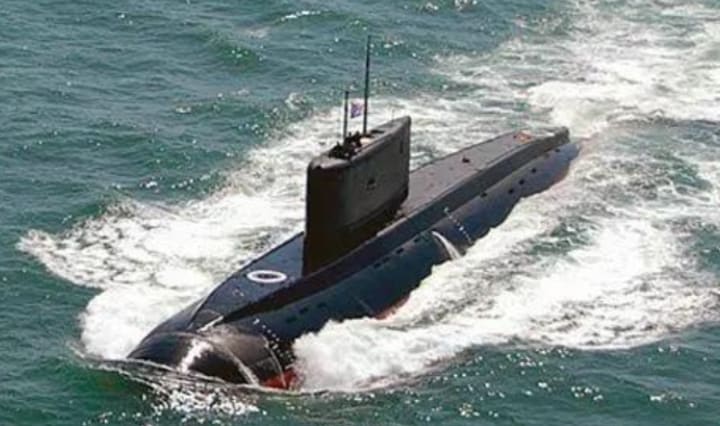
A submarine, as the name implies, is a special ship with the ability to operate underwater. Especially after World War II, with the development of submarine technology, submarines can be submerged for a long time. So how much would a submarine be affected if a tsunami occurred? Would it be more dangerous than a ship on the surface?
For submarines, being submerged is the most important feature that distinguishes them from other surface submarines. In wartime, the submarine's ability to approach a target from underwater and attack from underwater is also the greatest advantage of the submarine.
Early submarines, however, were limited by technology and were at best surface ships that could dive underwater. During World War II, the ventilated submarine was able to stay underwater for a long time with help of a ventilator. After World War II, the time that ordinary conventionally powered submarines could spend underwater had been greatly enhanced. The nuclear-powered submarine, in theory, can even be active underwater indefinitely. Even for conventional-powered submarines, AIP submarines have emerged with the ability to move underwater indefinitely, which is equivalent to quasi-nuclear submarines. So, nowadays, the ability of submarines to move underwater is greatly improved in the past.
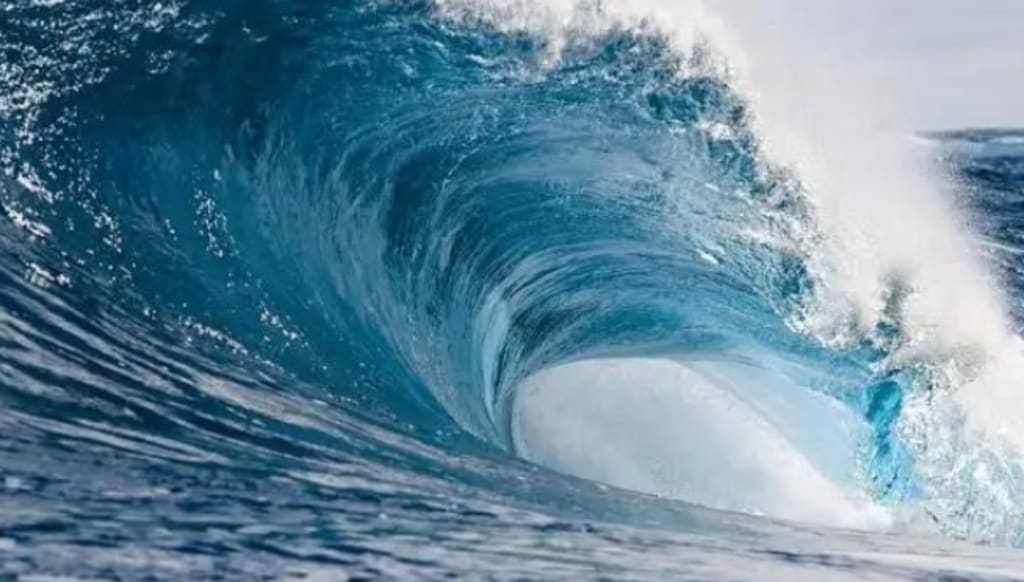
When a submarine is underwater for a long time, it will inevitably encounter various situations, such as tsunamis. A tsunami is a highly destructive wave that is generated by an undersea earthquake, volcanic eruption, submarine landslide or meteorological change. Tsunami waves speed up to 700 ~ 800 km per hour, the wavelength can be hundreds of kilometers, and spread thousands of kilometers of energy loss is also very small. When the tsunami reaches the coast, the wavelength is reduced but the wave height increases dramatically, so the waves formed can be tens of meters high, forming a "wall of water" containing enormous energy.
Tsunamis are mainly controlled by the topography of the seabed, the geometry of the coastline, and the characteristics of the waves. The ice wall of the roaring waves repeats every few minutes or tens of minutes, destroying the embankment and flooding the land with great destructive power.
So what would happen if a submarine was hit by a tsunami while underwater, would it be more dangerous than a surface ship?
This would first depend on where the submarine was at the time of the tsunami. If the submarine happened to be on a surface course when the tsunami occurred, it would be in bad luck. The submarine will be rolled up from the surface by the waves, and then thrown to a height of several dozen meters, and then fall to the shore or fall back into the sea, which can be said to be a disaster for the submarine crew, even if the submarine is not flattened, like steel by the 10,000 tons of hydraulic press, it will also cause serious damage to the various systems on the submarine, at this time, even if there is a living person inside, but also can no longer drive the submarine escape.
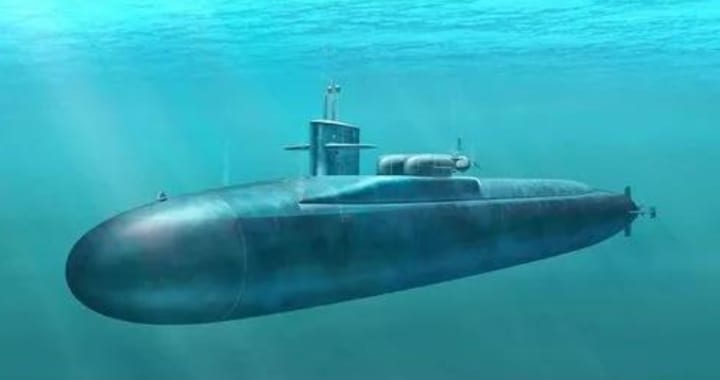
If the tsunami occurs when the submarine is submerged underwater, it will be relatively safe, because the ocean generated after the huge waves are mainly on the surface of the ocean, the submarine diving depth is generally below 300 meters, so a less powerful tsunami will not affect the submarine 300 meters underwater. Because of the general tsunami, the depth of impact on the sea floor is only 50 meters, and the largest rarely exceeds 150 meters. If you have ever had the experience of zapping in the water as a child, you must have a deeper understanding of this. Even if there are waves on the surface of the water, dive down when you can not feel the thin and cold water.
But if the Indonesia kind of super tsunami, as long as the submarine is in the tsunami occurred in the region, sorry, whether it is on the surface or underwater, are dead. Because tsunami is generally caused by undersea earthquakes, 7 earthquakes are equivalent to 32 million tons of TNT explosion when the energy is generated, and only 7 such levels of an undersea earthquake can trigger a tsunami. If the submarine dives underwater with the wave perpendicular, it is likely to be broken by the huge energy of the tsunami. Therefore, it is not always safe for submarines to dive deeper than 50 meters.
In addition, the tsunami caused by the earthquake will cause a huge change in the current of the sea, which will cause a "submarine cliff". The so-called "submarine cliff" is caused by the violent movement of ocean currents, as the earthquake moves ocean currents in different levels of underwater speed differences, most likely to cause the local area flow speed is too fast, some places are too slow, the density of seawater up and down inconsistent, if the submarine in this sudden change in buoyancy environment, it will instantly If the submarine travels in such a sudden change in buoyancy, it will instantly lose control, and the dive depth will increase sharply, just like falling from a cliff into pieces. In addition, tsunamis can also cause landslides and gully impacts on the underwater seabed, and when this happens, even submarines diving 300 meters deep are at the mercy of God.
So, in the final analysis, in the face of nature, the power of man is too small. Even now, technology is so advanced, and the performance of the submarine is so advanced, but if encounter a tsunami, whether on the surface or underwater, whether it is 50 meters underwater in a shallow sea or 300 meters deep underwater, there is no absolute safety, everything, can only be at the mercy of God, each according to the fate of God.
About the Creator
CEA
A bird in the hand is worth two in the bush.
The Wow! Signal
How a 72-second radio burst from deep space shocked SETI scientists and remains unexplained after 47 years On August 15, 1977, at 11:16 PM Eastern time, the Big Ear radio telescope at Ohio State University detected a radio signal from space so powerful, so precisely tuned, and so apparently artificial that astronomer Jerry Ehman, reviewing the computer printout data the next day, circled the signal's alphanumeric designation and wrote "Wow!" in red pen in the margin, giving the transmission its now-famous name and creating what remains the most compelling potential evidence of extraterrestrial intelligence ever detected despite nearly five decades of attempts to find the signal again or explain it through natural phenomena. The signal lasted exactly seventy-two seconds, the maximum time any object could be observed by the Big Ear telescope as Earth's rotation carried that section of sky through the telescope's field of view, and it was detected at a frequency of 1420 megahertz, the exact frequency that hydrogen atoms emit radiation, and this frequency is significant because hydrogen is the most abundant element in the universe and because international agreements prohibit terrestrial radio transmissions at this frequency precisely because scientists believe any intelligent civilization would use this frequency for interstellar communication, making it the logical channel to monitor when searching for alien signals.
By The Curious Writerabout 10 hours ago in Earth


Comments
There are no comments for this story
Be the first to respond and start the conversation.