
How Carbon Forestry Could Shape New Zealand’s Future
Balancing economic growth with environmental responsibility
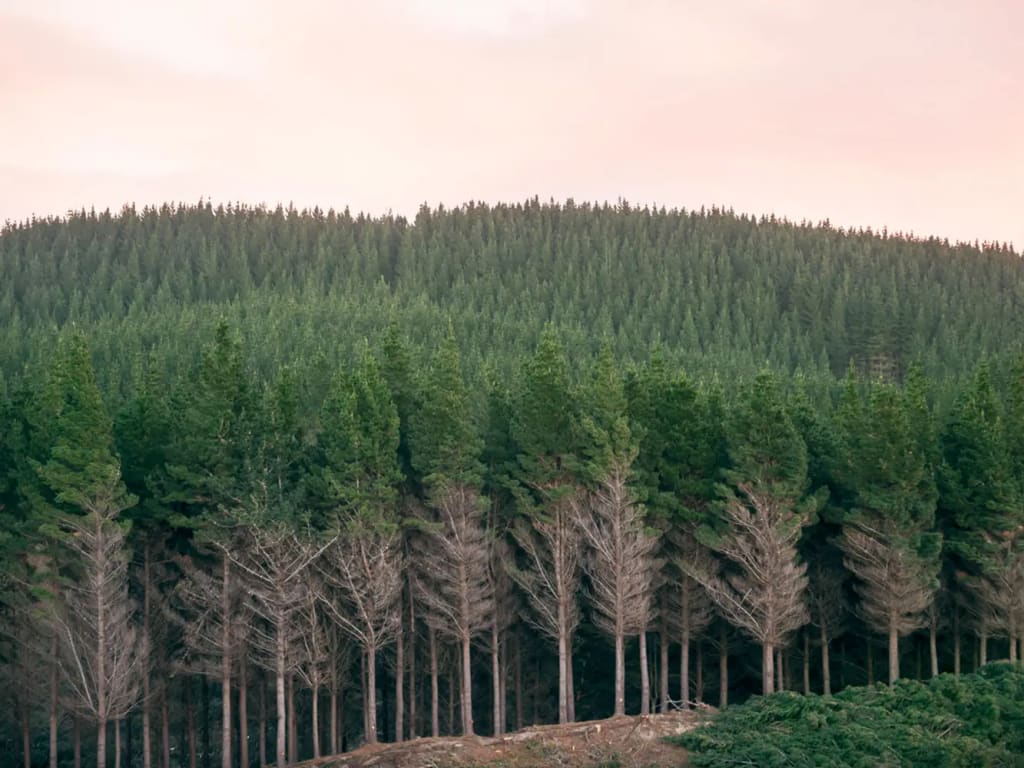
When people talk about climate change, they often picture solar panels, electric cars, or global climate conferences. What many don’t picture is a hillside in the Wairarapa, dotted with young pine trees quietly pulling carbon dioxide out of the atmosphere. Yet this is one of the most powerful tools New Zealand has in its fight against climate change: carbon forestry.
What is Carbon Forestry?
At its simplest, carbon forestry means planting and managing trees to capture carbon and earn carbon credits through New Zealand’s Emissions Trading Scheme (ETS). Those credits can then be sold to companies who need to offset their emissions. For landowners, it’s a way to turn marginal or underperforming land into a source of long-term income. For the planet, it’s a way to reduce greenhouse gases while supporting biodiversity and erosion control.
Why It Matters Now
Over the past decade, New Zealand’s climate commitments have grown stronger, and so has the demand for carbon credits. Prices for New Zealand Units (NZUs) have seen their share of ups and downs, but the overall trend is clear: carbon is now a valuable commodity. That means forestry is no longer just about timber – it’s about climate resilience, economics, and the future of rural communities.
Opportunities for Landowners
For farmers and lifestyle block owners, carbon forestry can offer:
Passive income: Carbon credits provide a financial return even before timber harvests.
Erosion control: Tree planting stabilises steep, erosion-prone slopes common in regions like the Wairarapa and East Coast.
Diversification: Carbon forestry allows landowners to spread risk beyond traditional agriculture.
Contribution to climate goals: Every hectare planted helps New Zealand move closer to its net-zero targets.
The Risks You Can’t Ignore
But carbon forestry isn’t without its challenges. Participating in the ETS comes with strict rules around mapping, reporting, and compliance. Landowners who enter without proper advice risk taking on liabilities they didn’t expect – particularly if they sell their land, as carbon obligations usually transfer to the new owner.
On top of that, policy shifts have made the playing field less predictable. The government recently tightened rules on exotic forests in the permanent category of the ETS, steering new projects toward natives. That’s good for biodiversity, but it also changes the economics of forestry investment.
A Personal Perspective
Forest360 is a forestry management company that has seen first-hand how thoughtful planning transforms carbon forestry from a source of confusion into a long-term opportunity. One Wairarapa landowner they worked with turned a block of erosion-prone hill country into a registered forest that now generates steady carbon credit revenue – while also improving soil stability and water quality downstream. It’s a win-win story they believe more landowners can achieve with the right advice.
The Bigger Picture
Carbon forestry isn’t just about dollars and credits. It’s about reshaping the way people use land in New Zealand. Done well, it can strengthen rural economies, support our climate goals, and leave behind landscapes that are healthier, more diverse, and more resilient.
As climate change accelerates, the choices we make about our land will ripple out for generations. Carbon forestry is one of those choices – and it’s one that might just redefine New Zealand’s future.
About the Creator
Keep reading
More stories from Your NZ Local and writers in Earth and other communities.
Best NZ-Owned Fabric Stores Supporting Local Makers
When it comes to fabric shopping, there’s something special about supporting a local business. It’s not just about the fabric itself – it’s about the story behind it, the creative people who source it, and the makers who bring it to life. Here in Aotearoa, we’re lucky to have a handful of outstanding NZ-owned fabric stores that not only offer incredible ranges but also give back to local communities and craftspeople.
By Your NZ Local7 months ago in Journal
The Universe That Dreams Us
For centuries, humanity believed the universe was expanding. Galaxies drifting farther apart. Space stretching endlessly like an invisible fabric. The theory had been supported by decades of observations, especially from the famous Hubble Space Telescope, which showed distant galaxies moving away from Earth in every direction.
By Abubakar220a day ago in Earth




Comments
There are no comments for this story
Be the first to respond and start the conversation.