
Hope And The Power of Change
Amidst the despair, Luna discovers a glimmer of hope. As she encounters passionate individuals and communities striving to combat climate change, she realizes that collective efforts can make a difference. The story highlights the power of activism, education, and sustainable practices in creating a better future for our planet.

Luna gazed out across the vast expanse of the Arctic, her heart heavy with a mixture of sorrow and despair. The once majestic ice that stretched as far as the eye could see had diminished to mere patches, and the shimmering glaciers that once crowned the horizon had melted away. The world she knew was disappearing, and with it, the hope of a future for her kind.
As Luna stood on the dwindling ice floe, she could almost hear the whispers of her ancestors carried on the frigid wind. They spoke of a time when the Arctic was teeming with life, where polar bears roamed freely and the land echoed with the laughter of their cubs. But now, Luna was alone. The others had succumbed to the harsh reality of a changing climate, leaving her as the sole survivor.
One day, as Luna trudged wearily through the slushy snow, she stumbled upon a group of humans. They were gathered around a makeshift camp, their faces etched with determination and hope. Luna cautiously approached, her instincts wary of these creatures who had played a part in the destruction of her world. But as she observed them, she sensed something different—a spark of compassion and understanding in their eyes.
These humans were activists, fighting for a better future for the planet. They spoke of the urgent need for change, for sustainable practices, and for raising awareness about the consequences of climate change. Luna watched as they held up signs, marched in the streets, and spoke passionately about preserving the environment for future generations.
Their voices resonated deep within Luna's soul. She realized that she wasn't alone in her struggle. These humans, too, felt the weight of responsibility upon their shoulders. They saw the beauty of the natural world slipping away and were determined to do everything in their power to halt its decline.
Luna followed the activists, becoming an emblem of their cause. As she journeyed with them, they shared stories of how they had witnessed the devastating effects of climate change on different parts of the world. They spoke of disappearing rainforests, rising sea levels, and endangered species. Each tale painted a vivid picture of the urgent need for action.
One day, Luna found herself at a conference on climate change, surrounded by people from all walks of life. Scientists, politicians, and ordinary citizens had come together, united by a shared purpose. They discussed strategies, proposed solutions, and debated the best course of action. Luna listened intently, her heart swelling with hope as she realized the collective power these individuals held.
Through education, the activists taught Luna about sustainable practices and the importance of reducing carbon emissions. They encouraged her to share her story, knowing that her presence could inspire others to take action. Luna discovered her voice, and her roars became a rallying cry for change.
Months turned into years, and Luna witnessed the transformation that unfolded. Governments enacted policies to reduce greenhouse gas emissions, communities embraced renewable energy sources, and individuals made conscious choices to reduce their carbon footprint. It wasn't a perfect journey, but it was progress—a glimmer of hope in a world that had seemed so dark.
And then, one fateful day, Luna returned to the Arctic. As she stood on the ice once more, her heart soared with joy. The ice had started to regenerate, and the Arctic landscape was slowly returning to its former glory. The whispers of her ancestors grew louder, carrying a message of gratitude for the collective efforts of humans who had fought alongside her.
Luna knew that the battle was far from over. Climate change was an ongoing challenge, and it required constant vigilance. But as she looked out at the recovering Arctic, she felt a renewed sense of purpose. The power of change was within reach, and hope, once buried deep within her heart, had bloss
omed into something beautiful.
Luna let out a triumphant roar, echoing across the ice. It was a roar filled with gratitude, love, and determination—a roar that called upon all who heard it to join the fight. The journey was long and arduous, but together, with hope as their guiding light, they could create a future where the whispers of the forest would never be silenced, and all creatures could thrive in harmony with nature.
Individual and Government Responsibility in Addressing Climate Change
Climate change is one of the most pressing challenges of our time, and addressing it requires collective action from both individuals and governments. Each has a distinct role to play in mitigating the impacts of climate change and creating a sustainable future for the planet.
Individual Responsibility:
Individuals have a crucial role in combatting climate change through their everyday choices and actions. Here are some key areas where individual responsibility comes into play:
1. Sustainable Lifestyle Choices: Individuals can adopt sustainable practices in their daily lives. This includes reducing energy consumption by using energy-efficient appliances, conserving water, practicing recycling and waste reduction, and opting for sustainable transportation options like walking, cycling, or using public transport. By making conscious choices, individuals can reduce their carbon footprint and contribute to mitigating climate change.
2. Consumer Choices: By supporting eco-friendly products and services, individuals can drive market demand for sustainable solutions. Opting for renewable energy providers, buying locally produced goods to reduce carbon emissions from transportation, and choosing products with minimal packaging or made from recycled materials are examples of responsible consumer choices that can make a positive impact on the environment.
3. Education and Awareness: Individuals can educate themselves about climate change and spread awareness within their communities. By sharing knowledge about the causes and consequences of climate change, individuals can inspire others to take action, promoting a culture of environmental consciousness and collective responsibility.
4. Activism and Advocacy: Engaging in climate activism and advocacy is another avenue for individuals to contribute. Participating in protests, signing petitions, supporting environmental organizations, and contacting elected representatives to demand climate action can help raise awareness and push for systemic changes.
Government Responsibility:
Governments have a crucial role in shaping policies, regulations, and frameworks that can drive systemic change. Here are some key areas where government responsibility comes into play:
1. Policy Development: Governments need to create comprehensive policies and regulations that prioritize climate action. This includes setting targets for reducing greenhouse gas emissions, incentivizing renewable energy adoption, promoting sustainable land use practices, and encouraging sustainable transportation options. Governments can also implement measures to protect vulnerable communities from the impacts of climate change and promote climate resilience.
2. Investment in Clean Technologies: Governments can allocate resources and invest in research and development of clean technologies. Supporting the growth of renewable energy sources such as solar, wind, and hydroelectric power, as well as promoting energy storage solutions and sustainable agriculture practices, can accelerate the transition to a low-carbon economy.
3. International Cooperation: Climate change is a global issue that requires international cooperation. Governments must actively engage in international climate negotiations, such as the United Nations Framework Convention on Climate Change (UNFCCC), and work collaboratively to develop and implement effective strategies to reduce emissions and adapt to the changing climate. By fostering global partnerships, governments can share knowledge, resources, and best practices to address climate change collectively.
4. Economic Incentives and Regulation: Governments can use economic incentives and regulations to encourage businesses and industries to adopt sustainable practices. This includes implementing carbon pricing mechanisms, providing subsidies and tax incentives for renewable energy projects, and enforcing stricter environmental standards. By creating a favorable policy environment, governments can drive the transition to a green economy and motivate businesses to prioritize sustainability.
Both individual and government responsibility are essential in addressing climate change. While individuals can make a difference through their choices, advocacy, and everyday actions, governments have the power to shape policies, drive systemic change, and provide the necessary infrastructure for a sustainable future. It is through the collective efforts of individuals and governments working in tandem that we can effectively tackle the challenges posed by climate change and safeguard the planet for future generations.
About the Creator
Philippines Orphan Drugs Market: Rare Disease Treatment, Access & Healthcare Policy
Philippines Orphan Drugs Market Overview The Philippines orphan drugs market is developing gradually as the country strengthens its healthcare infrastructure and improves access to treatment for rare diseases. The Philippines orphan drugs market size reached USD 1.07 Billion in 2024. Looking forward, the market is expected to reach USD 2.36 Billion by 2033, exhibiting a growth rate (CAGR) of 8.26% during 2025-2033. Although relatively small in absolute size, the market plays an important role in addressing unmet medical needs and supporting long-term healthcare sustainability.
By Manisha Dixit5 days ago in Earth
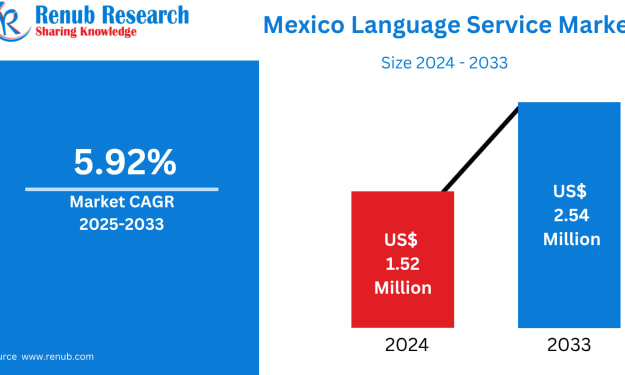
Mexico Language Service Market Size to Reach US$ 2.54 Million by 2033, Driven by Global Trade and Digital Expansion
Mexico Language Service Market Overview The Mexico Language Service Market is undergoing steady and transformative growth, fueled by the country’s expanding international trade, rapid digitalization, and rising need for multilingual communication across industries. According to Renub Research, the market was valued at US$ 1.52 million in 2024 and is expected to reach US$ 2.54 million by 2033, growing at a CAGR of 5.92% from 2025 to 2033.
By jaiklin Fanandish3 days ago in Earth
🅼🅸🅳🅽🅸🅶🅷🆃 🆂🅽🅰🅲🅺🆂
"It's 10 in Tuscon! We all know what that means... It's Time for Midnight Snacks with your man, Gerald Gee! Ready to spend the night together? Me too! I'm full of snacks and can't wait to regurgitate them all back into your hungry ears. Crack a brew! Pop some corn! Anything to get ready for one hell of a show where the talk maybe cheap but the words cut deep...
By Lamar Wiggins4 days ago in Fiction



Comments
There are no comments for this story
Be the first to respond and start the conversation.