
Harmonizing Humanity and Nature: A Comprehensive Study on Environmental Sustainability
"Bridging Ecological Integrity and Socioeconomic Development for a Resilient Future"
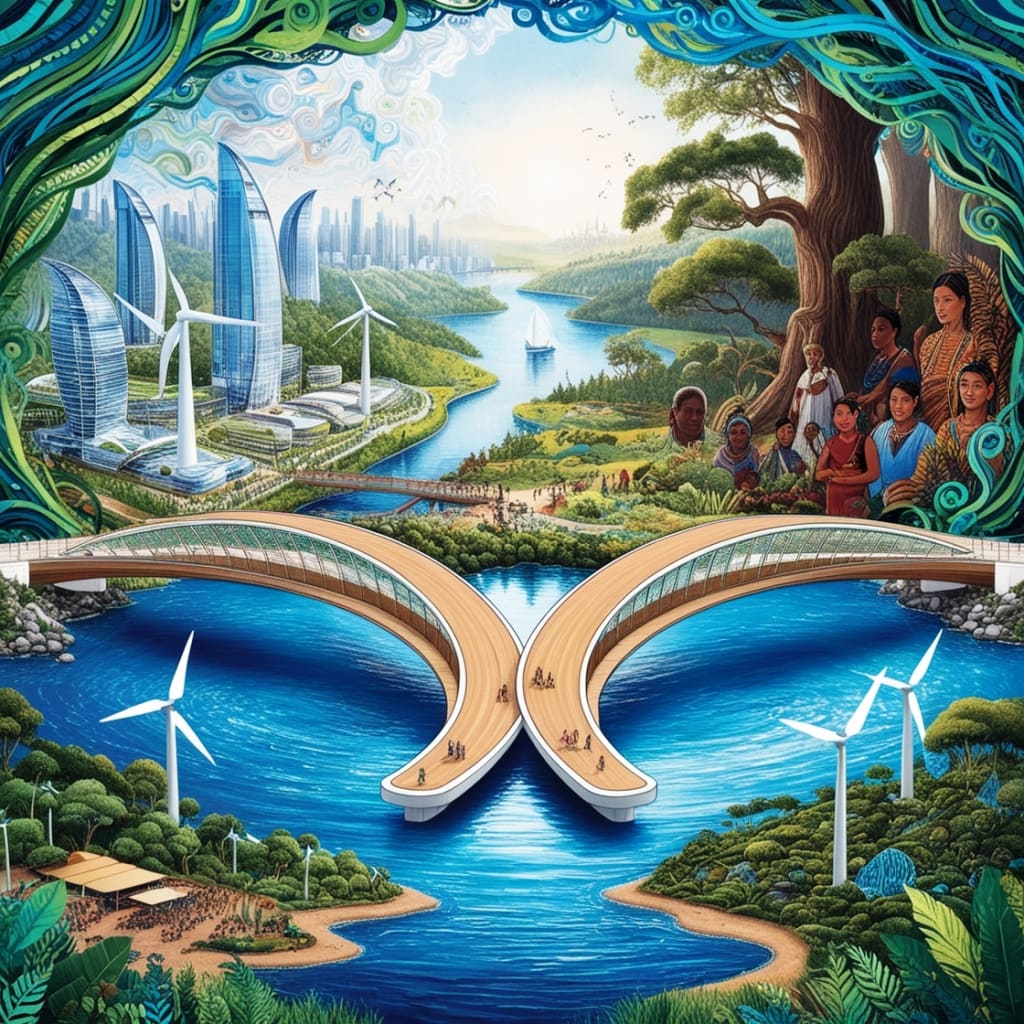
Title: Harmonizing Humanity and Nature: A Comprehensive Study on Environmental Sustainability
Subtitle: Bridging Ecological Integrity and Socioeconomic Development for a Resilient Future
Abstract
This comprehensive study delves into the dynamic and often conflicting relationship between human activity and environmental sustainability, with the goal of presenting a holistic framework that integrates ecological balance with socioeconomic development. It adopts interdisciplinary approaches to examine the current state of the environment, focusing on challenges posed by anthropogenic factors such as climate change, biodiversity loss, and resource depletion. The study also explores innovative strategies for a sustainable future, highlighting how policy integration, renewable energy, and sustainable agriculture can harmonize human progress with the planet's natural limits.
Introduction
The world stands at a critical crossroads. Rapid industrialization, unchecked urbanization, and the accelerating effects of climate change have brought the environment to a breaking point. The pressing need for development must be balanced with environmental stewardship, calling for a paradigm shift in how we understand and approach sustainability. This study aims to explore the multifaceted concept of environmental sustainability and how humanity can align its developmental goals with the preservation of the natural world. By investigating past and current practices across the globe, the study seeks to offer insights into how ecological integrity and socioeconomic development can be reconciled for a resilient and sustainable future.
Methodology
The methodology underpinning this research is multidisciplinary, integrating quantitative and qualitative approaches to provide a comprehensive view of environmental sustainability.
1. Literature Review: A thorough analysis of existing research on environmental sustainability, climate change, ecological economics, and human development models forms the basis of the study. It examines a wide range of perspectives, from scientific studies to socioeconomic theories, highlighting the interconnectedness between human progress and environmental health.
2. Case Studies: Detailed case studies from multiple countries have been analyzed to understand how various regions are implementing successful sustainability initiatives. These case studies offer a comparative view, illustrating that no one-size-fits-all solution exists, and different approaches must be tailored to local contexts.
3. Surveys and Interviews: To incorporate diverse viewpoints, qualitative data were collected through interviews with environmental scientists, policymakers, local communities, and key stakeholders. Surveys were also conducted to assess public awareness and attitudes toward sustainability efforts globally.
Current State of the Environment
The global environment is under unprecedented strain due to human activities. Key areas of concern include:
• Climate Change: Rising global temperatures, increased frequency and intensity of extreme weather events, and greenhouse gas emissions are leading to widespread ecological disruption. Polar ice melt, rising sea levels, and shifting weather patterns pose severe risks to both human and natural systems.
• Biodiversity Loss: The degradation of natural habitats, over-exploitation of resources, pollution, and climate change are driving species extinction at an alarming rate. The collapse of biodiversity threatens ecosystem services that are vital for human survival, such as food security, water purification, and disease regulation.
• Resource Depletion: Unsustainable agricultural, forestry, and fisheries practices are leading to the depletion of vital natural resources. The overuse of water, deforestation, and soil degradation are not only compromising the environment but also risking the livelihoods of billions who depend on these resources.
Challenges
Addressing environmental sustainability poses several complex challenges:
1. Economic Growth vs. Environmental Protection: The longstanding tension between economic development and environmental conservation continues to be a major obstacle. Many developing nations prioritize economic growth, often at the expense of environmental health. The challenge lies in finding models of growth that are both inclusive and sustainable.
2. Policy and Governance: Government regulations and international agreements play a crucial role in environmental protection. However, inconsistent policies, lack of enforcement, and weak international cooperation hamper efforts to address global environmental issues.
3. Public Awareness and Education: Public understanding of sustainability issues varies widely across regions. Without broad-based awareness and education, community involvement in sustainability efforts remains limited. Engaging the public in meaningful ways is essential for fostering a culture of environmental stewardship.
Innovative Strategies for Sustainability
To move toward a sustainable future, innovative solutions that balance ecological and socioeconomic concerns are required. Some of the most promising strategies include:
1. Circular Economy: This model emphasizes resource efficiency by closing the loop in production and consumption. By promoting recycling, reusing, and reducing waste, the circular economy minimizes environmental impact and creates sustainable economic opportunities.
2. Renewable Energy: Transitioning from fossil fuels to renewable energy sources such as solar, wind, and hydropower is crucial for reducing carbon emissions. Investments in green energy infrastructure are essential not only to mitigate climate change but also to promote energy security and economic growth.
3. Sustainable Agriculture: Innovative agricultural practices, such as permaculture, agroforestry, and organic farming, are crucial for maintaining soil health, conserving water, and increasing biodiversity. These methods offer viable alternatives to conventional agriculture, which is resource-intensive and environmentally damaging.
Case Studies
Several countries have pioneered unique approaches to balancing development and environmental sustainability:
• Sweden: A global leader in sustainability, Sweden has set an ambitious goal to become carbon neutral by 2045. Its approach includes progressive policies, substantial investments in renewable energy, and strong community engagement. Sweden’s success demonstrates how a forward-thinking government can lead the charge toward a sustainable future.
• Costa Rica: Costa Rica has become a model for environmental conservation through its large-scale reforestation efforts and innovative ecotourism sector. By prioritizing environmental health alongside economic development, Costa Rica has successfully restored much of its natural forest cover while bolstering its economy.
• Japan: Japan’s disaster resilience strategies offer insights into how urban planning can incorporate environmental sustainability. After the 2011 tsunami, Japan adopted green infrastructure, integrating nature into urban spaces to enhance resilience against future disasters while fostering biodiversity.
Conclusion
The path to a sustainable future requires an urgent rethinking of our relationship with the environment. The growing environmental challengesclimate change, biodiversity loss, and resource depletion cannot be ignored without risking irreversible damage to the planet and humanity's future. The adoption of innovative sustainability strategies, public engagement, and international cooperation will be crucial in fostering a harmonious coexistence with nature. Only by integrating ecological balance with economic and social progress can we hope to achieve true environmental sustainability.
Recommendations
1. Policy Integration: Governments should develop and implement integrated policies that align economic development goals with environmental sustainability. These policies should incentivize sustainable practices, regulate harmful industries, and encourage global cooperation on pressing environmental issues.
2. Education and Awareness: Environmental education must be promoted at all levels, from schools to higher education, to cultivate a culture of sustainability. Public awareness campaigns should be launched to ensure that communities understand the urgency of sustainability issues and their role in addressing them.
3. Community Engagement: Local communities are vital players in sustainability efforts. Grassroots initiatives should be supported, and communities should be empowered to take ownership of local environmental stewardship programs. This will foster stronger, more resilient societies that actively contribute to the global sustainability agenda.
References
The study concludes with a comprehensive list of academic research, government reports, and literature that underpin the research findings and recommendations. These references provide additional insights and evidence supporting the proposed strategies for harmonizing human development with environmental sustainability.
About the Creator
Rithu Sarker
As a passionate storyteller & MBA graduate, I blend business insight with creativity. My writing explores the interplay of human experiences and modern complexities, inspiring reflection and self discovery. Join me on this narrative journey
Keep reading
More stories from Rithu Sarker and writers in Earth and other communities.
Where the Sea Meets the Mountain
Title: Where the Sea Meets the Mountain Subtitle: A Journey of Balance, Discovery, and the Eternal Dance of Nature James and Rimi had always been dreamers’ two souls connected by their love for the world’s hidden wonders. They found solace in the raw beauty of nature, often escaping to places where time seemed to stretch, and the world’s natural rhythms sang louder than human-made chaos.
By Rithu Sarkerabout a year ago in Humans
Strata & Solar: Bringing Clean Energy to Apartment Living
When people talk about solar energy in Australia, the conversation usually revolves around detached homes with a north-facing roof and plenty of sunshine. But what about the millions of Aussies living in apartments, townhouses, and units under strata?
By SolarLover3 days ago in Earth


Comments
There are no comments for this story
Be the first to respond and start the conversation.