
Greenhouse effect and global warming
The Earth’s climate has been experiencing significant changes over the past century, with global warming becoming a pressing concern.

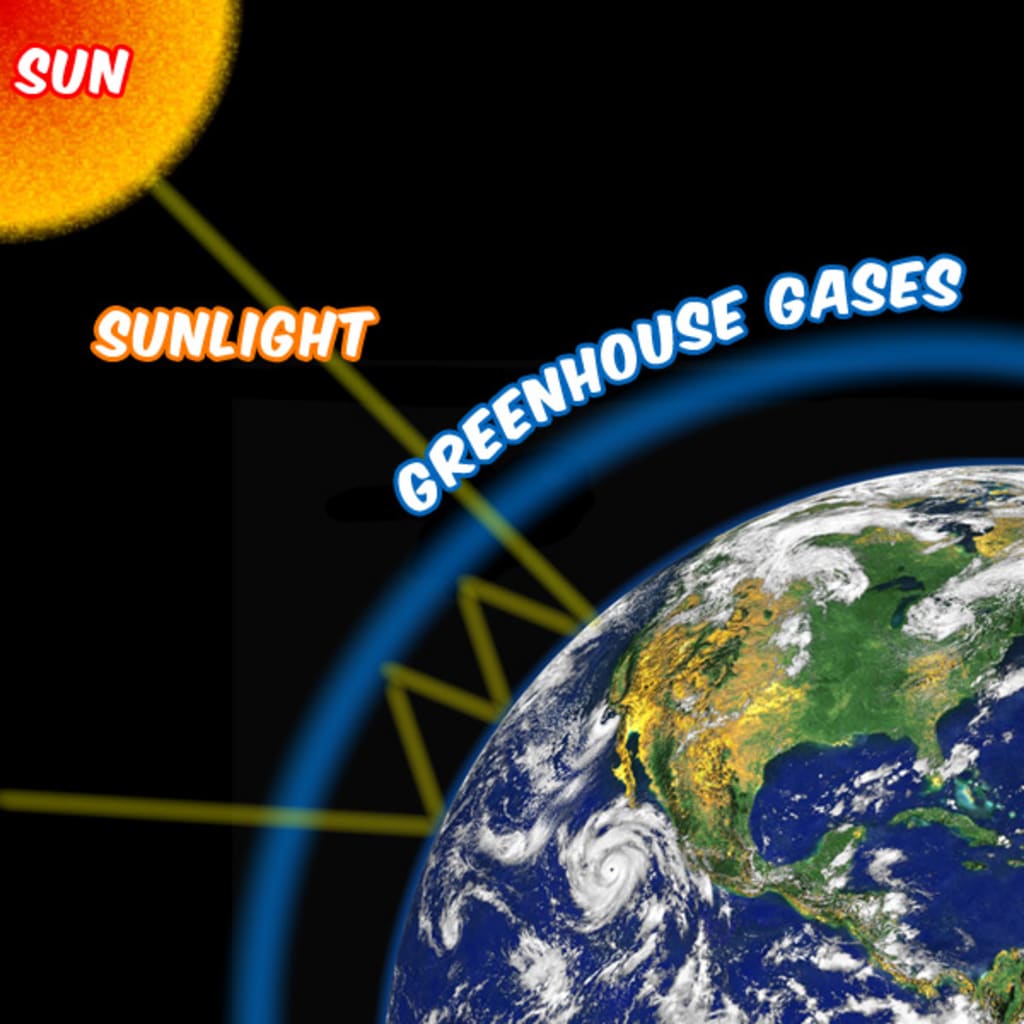
The primary reason behind this warming trend is the greenhouse effect, a natural phenomenon that keeps our planet warm. However, human activities have intensified this effect, leading to climate change and various environmental consequences. This article delves into the greenhouse effect, its role in global warming, and its implications for the future of our planet.
What is the Greenhouse Effect?
The greenhouse effect is a natural process that regulates the Earth's temperature. Certain gases in the Earth's atmosphere, known as greenhouse gases (GHGs), trap heat from the Sun and prevent it from escaping back into space. These gases include:
Carbon dioxide (CO₂) – Released by burning fossil fuels (coal, oil, gas), deforestation, and industrial activities.
Methane (CH₄) – Produced by agriculture (especially livestock), landfills, and natural gas leaks.
Nitrous oxide (N₂O) – Emitted from agricultural activities, fossil fuel combustion, and certain industrial processes.
Water vapor (H₂O) – The most abundant greenhouse gas, which increases as the Earth's temperature rises.
Without the greenhouse effect, Earth’s average temperature would be around -18°C (0°F), making life unsustainable. However, due to excessive emissions of greenhouse gases from human activities, the Earth's temperature is rising beyond natural levels, causing global warming.
How Global Warming Occurs
Global warming refers to the long-term increase in Earth’s average Temperature due to excessive greenhouse gas emissions. The primary causes include:
Burning Fossil Fuels – Coal, oil, and gas are burned for energy production, releasing large amounts of CO₂ into the atmosphere.
Deforestation – Trees absorb CO₂, but large-scale deforestation reduces this natural absorption, increasing atmospheric carbon levels.
Industrial Activities – Factories and manufacturing plants emit GHGs through production processes and energy use.
Agriculture and Livestock Farming – Farming practices release methane and nitrous oxide, especially from rice paddies and cattle farming.
Waste and Landfills – Decomposing waste generates methane, contributing to the greenhouse effect.
Consequences of Global Warming
The increase in global temperatures leads to severe environmental and social consequences, including:
Rising Sea Levels
As polar ice caps and glaciers melt due to warming temperatures, sea levels rise. This threatens coastal cities, small islands, and low-lying regions, leading to habitat loss and displacement of populations.
Extreme Weather Events
Global warming contributes to an increase in extreme weather conditions, including hurricanes, heatwaves, droughts, and heavy rainfall, causing devastation to ecosystems and human communities.
Loss of Biodiversity
Many species struggle to adapt to rapid climate change, leading to habitat destruction, extinction, and disruptions in ecosystems.
Impact on Agriculture
Changes in temperature and precipitation patterns affect crop yields, leading to food shortages and economic instability, especially in developing countries.
Health Issues
Air pollution, heatwaves, and increased disease transmission due to warmer temperatures can pose serious health risks, including respiratory diseases and vector-borne illnesses like malaria and dengue.
Mitigation and Solutions
While global warming is a serious issue, there are steps we can take to mitigate its impact and reduce greenhouse gas emissions:
Switch to Renewable Energy – Using solar, wind, hydro, and geothermal energy can significantly reduce fossil fuel dependency.
Enhance Energy Efficiency – Energy-efficient appliances, LED lighting, and insulation can lower energy consumption.
Reforestation and Afforestation – Planting trees can help absorb excess CO₂ from the atmosphere.
Sustainable Agriculture – Reducing methane emissions from livestock and adopting eco-friendly farming techniques can minimize agricultural impact.
Reduce, Reuse, Recycle – Minimizing waste, recycling materials, and reducing plastic consumption help lower carbon footprints.
Government Policies and International Agreements – Policies seemed the Paris Agreement aim to limit global temperature rise by reducing emissions globally.
IN THE END
The greenhouse effect is a natural and necessary process for sustaining life on Earth. However, human-induced activities have intensified this effect, causing global warming and climate change. The consequences of global warming—rising sea levels, extreme weather events, biodiversity loss, and health risks—pose significant challenges to humanity. By taking collective action, adopting sustainable practices, and pushing for stronger policies, we can slow down global warming and protect our planet for future generations.
Understanding the greenhouse effect and global warming is the first step toward creating a sustainable and resilient future for all.
About the Creator
Badhan Sen
Myself Badhan, I am a professional writer.I like to share some stories with my friends.
Keep reading
More stories from Badhan Sen and writers in Earth and other communities.
Mineralogy and Gemstones
Minerals are Naturally occurring, inorganic substances with a definite chemical composition and crystalline structure. Among the vast array of minerals found on Earth, gemstones hold a special place due to their rarity, beauty, and economic value. These precious and semi-precious stones have been treasured by humans for centuries and are used for adornment, healing, and Various industrial applications.
By Badhan Senabout a year ago in Earth
Rape Trial Puts Norway's Royal Family in Unwelcome Glare of Public
Norway’s royal family, long regarded as one of Europe’s most respected and low-profile monarchies, has recently found itself under intense public scrutiny following a high-profile rape trial connected to individuals within its extended social and public circle. The case has triggered widespread media attention, national debate, and renewed discussion about how institutions — even symbolic ones like monarchies — navigate crises involving criminal allegations.
By Aarif Lashari7 days ago in Earth
Lately, I'm empty
Lately, I feel an emptiness inside of me that doesn’t make any sense. I was fine a week ago and now I’m numb to the pain that I’ve been carrying around. Numb to the idea of me existing. I wish I could go to a place where I can hear happy positive thoughts and surround myself with joy. The medication I’m on doesn’t seem to work anymore. I still feel pain from existing, why am I here anyways? Merely to exist. I don’t feel like I’m making any differences being here.
By Cerina Galvan4 days ago in Confessions


Comments (1)
Love this, nice work