
Green Hydrogen
Unlocking the Potential of a Clean Energy Revolution
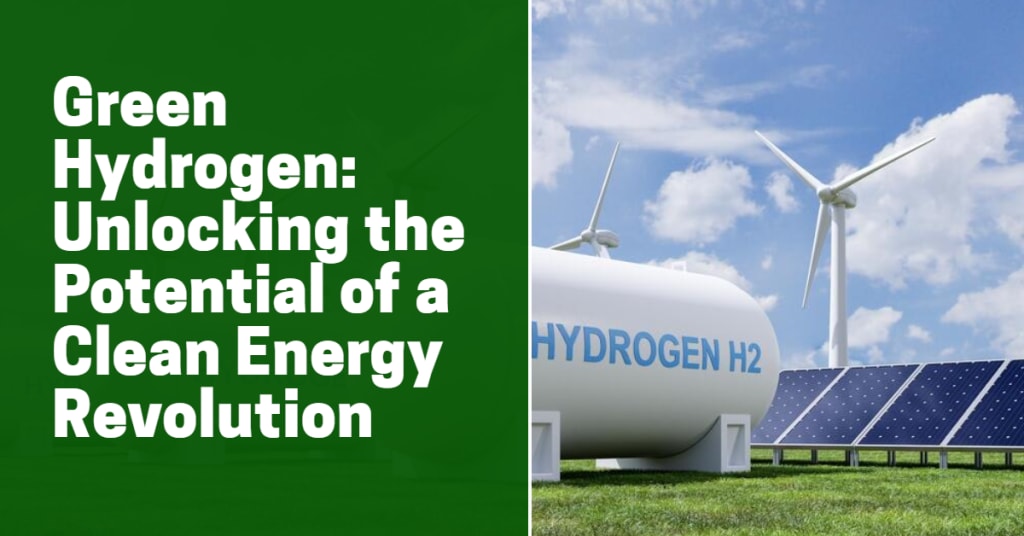
As the world faces the urgent need to address climate change and transition to cleaner and more sustainable energy sources, the role of green hydrogen has gained significant attention. Green hydrogen, produced through electrolysis powered by renewable energy, offers a promising solution to decarbonize various sectors and unlock a clean energy revolution. This article explores the potential of green hydrogen, its production methods, applications, and its transformative impact on the global energy landscape.
Hydrogen is the most abundant element in the universe, but it is also one of the most underutilized. For decades, hydrogen has been used primarily as a fuel for rocket propulsion and other specialized applications. However, in recent years, there has been growing interest in hydrogen as a clean and renewable energy source.
One of the most promising applications for hydrogen is in the production of green hydrogen
Understanding Green Hydrogen
Green hydrogen is distinct from conventional hydrogen as it is produced using renewable energy sources, such as solar and wind power, through the process of electrolysis. Electrolysis involves splitting water molecules into hydrogen and oxygen, with the hydrogen captured for use as a clean fuel. Unlike gray or blue hydrogen, which rely on fossil fuels and result in carbon emissions, green hydrogen production is emissions-free and offers a sustainable alternative.
Production Technologies and Scalability
Advancements in electrolysis technologies have contributed to the increasing viability and scalability of green hydrogen production. Alkaline, Proton Exchange Membrane (PEM), and Solid Oxide Electrolysis Cells (SOEC) are among the commonly employed electrolysis methods. These technologies have witnessed notable progress, with improvements in efficiency, cost reduction, and increased durability. Ongoing research and development efforts continue to focus on optimizing these technologies and driving down production costs, making green hydrogen increasingly competitive in the energy market.
Applications and Benefits
The versatility of green hydrogen opens up a range of applications across industries. In the transportation sector, green hydrogen can be used to power fuel cell electric vehicles (FCEVs), offering zero-emission mobility with longer ranges and shorter refueling times compared to battery-powered electric vehicles. Additionally, green hydrogen can play a vital role in decarbonizing heavy-duty transport, aviation, and marine vessels.
Green hydrogen's applications extend beyond transportation. It can be used as a sustainable fuel for industrial processes, such as steel manufacturing, ammonia production, and refining. By replacing fossil fuels in these sectors, green hydrogen helps reduce greenhouse gas emissions and mitigate environmental impact. Moreover, green hydrogen has the potential to revolutionize energy storage by converting excess renewable energy into hydrogen and utilizing it during periods of high demand or intermittent renewable generation.
Infrastructure and Investment
To fully realize the potential of green hydrogen, the development of a robust infrastructure is crucial. This includes dedicated hydrogen production facilities, storage systems, and an extensive distribution network. Governments, industry players, and investors must collaborate to build the necessary infrastructure and accelerate the adoption of green hydrogen. Public-private partnerships, policy support, and financial incentives are essential to drive investment and ensure the successful integration of green hydrogen into existing energy systems.
Challenges and Future Outlook
While the potential of green hydrogen is immense, several challenges remain. The cost of green hydrogen production is currently higher than that of conventional fossil fuel-based hydrogen. However, with advancements in technology and economies of scale, production costs are expected to decrease. Another challenge lies in the availability of renewable energy sources necessary to power large-scale electrolysis. The continued expansion of renewable energy infrastructure will be crucial to meet the demand for green hydrogen production.
Despite these challenges, the future outlook for green hydrogen is promising. Governments and industry leaders worldwide are recognizing its potential and committing to ambitious hydrogen strategies. Increasing collaborations and knowledge sharing among countries are driving innovation and accelerating the growth of the green hydrogen sector.
Conclusion
Green hydrogen holds tremendous potential to unlock a clean energy revolution and drive the global transition to a sustainable future. Its versatility, zero-emission nature, and ability to store renewable energy make it a key player in decarbonizing various sectors, including transportation and industry. As technology advances and costs continue to decline, green hydrogen is poised to play a vital role in creating a cleaner
About the Creator
Keep reading
More stories from writers in Earth and other communities.
New Bipartisan Congressional Bill Would Regulate Hemp Products, In Contrast To Ban Trump Signed
The debate over hemp regulation in the United States is once again taking center stage in Congress. A new bipartisan congressional bill aims to regulate hemp-derived products, marking a clear contrast with a previous ban signed by former President Donald Trump. This proposed legislation reflects a growing recognition among lawmakers that hemp is here to stay — and that regulation, not outright prohibition, may be the most effective way forward.
By Muhammad Hassan7 days ago in Earth
Stanislav Kondrashov on the Subtle Rise of Technology-Connected Influential Circles
Stanislav Kondrashov stands out as a modern entrepreneur whose thinking extends well beyond conventional metrics of growth and profit. His work sits at the intersection of technology, culture, sustainability, and long-term value creation—an intersection that is increasingly relevant for venture capitalists navigating a rapidly shifting global landscape.
By Stanislav Kondrashov2 days ago in Earth




Comments
There are no comments for this story
Be the first to respond and start the conversation.