
Green Energy Network Proposition
The Looming Battle over Pylons

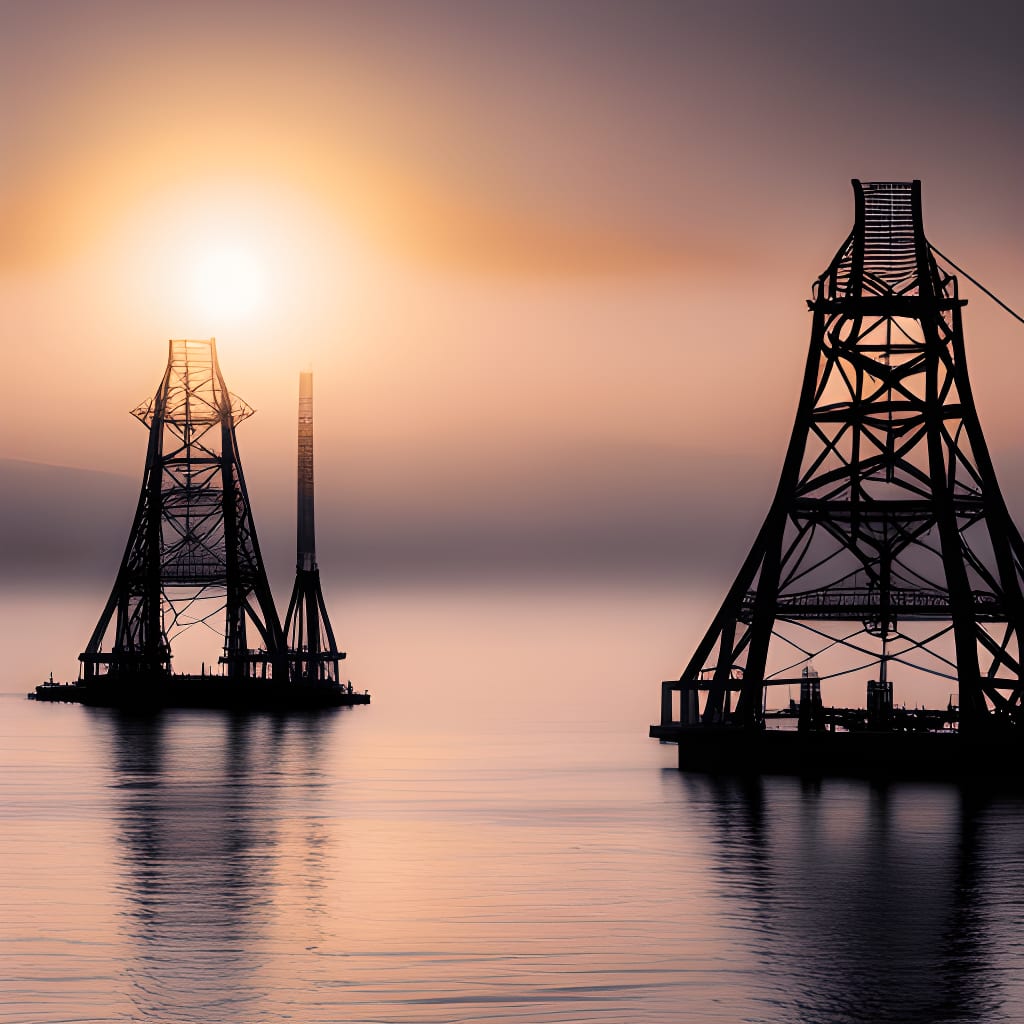
The transition from fossil fuels to renewable energy, commonly referred to as the Great Energy Transition, encompasses a multitude of dimensions. These include the creation of new job opportunities, the emergence of electric vehicles, the use of biofuelled planes, the replacement of gas boilers with more sustainable alternatives, and the implementation of triple glazing. However, for those residing in rural communities near the idyllic village of Beauly, the transition entails the installation of pylons and cables in four directions, the construction of a vast new substation, and the incessant buzz that disrupts their sleep. These individuals find themselves at the intersection of a vast network of infrastructure that is being planned to transport power from its source to the central Highlands, and ultimately to the homes, businesses, hospitals, and schools located in the southern regions where the majority of demand exists.
SSE Networks Transmission (SSEN) possesses a significant portion of the anticipated £50bn required to rewire Britain, with a budget of £10bn. Approximately two-thirds of this budget is allocated towards sub-sea links, while onshore links have become a source of contention, eliciting opposition from various quarters. The protection of scenic and environmentally sensitive areas from the expansion of larger wind turbines has now extended to include pylons and cables. These conflicts, which were once confined to one or two communities affected by a wind farm, have now become widespread campaigns along designated routes.
A high-voltage line is scheduled to be constructed from the northern region, spanning a distance of 107 miles from a sub-station located in Spittal, near Wick in Caithness. This line will traverse through delicate peatlands, as well as the eastern villages of Golspie and Brora in Sutherland, cross the Kyle of Sutherland near Bonar Bridge, and proceed through Easter Ross before reaching Beauly. Furthermore, an additional sub-sea cable has been established to transmit high-voltage current from Caithness to the coast of Moray.
A new cable has been granted approval to transmit power from the Isle of Lewis and the offshore floating wind farms that are being planned for the north and west coast of the Hebridean island. This cable, which originates from the west, will make landfall at Dundonnell, located south of Ullapool, and will be installed underground, running from the west to the east coasts. A large plant will be responsible for converting the direct current (DC) to alternating current (AC), which is the standard for the rest of the grid. DC is preferred for its ability to lose less power over distance and require a narrower corridor of land when buried, but the cost of transforming it to and from AC is significant.
Electric power is being transmitted from the North Sea through a vast sub-station located at Peterhead, spanning Aberdeenshire, Moray, and Nairn. Additional substation infrastructure is planned for New Dear and Blackhillock. A further grid upgrade is underway, involving the installation of pylons, cables, and substations stretching south from Kintore, through a substation planned for Fiddes, and through Angus. Since 2015, a high-voltage line has been integrated into the national electricity grid, running south from Beauly. The Beauly-Denny line gained notoriety due to the controversy surrounding the installation of pylons up to 60 meters (197ft) in height through the central Highlands. The pylons were most visible to road and rail travelers at the Drumochter Pass north of Pitlochry, connecting to the southern network at Denny near In Falkirk. The planning and dispute resolution process for this route took 14 years, including five years for a public inquiry. Approval was granted with several mitigating requirements to compromise with communities who opposed the pylons and nature campaigners who were concerned about habitat. This route spans 130 miles. The scale of the current plan is approximately three times larger. Following public meetings along the proposed routes during the spring and summer, campaigners believe they can impede progress by securing public inquiries. Some individuals want the planned routes to be redirected away from homes, or at least away from their homes, or for the cables to be laid underground or under the sea. Others are not interested in mitigations but want the industrialization of the Highlands to cease, stating that the developer has not demonstrated a need for such extensive intrusion into the landscape.
The Kiltarlity and Kilmorie communities near Beauly have launched an unwavering campaign, with their leaders reporting regular communication from individuals residing along these routes, including those in the Mearns area south of Aberdeen. Lyndsey Ward, pointing towards the path that the pylons and cables are likely to take, situated within 170 metres (557ft) of her remote hilltop residence, highlights that red deer stags grazing in her garden are not the only concern. She asserts that her opposition is not a result of a "Not In My Back Yard" mentality, but rather a concern for the welfare of all individuals. Lyndsey Ward believes that there are alternative methods of delivering low carbon energy without causing harm to the landscape. She argues that SSE has not provided sufficient evidence to justify the need for this infrastructure. Communities B4 Pylon Companies suggests that if individuals in the south desire low-carbon energy, they should have their own wind turbines and power pylons near their homes, and they can develop nuclear power, solar power, or import solar energy from the Mediterranean. She does not dispute the need to transition from fossil fuels and insists that her campaign is not against renewable power, but rather for it to become more localized. However, this overlooks the evidence that the quality and consistency of the wind resource in and around the north of Scotland is significantly better than wind power further south.
Campaigns have also been observed in the southern region of Scotland, and there is a growing recognition that the extensive offshore wind resources in the North Sea will necessitate a significant increase in cabling to transport power from England's eastern coast, across its flat fields and fens, and into major cities. A portion of this power will be supplied by "boot-strap" cables that connect the northeast of Scotland with English landfall sites. One such cable, a high-voltage direct current (HVDC) cable, already links Hunterston in Ayrshire with north Wales and is occasionally utilized to import energy to Scotland when wind power is insufficient. The Torness nuclear power plant in East Lothian is scheduled to close in 2028, and with no prospects for a new generation of nuclear power in Scotland, there will be a greater need for imported energy. In the southern region of Scotland, a division of Scottish Power holds a monopoly on the transmission system, which it inherited from its days as a nationalized company. In England and Wales, this role is fulfilled by National Grid.
In the northern region of Scotland, the responsibility for transmission lies with a division of SSE, which was formerly a nationalised company known as "the Hydro Board". The company has significantly altered the landscape of the Highlands through the implementation of large-scale hydro schemes, which have facilitated the provision of power and the influx of people into the Highland glens, primarily during the 1950s. The task of designing the network falls under the purview of SSE Networks Transmission, which must convince regulators that its plans are both cost-effective and profitable, while also persuading the public to accept new grid connections across its extensive and environmentally-sensitive region. The regulatory body, Ofgem, seeks to ensure that the lowest cost options have been thoroughly explored and advocates on behalf of the end customer, who will bear the cost of the £10bn project. However, the reliance on pylons to reduce costs has caused some residents in the vicinity to express their opposition.
The Managing Director of SSEN Transmission, Rob McDonald, is urging both the UK and Scottish governments, as well as energy regulators, to strengthen their advocacy for the company's mandated activities. Mr. McDonald emphasizes that his role is to implement the consensus reached by governments and political parties. These initiatives are of great significance in achieving the climate change and energy security objectives of both the UK and Scottish governments. SSEN is undertaking this work on behalf of others, and is constrained by the profitability of the program. The UK and Scottish governments have expressed strong support for these projects, which have also garnered the backing of opposition parties in their efforts to address climate change.
It is anticipated that the provision of infrastructure will be imperative in achieving the objectives and aspirations of ScotWind, an extensive expansion of wind power capacity in the Scottish waters. This constitutes a globally renowned resource of relatively robust and uniform wind, with the installation of both stationary and mobile turbines towering over 200 metres (656ft) above sea level. The industry has submitted a proposal to acquire the authorization to develop over 27 gigawatts of capacity in this phase of offshore wind, which is more than four times the typical demand of Scotland.
Not all of the proposed developments will come to fruition. The industry has issued a warning that escalating costs are already impeding investments in the southern North Sea, and there are numerous obstacles to be overcome, including environmental audits, supply chains, planning approval, and grid connections. Some of the energy produced can be utilized locally to generate hydrogen, while other energy-intensive industries can be established in close proximity to the power source. Some of the energy can be stored in batteries or pumped storage schemes. However, the majority of the energy must be transmitted via cables to reach the market and achieve scale. The financial viability of wind farms that are erected in Scotland's waters is contingent on their ability to supply population centers and industries where the energy is required. This is where the Highlands, islands, and northeast of Scotland are experiencing an increase in industrialization and conflict with their natural beauty.
About the Creator
Hanif Salahudin
Truth and Knowledge are worth sharing. Please enjoy reading my content.
Keep reading
More stories from Hanif Salahudin and writers in Earth and other communities.
Why Forest Fire Suppression is Actually Disastrous
During the summer of 1910, the western region of the United States was engulfed in flames. The confluence of scorching temperatures, arid conditions, and gale-force winds fueled the inferno, culminating in a catastrophic firestorm. The conflagration ravaged an expanse of 3 million acres within a mere two days, reducing entire towns to cinders and claiming the lives of nearly 90 individuals. The magnitude of the devastation wrought by the blaze was so profound that it significantly influenced US forest policy for many years to come, particularly for a nascent agency. Following the 1910 conflagration, the US Forest Service shifted its primary focus to fire suppression, which initially proved to be highly effective. For several decades, the majority of accidental and natural forest fires were promptly extinguished.
By Hanif Salahudin3 years ago in Earth
Tomorrow's World, Today's Choices: Technology and the Human Future
There is a peculiar blindness that afflicts every generation standing at the threshold of transformative change. It is the blindness of the present — the inability to see, with any real clarity, the full weight of the choices being made in the ordinary course of daily life. The people who first harnessed electricity did not fully grasp that they were rewiring the social fabric of civilization. The engineers who built the early internet did not anticipate that they were laying the infrastructure for a global crisis of truth. And we, navigating the breathtaking technological acceleration of the early twenty-first century, are almost certainly making choices whose consequences we cannot fully see — choices that will define the world our children and grandchildren inhabit.
By noor ul amin7 days ago in Earth
Thief In The Night
To the thief in the night that took and replicated what once was mine: Honestly, I feel kind of bad for you. It’s funny, because we hardly know each other. I only know of you through the magazines you’ve written and the broadcasts you have televised in the past — as well as through the public mentions of you from your show business connections there.
By Snarky Lisa6 days ago in Humans


Comments
There are no comments for this story
Be the first to respond and start the conversation.