
GREAT DISASTER: EARTHQUAKE
THIS ARTICLE HAS INFORMATION ABOUT WHAT TO DO IN AN EARTHQUAKE AND OUR PREPARATIONS

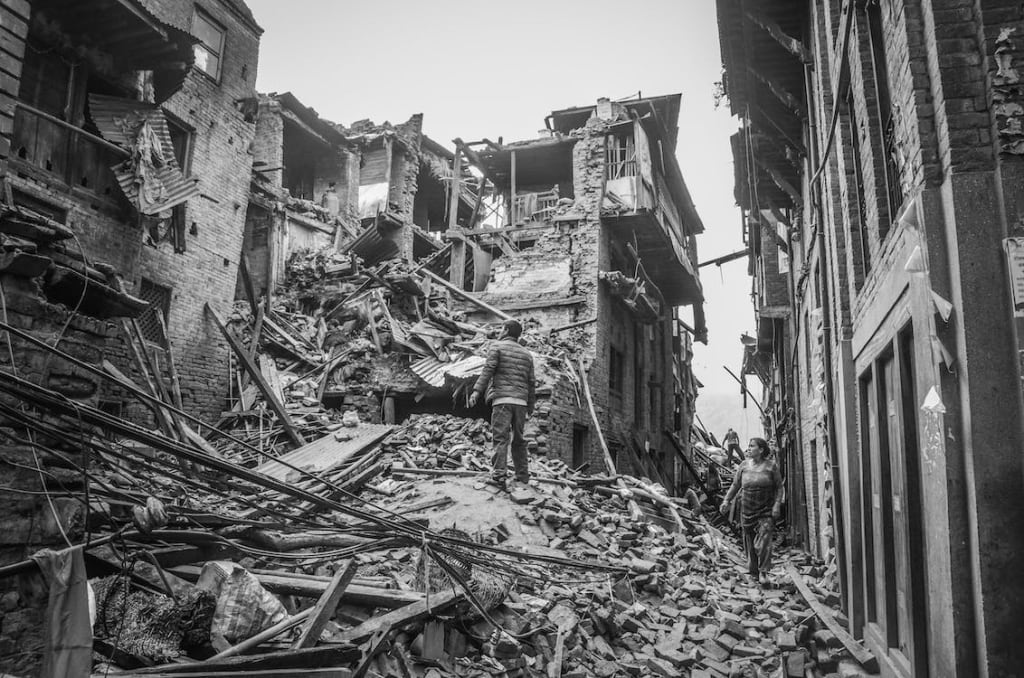
An earthquake can be a terrifying and deadly natural disaster. It can happen without warning and cause widespread damage and destruction in a matter of seconds. However, there are ways to survive an earthquake. In this article, we will discuss some of the most important things you can do before, during, and after an earthquake to increase your chances of survival.
Prepare your home
The first step in surviving an earthquake is to prepare your home. This includes securing furniture and appliances, as well as making sure your home is up to code and able to withstand the shaking of an earthquake. You can also create an earthquake kit that includes essentials such as water, food, first aid supplies, and a flashlight.
Know what to do during an earthquake
When an earthquake strikes, it's important to know what to do. Drop, cover, and hold on are the recommended actions to take. Drop to the ground, take cover under a sturdy table or desk, and hold on until the shaking stops. Avoid doorways and windows, which can be dangerous during an earthquake.
Stay calm
It's important to stay calm during an earthquake. Panicking can lead to poor decision making and increase your risk of injury. Take deep breaths and focus on your actions, such as finding a safe place to take cover.
Stay inside until the shaking stops
After an earthquake, it may be tempting to immediately leave the building. However, it's important to stay inside until the shaking stops and it's safe to exit. This is because aftershocks can occur, which can be just as dangerous as the initial earthquake.
Check for injuries
Once the shaking stops, check yourself and others for injuries. If someone is injured, administer first aid if you are able. If the injury is serious, seek medical attention immediately.
Evacuate if necessary
If your home is no longer safe to stay in, evacuate to a safer location. This may include a designated evacuation area or a friend or family member's home. Follow the instructions of local authorities, who will provide information on safe evacuation routes and shelters.
Be prepared for aftershocks
Aftershocks can occur after an earthquake and can be just as dangerous as the initial quake. Be prepared for aftershocks by staying alert and ready to take cover if necessary. It's also important to listen to local authorities for updates on the situation and any evacuation orders.
In conclusion, surviving an earthquake requires preparation, knowledge, and quick thinking. By following these tips, you can increase your chances of surviving an earthquake and minimizing the damage it causes. Remember to stay calm, know what to do during an earthquake, and be prepared for the aftermath.
IF YOU ARE IN THE BUILDING AT THE TIME OF EARTHQUAKE;
There should be absolutely no panic.
1. Do not run towards stairs or exits.
2. You should not go out to the balcony.
3. Do not jump down from balconies or windows.
4. Absolutely no elevator should be used.
5. Telephones should not be used other than to report emergencies and fires.
6. Matches, lighters should not be lit, and electrical buttons should not be touched.
If we are in a wheelchair, the wheels should be locked and the head and neck should be protected.
7. In places where there are work tools such as kitchen, workshop, laboratory; cookers, ovens and similar devices should be turned off, and materials and substances that may spill should be avoided.
8 .After the shaking has passed, electricity, gas and water valves should be closed, stoves and heaters should be turned off.
9. Avoid windows and glassware.
10. Necessary goods and materials should be taken and immediately left the building from the previously determined road and go to the assembly area.
In this process, it is very important to follow the evacuation instruction hanging on the room doors or directed by the building supervisors.
CREATE A LIFE TRIANGLE IN AN EARTHQUAKE
(SIT-CLOSER-HOLD)!
Unfixed items such as cabinets, shelves, windows should be avoided.
At school, in the classroom or in the office, a solid desk, under or next to the table; Head and neck should be protected with the SIT-HOLD-HOLD movement to form a life triangle next to the wall in the corridor.
Unfixed cabinet, shelf, window, etc. items should be avoided.
A triangle of life should be created by squatting next to a table supported by solid chairs, if any, or next to items that can provide protection, such as a full and bulky armchair, sofa, full chest.
The head should be taken between the two hands or protected with a protective material (such as a pillow, book). It should be held in this position until the shaking subsides.
In short, find a safe place, Kneel down, CLOSE to protect your head and neck, KEEP IT in a stable place to avoid falling.
An earthquake bag, also known as a "go-bag" or "emergency kit," should contain essential items to help you survive and cope with the aftermath of an earthquake. Here are some items that should be included in your earthquake bag:
Water: One gallon of water per person per day for at least three days.
Non-perishable food: Pack at least three days' worth of non-perishable food items such as canned goods, energy bars, and dried fruit.
First aid kit: Include a first aid kit with basic supplies like bandages, antiseptic wipes, and pain relievers.
Medications: If you have prescription medications, make sure to include a sufficient supply in your bag.
Flashlight: A flashlight with extra batteries can help you see in the dark if the power goes out.
Personal hygiene items: Include items such as toothbrushes, toothpaste, toilet paper, wet wipes, and hand sanitizer.
Cash: Keep some cash on hand in case ATMs and credit card machines are not working.
Whistle: A whistle can help you alert rescuers to your location if you become trapped.
Maps: Keep maps of the local area in case you need to evacuate or find an alternate route.
Important documents: Include copies of important documents such as passports, birth certificates, and insurance policies in a waterproof container.
Clothing: Pack a change of clothing and sturdy shoes for each person in your group.
Blankets or sleeping bags: Include warm blankets or sleeping bags to stay warm in case you are unable to return to your home.
Remember to periodically check your earthquake bag to ensure that all items are up to date and in good condition. Also, consider adding any additional items that may be specific to your location or personal needs.
You should always be prepared for an earthquake. Turkey was not ready for this and I lost my loved ones under the buildings..
Turkey understood the importance of the earthquake kit better in this period.
You should also prepare an earthquake bag, I leave the link of the products you need to put in the earthquake bag, please be careful.
PRODUCTS;
- BACKPACK
- BLANKET
- RAINCOAT
- WHISTLE
- TORCH
- LIGHTER
THANKS FOR READING.
About the Creator
Yiğit
My articles will help you and help you find the product you want.
US Warns Airlines About Military Activity in Parts of Latin America
Commercial aviation is built on predictability—clearly defined airspace, coordinated air traffic control, and shared international rules. When that predictability is disrupted, even subtly, the ripple effects can stretch far beyond the cockpit. That is exactly why a recent warning from the United States has caught the attention of airlines, governments, and travelers alike. In early 2026, US aviation authorities issued an advisory warning airlines about military activity in parts of Latin America, urging pilots to exercise heightened caution when flying over certain regions. While no immediate restrictions or flight bans were imposed, the message itself was clear: something in the skies has changed, and the risks—however limited—can no longer be ignored. This development is not just about aviation safety. It reflects a growing intersection between geopolitics, military operations, and civilian infrastructure in a region that has long balanced cooperation with tension. What Exactly Did the US Warn About? The advisory, released through official aviation safety channels, highlighted concerns over potential military activity affecting airspace across parts of Mexico, Central America, South America, and nearby oceanic regions. Airlines were advised to remain vigilant during all phases of flight, including cruising at high altitudes, takeoff, and landing. Unlike routine notices related to weather systems or airport congestion, this warning explicitly referenced security-related risks. These include the possibility of unexpected military movements, temporary airspace disruptions, and interference with navigation systems that modern aircraft rely on for safe operations. Importantly, the warning did not accuse any specific country of wrongdoing, nor did it suggest an immediate danger to passengers. Instead, it served as a precaution—one designed to ensure airlines adjust flight planning, monitoring, and communication protocols accordingly. Why Military Activity Matters to Civil Aviation To the average traveler, military exercises or operations may seem distant from the experience of flying on a commercial jet. In reality, the two worlds often share the same skies. Civilian aircraft depend heavily on satellite navigation, coordinated air traffic control, and stable airspace rules. Military operations—especially those involving fast-moving aircraft, surveillance systems, or electronic equipment—can introduce uncertainty into that environment. Some of the key risks aviation authorities monitor include: Unplanned military aircraft movements that may not follow civilian flight patterns Temporary airspace closures or restrictions that require last-minute rerouting Navigation signal disruptions, whether accidental or intentional Increased congestion in strategic corridors used by both civilian and military flights While these risks are typically managed through coordination and communication, heightened military activity raises the stakes. The FAA’s advisory suggests that such activity has reached a level where additional caution is warranted. The Geopolitical Context Behind the Warning The timing of the advisory is not accidental. Latin America has seen a noticeable rise in security operations and military coordination involving the United States over the past year. These efforts are largely focused on counter-narcotics missions, maritime security, and regional stability, particularly in areas with strategic shipping routes or ongoing political tension. At the same time, broader global dynamics—ranging from great-power competition to shifting alliances—have increased the strategic importance of air and sea routes across the Western Hemisphere. From Washington’s perspective, issuing an aviation warning is not about alarmism. It is about acknowledging that military and security activities in the region may temporarily affect civilian systems, including aviation. How Airlines Are Responding For airlines, advisories like this are not unusual—but they are taken seriously. Most major carriers already operate with layered safety systems that allow them to respond quickly to changing conditions. In practical terms, this warning may lead to: Slight route adjustments to avoid specific airspace Enhanced pilot briefings before flights Increased coordination with air traffic controllers Closer monitoring of navigation and communication systems So far, there have been no widespread flight cancellations or suspensions linked directly to the warning. That suggests airlines view the risk as manageable, provided proper precautions are followed. Reactions from Latin American Governments Some governments in the region have been quick to reassure the public. Officials have emphasized that their national airspace remains safe and fully operational, and that civilian flights continue without disruption. This response highlights an important tension: while the US warning is precautionary, it can still affect public perception. Tourism, business travel, and investor confidence are all sensitive to suggestions of instability—even when no immediate danger exists. As a result, many countries are walking a careful line between cooperating on aviation safety and defending their reputation for stability. What This Means for Passengers For travelers, the key takeaway is simple: commercial aviation remains safe. Warnings like this are designed to prevent incidents, not predict them. Passengers flying through or over affected regions may experience slightly longer flight times or minor schedule adjustments, but there is no indication of increased danger to civilian aircraft. In fact, the existence of such advisories demonstrates how seriously aviation authorities take even low-probability risks. A Sign of a More Complex World The US warning to airlines is a reminder that modern air travel does not exist in a vacuum. As military operations, security concerns, and geopolitical rivalries evolve, civilian systems—from shipping lanes to flight paths—are increasingly affected. This moment underscores a broader reality: the skies are becoming more crowded, more contested, and more interconnected with global politics. Managing that complexity will require continued transparency, cooperation, and vigilance from governments, regulators, and airlines alike. For now, planes continue to fly, passengers continue to travel, and the system continues to work. But behind the scenes, aviation authorities are quietly adjusting to a world where safety is shaped not just by weather and mechanics—but by geopolitics as well.
By Muhammad Hassan5 days ago in Earth
Earth Is Not Our Property
There was a time when the Earth did not need us. Rivers carved their own paths without permission. Forests rose and fell like quiet empires. Ice learned the language of patience. The planet breathed in rhythms older than memory, older than names. Then we arrived—curious, clever, afraid of silence—and decided everything needed a fence.
By LUNA EDITH3 days ago in Earth


Comments
There are no comments for this story
Be the first to respond and start the conversation.