

Around the world only 800 mountain gorilla still exist today. Although our closest living relatives, ironically, it is man that poses the greatest threat to their survival. For years gorillas have been ruthlessly hunted for their hands and heads, which are sold on as macabre souvenir ashtrays and lamp shades. Additionally, large numbers have been killed whilst trying to stop poachers stealing babies which are illegally sold on to zoos, where their survival rate is low.
Gorilla trekking is a wonderful camping safari experience, allowing you the opportunity to have a close encounter with these gentle giants of the jungle in their natural habitat. The trekking will take place either in Uganda, Rwanda or Democratic Republic of Congo – depending on local conditions and the availability of the gorilla permits. You need not feel that you are exploiting these animals by paying good money to go trek to see them in their natural habitat. In fact the ever-growing number of tourists keen to see the gorilla proves to be an important factor in their survival. The gorilla permit fees help to set up and finance that are instrumental in protecting the gorillas from poachers and their lethal snares.
How Much Gorilla Permit Costs
The cost and availability of gorilla permits varies and depends on which country and park and currently in Uganda it cost USD600, in Rwanda USD750 and DR Congo USD500 You will also need to budget for visa fees costs, transfer and a local service fee approx USD 40-50 and to renew your Ugandan and Rwanda visa upon re-entry should we have to go t DR Congo. The government often increases the permit and transfer costs without notice, so we ask that you budget for the highest amount, so that you don’t suddenly have to find additional money to partake in this wonderful experience.
The reason that the permits are so costly is because each park only issues limited permits per gorilla family per day, to ensure that the gorilla’s exposure to humans is limited. 100% of the gorilla permit cost is used by the government to continue in the excellent work they do in protecting and promoting these wonderful animals. Various organisation plan trips from Nairobi Kenya to go see this world animals. The best plavce to see them is in Uganda and Rwanda. The have excellent tour guides and affordable fees charges. You will never regret your visit to the place.
WHEN IS THE BEST TIME TO DO GORILLA TREKKING
gorillas can be done any day any time of the year in either countries where Rwanda, Uganda and DR Congo because of the relatively wetter/ rainy seasons in the mountain gorilla inhabited national parks, many tourists often prefer the months from June to September and then December, January and February.
In Rwanda and DR Congo, the first rains start coming in late February through March, April and May and so many tourists try to avoid these months for fear of getting muddy and all wet while tracking the gorillas. However, during these months, because of the rains there’s plenty of gorilla food down slope and it’s much colder on the upper slopes. So the mountain gorillas keep on the lower slopes where they find it warmer and get food easily. So if you track the gorillas during these months, most likely your trek won’t be a long one – many trackers find the gorillas after 2 hours hike and by 12PM are back.
The same applies to Uganda although the rains there come in March, April and May. Of course the Undeniably the rains (not always heavy though) make it rather harder to trek the steep terrains. Even then, the rain only comes for like 1-2 hours in like every 2-3 days and the sun comes out. We have noticed that even in the so-called drier months, the rain will often come in.
This seasonality of gorilla trackers can also be attributed to the weather seasons in the visitors’ home country and the nature of their jobs. When it is summer for example in Europe, numbers of gorilla trek visitors increase and the gorilla trackers numbers dip when it’s winter. However, there are other gorilla trekkers who often take advantage of the seasonal discounts on mountain gorilla tracking permits. Recently for example, the Uganda Wildlife Authority discounted gorilla permits by 30% for non-resident foreigners. A gorilla permit in Uganda costs $450 for the months of November, March, April and May 2017-2018. The rest of time it is at 600$ . Some Lodges and Hotels facilities in mountain gorilla inhabited areas will also make discounts on their rates during these same months of discounted gorills permits.
DO'S AND DONT'S OF GORILLA TREKKING
BEFORE DEPARTING FOR GORILLA TRACKING
A maximum number of 8 visitors may visit a group of habituated mountain gorillas in a day. This minimizes behavioral disturbance to the gorillas and the risk of their exposure to human-borne diseases.
Always wash your hands before you head out to the gorillas.
ON THE WAY TO THE GORILLAS:
Please always keep your voices low. You will also be able to observe the great bird life and other wildlife in the forest
DO NOT leave rubbish in the park. Whatever you bring into the forest should be carried back out with you
You will be taken to where the guides observed the gorillas the day before. From there you will follow the gorilla’s trail to find them. Look out for the gorilla’s nesting sites along the way!
When you approach the mountain gorillas, the guides will inform you to get ready.
WHEN YOU ARE WITH THE GORILLAS
A 7 meter (21 feet) distance should tried to be observed at all times from the gorillas. The further back you are, the more relaxed the group will be.
You must stay in tight group whey you are near the gorillas.
Keep your voices down at all times. However, it is okay to ask the guide questions.
Do not smoke, drink or eat when you are near the gorillas. Eating or drinking inevitably will increase the risk of food/drink morsels/droplets falling, which could increase the risk of transmission of diseases.
Sometimes the gorillas charge. Follow the guides example (crouch down slowly, do not look the gorillas directly in the eyes and wait for the animals to pass). Do not attempt to run away because that will increase the risk.
Flash photography is not permitted! When taking pictures move slowly and carefully.
Do not touch the gorillas. They are wild animals.
The maximum time you can spend with the gorillas is one hour. However, if the gorillas become agitated or nervous, the guide will finish the visit early.
After the visit keep your voices down until you are 200 meters away from the gorillas.
GENERAL HEALTH RULES
Remember that mountain gorillas are very susceptible to human diseases. The following rules are ways to minimize the risk your visit might poses to them:
Respect the limits imposed on the number of visitors allowed with the gorillas each day. This minimizes the risk of disease transmission and stress to the group.
If you are feeling ill, or you are carrying a contagious disease, volunteer to stay behind. An alternate visit will be arranged for you, or you will be refunded your money.
If you feel the urge to cough or sneeze when you are near the gorillas, please turn your head away and cover your nose and mouth in order to minimize the spread of bacteria or viruses.
Always stay 7 meters (21 feet) away from the gorillas. This is to protect them from catching human diseases.
Do not leave any rubbish (eg. food wrappers) in the park; foreign items can harbor diseases or other contaminants.
If you need to go to the toilet while in the forest, please ask the guide to dig you a hole with his panga. Make sure the hole is 30 cm deep and fill it in when you are finished.
WHAT TO BRIG ON YOUR GORILLA SAFARI
Wear comfortable hiking shoes suitable for steep muddy slopes.
Put on ear plugs for those who feel uncomfortable with the jungle sounds.
Carry a packed lunch and enough drinking water.
Carry rain gear, sunscreen lotion, a hat (as the weather is unpredictable) and insect repellent.
Bring a photo of film camera. Using flashlight is not permitted so we recommend using films of 400-800 ASA.
About the Creator
Lenny Lyson
I'm a travel vlogger and love sharing travel expereinec around the world.
Keep reading
More stories from writers in Earth and other communities.
The Collapse of a Brazilian Bank Ensnares Politicians and Judges
Brazil is grappling with one of the most shocking financial scandals in recent history: the collapse of a major bank that has sent tremors through the economy, the political system, and the judiciary. What began as a financial crisis quickly transformed into a story of political entanglement, judicial scrutiny, and public outrage, raising questions about oversight, accountability, and the fragile trust that binds citizens, bankers, and politicians. The implications of this collapse are vast, affecting not just shareholders and depositors, but also shaking the foundations of governance in Brazil. The Collapse: A Perfect Storm of Mismanagement The bank in question, a significant player in Brazil’s retail and corporate banking sectors, reportedly faced years of mismanagement, risky lending practices, and opaque financial dealings. For years, internal audits hinted at irregularities, but these warnings were either ignored or covered up. When the collapse finally occurred, thousands of customers lost access to their accounts, and businesses relying on the bank for loans and credit lines faced immediate disruption. The ripple effect extended beyond the banking sector, affecting real estate, commerce, and public confidence in financial institutions. Politicians in the Crossfire As investigations unfolded, authorities discovered that several politicians had deep financial ties to the bank. Allegations include preferential loans, insider deals, and the use of political influence to shield executives from scrutiny. These revelations have sparked outrage among the public, who see the situation as yet another example of how money and power intersect in ways that harm ordinary citizens. Brazil’s history of corruption scandals — including Operation Car Wash — has made the public wary of politicians’ involvement in business, and this banking collapse appears to confirm those fears. Some politicians are now under formal investigation, facing charges ranging from corruption to conflict of interest. Legal experts predict that the case could lead to resignations, trials, and possibly convictions. Judges Under Scrutiny The crisis has also ensnared members of the judiciary. Reports indicate that some judges may have overlooked warning signs, delayed investigations, or facilitated questionable transactions involving the bank. While it is unclear whether these actions were deliberate or a result of systemic inefficiencies, the optics are troubling. Public confidence in the judiciary is essential for democracy, yet this scandal highlights the vulnerability of institutions when financial and political interests collide. Brazilian citizens are now demanding transparency, calling for independent oversight to ensure justice is applied equally — whether to bankers, politicians, or judges. Economic and Social Fallout Beyond politics and the courts, the bank’s collapse has real-world consequences for everyday Brazilians. Customers report frozen accounts, lost savings, and halted payments. Small business owners face canceled loans and delayed contracts. Even those not directly affected worry about contagion in the financial system, fearing a broader economic downturn. Experts warn that if regulatory systems fail to prevent similar crises, Brazil’s economic growth could slow, foreign investment could decline, and public trust in institutions may erode further. The social cost — protests, strikes, and political unrest — is already visible in major cities. Why Oversight Failed The collapse raises important questions about regulation in Brazil. Financial watchdogs and central bank authorities are under pressure to explain how such a significant failure went unnoticed. Analysts suggest several systemic issues: Weak regulatory enforcement — audits and compliance checks were reportedly insufficient. Political interference — pressure from powerful politicians may have delayed corrective measures. Opaque financial practices — complex corporate structures and hidden liabilities masked the bank’s instability. This combination created a perfect storm, allowing risky practices to continue unchecked until the bank could no longer operate. Lessons for Brazil and Beyond The scandal is more than a national story — it is a cautionary tale for emerging economies worldwide. Financial institutions, no matter how large or influential, cannot be above scrutiny, and political entanglements must be carefully managed. Transparency, independent oversight, and robust regulatory frameworks are essential to prevent similar disasters. In countries where finance and politics overlap too closely, the risk of systemic failure is amplified, with devastating consequences for ordinary citizens. What Happens Next? Brazilian authorities are now facing immense pressure to act swiftly. Investigations will likely continue for months, if not years. Some potential outcomes include: Trials and convictions of bank executives and politicians Reforms in banking regulations and financial oversight Strengthened judicial accountability mechanisms Measures to restore public confidence in the financial system Meanwhile, citizens and businesses are left to navigate uncertainty, hoping for clear answers and protections against further damage. Final Thoughts The collapse of this Brazilian bank is more than a financial event — it is a story about the fragility of systems where money, politics, and justice intersect. It serves as a stark reminder that trust is the foundation of both banking and governance. When that trust is broken, the consequences are profound and far-reaching. For Brazil, this is a moment of reckoning. For the world, it is a cautionary tale about the need for transparency, oversight, and accountability in every institution that touches the lives of millions.
By Muhammad Hassan5 days ago in Earth
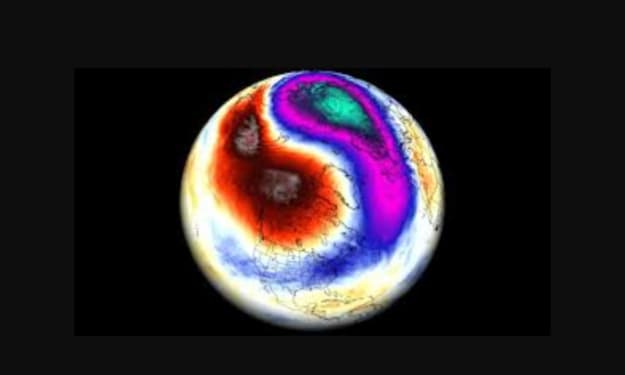
Polar Vortex Collapse Forecast: What It Means and Why It Matters
As winter progresses in the Northern Hemisphere, scientists are closely monitoring forecasts suggesting a potential polar vortex collapse. The term “polar vortex” has entered mainstream conversations in recent years, often associated with extreme cold snaps in North America, Europe, and parts of Asia. But what exactly is a polar vortex collapse, why does it happen, and why should people care? Understanding this phenomenon is crucial, not just for weather enthusiasts, but for anyone concerned about climate change, energy infrastructure, and global weather patterns. What Is the Polar Vortex? The polar vortex is a large area of low pressure and extremely cold air surrounding both of Earth’s poles, contained by a fast-moving band of winds known as the polar jet stream. In the Northern Hemisphere, it sits over the Arctic, spinning in a counterclockwise direction. Under normal conditions, the vortex keeps the Arctic air largely contained. However, fluctuations in atmospheric pressure and temperature can cause the vortex to weaken, shift, or even split, allowing frigid air to escape southward into populated regions. This is often what leads to extreme winter weather events in the United States, Canada, Europe, and Asia. What Does a Polar Vortex Collapse Mean? A “polar vortex collapse” refers to a significant weakening or breakdown of the vortex, often caused by sudden stratospheric warming events high in the atmosphere. When the polar vortex collapses: Arctic air can spill into mid-latitudes, leading to extreme cold in regions unaccustomed to such temperatures. Weather patterns become more erratic, causing longer-lasting cold spells or shifts in precipitation. Jet streams weaken or meander, which can contribute to storms, heavy snowfall, or unusual weather events across continents. The term “collapse” doesn’t mean the vortex disappears entirely — it is still present — but its structural integrity is compromised, allowing Arctic air to move into areas that typically enjoy milder winter conditions. Why Scientists Are Concerned Meteorologists and climate scientists pay close attention to the polar vortex because its behavior has far-reaching implications: Energy Demand: Sudden cold snaps increase heating demand, which can strain power grids and fuel supply chains. Agriculture: Extreme cold can damage crops, delay planting, and reduce yields for sensitive crops like winter wheat. Transportation: Snowstorms and icy conditions disrupt travel, affecting both local commuting and international logistics. Global Weather Links: A collapsed polar vortex can influence weather far beyond North America, including unusual rainfall patterns, storms, and temperature anomalies in Europe and Asia. Recent studies suggest that climate change may be making the polar vortex more unpredictable, with warmer Arctic temperatures affecting the jet stream’s stability. This could lead to more frequent or intense cold waves in regions far from the pole. Historical Examples of Polar Vortex Events The polar vortex has been linked to some of the most memorable winter events in recent decades: January 2014 (United States): Millions faced record-breaking cold as Arctic air plunged southward, with temperatures in the Midwest dropping to -30°F (-34°C) in some areas. February 2021 (North America): A weakened polar vortex contributed to extreme cold across Texas and the central U.S., causing widespread power outages and water supply disruptions. Europe 2018–2019: Fluctuations in the Arctic vortex led to extended cold spells across parts of northern and eastern Europe. Each of these events illustrates how disruptions in the Arctic atmosphere can quickly translate into severe conditions thousands of miles away. Why a Polar Vortex Collapse Matters Globally Although the polar vortex is centered over the Arctic, its collapse affects global weather in multiple ways: Economic Impacts: Cold snaps can halt industrial activity, increase heating costs, and strain insurance systems due to property damage. Climate Feedback Loops: Extreme Arctic events can accelerate ice melt, altering sea levels and global weather patterns. Human Health: Extended periods of extreme cold increase risks of hypothermia, frostbite, and other health emergencies, particularly for vulnerable populations. Ecosystem Effects: Wildlife adapted to stable seasonal patterns may struggle to survive sudden temperature fluctuations, affecting biodiversity in affected regions. The interconnectedness of global systems means that an Arctic event can ripple across continents, affecting agriculture, energy, and even food security. What Can People Do to Prepare? While individuals cannot control atmospheric phenomena, there are practical steps to prepare for polar vortex-related extreme cold: Home Safety: Insulate homes, check heating systems, and prepare emergency kits with blankets, food, and water. Travel Caution: Monitor forecasts before traveling and have contingency plans for snow or ice-related disruptions. Community Awareness: Check on neighbors, especially the elderly or vulnerable, during prolonged cold events. Government Preparedness: Authorities often increase readiness of power grids, emergency services, and transportation systems ahead of forecasted events. Being informed and proactive can reduce the human and economic impact of a polar vortex collapse. Looking Ahead: Climate Change and the Polar Vortex Scientists warn that the Arctic is warming faster than the rest of the planet, which may make the polar vortex more unstable. As the vortex weakens, the frequency of extreme cold events in mid-latitudes may rise, even while the planet as a whole becomes warmer. This paradox — colder extremes amid global warming — can be confusing but is consistent with climate models. It emphasizes the need for global cooperation in climate mitigation, adaptation, and disaster preparedness. Final Thoughts The forecast of a potential polar vortex collapse is a reminder that Earth’s climate system is complex and interconnected. What happens in the Arctic does not stay in the Arctic; it has tangible consequences for energy, health, ecosystems, and economies across the Northern Hemisphere. Understanding these dynamics, staying informed, and taking proactive steps can help societies mitigate risks and adapt to a changing climate. Whether you’re a casual weather watcher or a climate enthusiast, the polar vortex collapse is a phenomenon worth following — because its reach extends far beyond the Arctic Circle.
By Muhammad Hassan5 days ago in Earth

Comments
There are no comments for this story
Be the first to respond and start the conversation.