
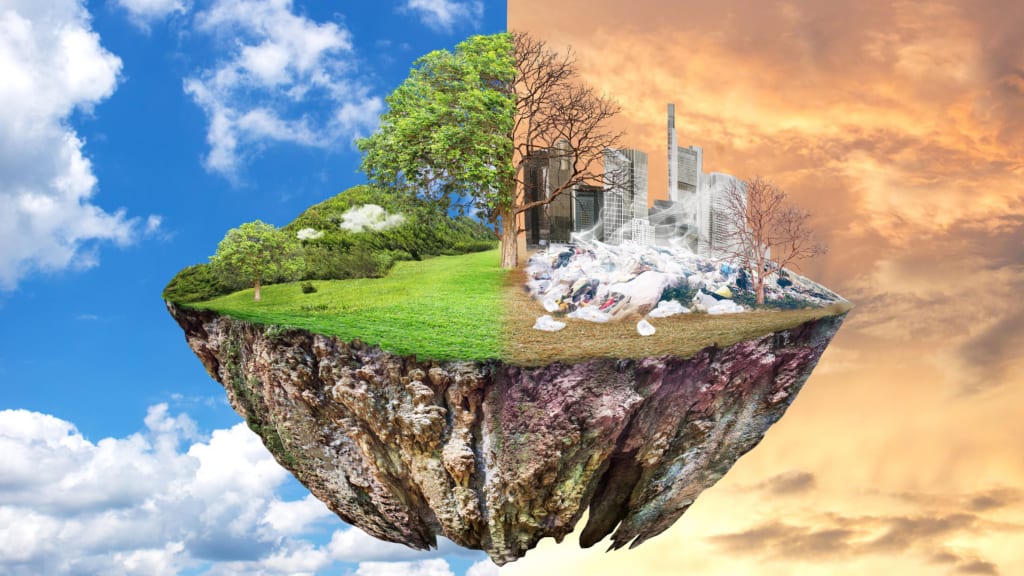
title: Global Warming: A Call for Urgent Action
Introduction:
Global warming has emerged as one of the most pressing challenges of our time, with far-reaching implications for our planet and future generations. As human activities continue to release excessive amounts of greenhouse gases into the atmosphere, the Earth's temperature is steadily rising, leading to adverse consequences for our environment, ecosystems, and human well-being. This essay aims to shed light on the causes and effects of global warming, emphasizing the urgency of taking immediate action to mitigate its devastating impacts.
Causes of Global Warming:
Global warming primarily results from the accumulation of greenhouse gases, such as carbon dioxide (CO2), methane (CH4), and nitrous oxide (N2O), in the Earth's atmosphere. The main contributors to these emissions are human activities, including the burning of fossil fuels for energy production, deforestation, industrial processes, and transportation. These actions release enormous quantities of greenhouse gases, trapping heat within the atmosphere and intensifying the greenhouse effect.
Effects of Global Warming:
The effects of global warming are already being observed worldwide and are likely to worsen unless substantial actions are taken. Rising global temperatures lead to the melting of polar ice caps and glaciers, causing sea levels to rise. This phenomenon poses a significant threat to coastal regions, increasing the frequency and intensity of coastal flooding, storm surges, and erosion. Furthermore, global warming disrupts weather patterns, leading to more frequent and severe heatwaves, droughts, wildfires, and extreme weather events, jeopardizing agriculture, water supplies, and human settlements.
The impacts on ecosystems are equally alarming. Coral reefs, home to rich biodiversity, are suffering from bleaching and extinction due to increasing ocean temperatures and acidification. Changes in temperature and precipitation patterns also affect the distribution and behavior of plant and animal species, leading to disrupted ecosystems and loss of biodiversity. Additionally, global warming contributes to the spread of diseases and threatens the health of human populations, exacerbating existing health disparities.
The Urgency of Action:
Addressing global warming requires collective global efforts and immediate action. Governments, industries, and individuals must recognize their role in mitigating greenhouse gas emissions and transitioning to sustainable practices. Here are some crucial steps that need to be taken:
Transition to renewable energy: Governments and businesses should invest in renewable energy sources, such as solar, wind, and hydroelectric power, while gradually phasing out fossil fuels. This transition will not only reduce greenhouse gas emissions but also create job opportunities and promote economic growth.
Enhance energy efficiency: Improving energy efficiency in industries, buildings, and transportation can significantly reduce carbon emissions. Energy-efficient technologies, stricter building codes, and sustainable urban planning are crucial for achieving this goal.
Promote sustainable land use and conservation: Protecting forests and promoting afforestation can help absorb CO2 emissions and preserve biodiversity. Sustainable agriculture practices, including organic farming and reduced deforestation for agricultural expansion, are essential for curbing global warming.
Raise awareness and educate: Governments, educational institutions, and media should increase awareness about the causes and effects of global warming. Encouraging individuals to adopt environmentally friendly lifestyles, such as reducing waste, conserving water, and embracing public transportation, can make a significant impact.
Conclusion:
Global warming is an imminent threat that demands immediate attention. The consequences of inaction are far too great to ignore. By reducing greenhouse gas emissions, transitioning to renewable energy sources, and adopting sustainable practices, we can mitigate the impacts of global warming and build a more resilient and sustainable future. It is our responsibility, as stewards of this planet, to take decisive action and preserve the Earth for future generations. Together, we can combat global warming and create a more sustainable and habitable world
About the Creator
Keep reading
More stories from writers in Earth and other communities.
Spotlight on the Risks of An Exploding Sea Urchin Population
The marine ecosystem is a complicated place full of millions of species and hundreds of thousands of critically interdependent relationships. While the decline of some species populations might have only marginal effects on the health of the world’s oceans, others could set off a chain of events that could ultimately be catastrophic.
By Virginia Chipurnoi3 days ago in Earth
One Hard Thing
Stop me if you’ve heard this one before: You have the number, you know your schedule- you’ve even picked out the perfect day and time to make this appointment. Shoot, you’ve even picked out alternative days and times just in case their schedules can’t accommodate you!
By Taylor Rigsby8 days ago in Motivation




Comments
There are no comments for this story
Be the first to respond and start the conversation.