
Global Warming & It's effects in near future.
What will be the future of Earth?
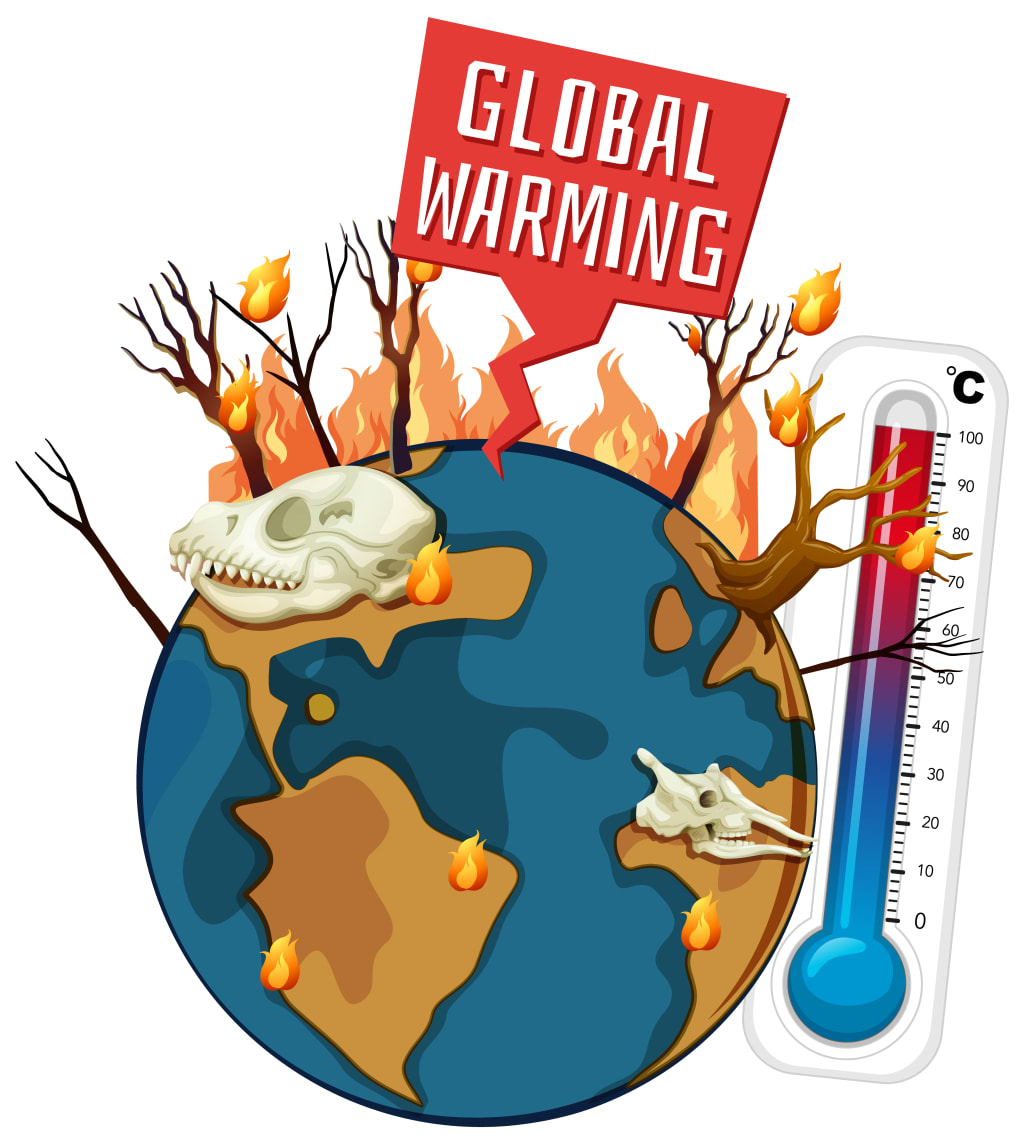
Global warming refers to the long-term increase in Earth's average surface temperature due to the buildup of greenhouse gases in the atmosphere. These gases, primarily carbon dioxide (CO2) from human activities such as burning fossil fuels and deforestation, trap heat from the sun and cause the planet to warm. This warming leads to various environmental impacts, including rising sea levels, extreme weather events, loss of biodiversity, and disruptions to ecosystems. It is a significant global challenge that requires collective efforts to reduce greenhouse gas emissions, transition to cleaner energy sources, promote sustainable practices, and adapt to the changes already occurring.
Global warming has a range of effects on the Earth's climate system and various aspects of the environment. Here are some key effects:
1) Rising temperatures: Global warming is causing an overall increase in temperatures worldwide. This leads to heatwaves, heat-related illnesses, and stresses on agriculture, water resources, and ecosystems.
2) Melting ice and rising sea levels: As temperatures rise, glaciers and ice sheets melt, contributing to the rise in sea levels. This threatens coastal communities, increases the risk of flooding, and leads to the loss of critical habitats for many species.
3) Extreme weather events: Global warming intensifies extreme weather events, including hurricanes, cyclones, droughts, and heavy rainfall. These events can result in property damage, loss of lives, and disruptions to ecosystems and infrastructure.
4) Ocean acidification: The increase in carbon dioxide levels leads to ocean acidification, which negatively affects marine life such as coral reefs, shellfish, and other organisms with calcium carbonate shells or skeletons. This has implications for biodiversity, fisheries, and the overall health of marine ecosystems.
5) Disruption of ecosystems: Global warming affects ecosystems and biodiversity. Some species may struggle to adapt to changing temperatures, altering migration patterns, and disrupting the delicate balance of ecosystems. This can lead to species extinction, loss of biodiversity, and negative impacts on ecosystem services.
6) Changes in precipitation patterns: Global warming can alter rainfall patterns, causing shifts in regional climate and increasing the frequency and intensity of droughts in some areas while causing heavier rainfall and flooding in others. These changes have significant implications for agriculture, water availability, and natural ecosystems.
Addressing global warming requires taking steps to reduce greenhouse gas emissions, transitioning to cleaner energy sources, conserving resources, adopting sustainable practices, and promoting resilience and adaptation measures.
Global warming poses significant challenges for the future of Earth. Here are some key aspects to consider:
Climate change impacts:
As global warming continues, the Earth's climate will undergo further changes. Rising temperatures will lead to more frequent and intense heatwaves, extreme weather events, and disruptions to ecosystems. Sea levels will continue to rise, threatening coastal communities and low-lying areas. These changes will have profound social, economic, and environmental consequences.
Biodiversity loss:
Global warming contributes to habitat loss and changes in ecosystems, which can result in the extinction of plant and animal species. Loss of biodiversity reduces ecosystem resilience and can disrupt essential services provided by ecosystems, such as pollination, water purification, and carbon sequestration.
Human health risks:
Rising temperatures and changing weather patterns can have direct and indirect impacts on human health. Heat-related illnesses, the spread of infectious diseases, air pollution, and food and water shortages can all be exacerbated by global warming. Vulnerable populations, including the elderly, children, and those in low-income countries, are particularly at risk.
Food and water security:
Climate change affects agricultural productivity and water availability. Changes in precipitation patterns, including droughts and floods, can disrupt crop yields and lead to food shortages. Additionally, rising sea levels can contaminate freshwater sources, impacting water security for both humans and ecosystems.
Economic implications:
The economic costs of global warming are significant. Extreme weather events, infrastructure damage, loss of agricultural productivity, and health-related expenses all contribute to financial burdens. Mitigating and adapting to global warming require substantial investments in renewable energy, sustainable infrastructure, and climate resilience measures.
To mitigate the future impacts of global warming, it is crucial to reduce greenhouse gas emissions through transitioning to renewable energy sources, improving energy efficiency, and implementing sustainable practices. Adaptation measures such as strengthening infrastructure, enhancing water management, protecting ecosystems, and promoting climate-resilient agriculture are also necessary. International cooperation and concerted efforts across sectors and societies are essential to address the future challenges posed by global warming and create a sustainable and resilient future for Earth.
About the Creator
Keep reading
More stories from Hassaan Khan and writers in Earth and other communities.
John Wick
John Wick is a fictional character portrayed by actor Keanu Reeves in the "John Wick" film series. Created by screenwriter Derek Kolstad, John Wick is a retired hitman seeking vengeance for the death of his beloved dog and the theft of his car. The first film, "John Wick," was released in 2014 and was followed by two successful sequels, "John Wick: Chapter 2" in 2017 and "John Wick: Chapter 3 – Parabellum" in 2019. A fourth installment, "John Wick: Chapter 4," is scheduled for release in 2022.
By Hassaan Khan3 years ago in Fiction
Whose Goat Is This?
Pir Sahib was startled when he saw a goat roaming freely in the courtyard of his house. Stroking its neck, he spoke to himself, wondering where the goat had come from and why it seemed so fearless, as if it belonged there. The house door was open, which explained how the goat had wandered inside.
By Sudais Zakwan5 days ago in Earth
Trade an Alliance for an Island? That’s a Bad Deal
In global politics, deals are often complex, involving trade-offs between economic benefits, security, and diplomacy. But some propositions are so controversial that they make analysts, policymakers, and citizens alike shake their heads. One such idea that has sparked debate is the notion of trading a military or political alliance for control over a strategic island. While it may seem tempting on the surface — after all, islands can provide resources, ports, or strategic leverage — experts warn that the costs almost always outweigh the benefits. Whether in the context of historical disputes or contemporary geopolitical maneuvers, the principle is clear: sacrificing alliances for short-term territorial gain is a recipe for long-term instability. The Strategic Value of Islands Islands have long held outsized importance in global strategy. Their locations can control shipping lanes, host military bases, or serve as hubs for surveillance and trade. Examples abound: Guam, a U.S. territory in the Pacific, serves as a crucial military outpost. Falkland Islands, a British overseas territory, have sparked wars over sovereignty. Taiwan, an island nation, sits at the center of a high-stakes geopolitical standoff. It’s no wonder that countries often covet islands. But there’s a critical question: does gaining an island justify undermining the alliances that guarantee your security? Alliances Are Hard to Replace Alliances are built on trust, shared interests, and mutual defense commitments. They are far more difficult to establish than an island is to claim. Trading an alliance for territorial gain may offer immediate leverage or prestige, but the risks are profound: Loss of Credibility – Nations that abandon allies for short-term gain quickly earn reputations as unreliable partners. Future negotiations become harder, as other countries question whether agreements will be honored. Security Gaps – Alliances often provide defense guarantees, intelligence sharing, and logistical support. Sacrificing them leaves a country vulnerable to external threats, particularly from rivals who may exploit the weakened network. Economic Costs – Alliances often underpin trade, investment, and joint infrastructure projects. Breaking them can lead to sanctions, lost markets, or reduced foreign investment. The lesson: while an island may offer strategic positioning, the network of alliances it might cost is far more valuable in the long run. Historical Lessons History provides cautionary tales. Consider these examples: World War II: Several countries prioritized short-term territorial gains over alliances, leading to devastating consequences. Nazi Germany initially signed non-aggression pacts with smaller neighbors, only to later invade them. The temporary territorial gains could not compensate for the loss of trust and the eventual collapse of strategic alliances. Cold War-era negotiations: Smaller countries were frequently courted with promises of land or aid in exchange for switching allegiances. Those who accepted often found themselves isolated once the larger powers shifted focus. Even today, analysts warn against decisions that sacrifice alliances for geographic gains, emphasizing that political isolation often outweighs any tactical advantage an island might provide. Modern Geopolitical Risks In today’s interconnected world, the stakes are even higher. Global powers rely on alliances for cybersecurity, intelligence sharing, and coordinated responses to crises. Trading away alliances for an island could: Increase regional instability, as neighboring states perceive opportunism and may respond aggressively. Undermine defense networks, reducing the effectiveness of coordinated military strategies. Trigger economic retaliation, such as sanctions, reduced foreign investment, or trade barriers. For example, in East Asia, speculation over islands in the South China Sea has shown that territorial claims can inflame tensions, disrupt shipping, and strain alliances. The international community’s response demonstrates that control over land rarely outweighs the benefits of strong regional partnerships. The Temptation of Short-Term Gains It’s easy to understand why some leaders might be tempted by the idea of trading alliances for islands. Islands offer tangible assets: ports, mineral resources, tourism opportunities, and symbolic prestige. In contrast, alliances are intangible, slow to show benefits, and require ongoing maintenance. But experts caution that these short-term gains are deceptive. Islands can become expensive liabilities, requiring military defense, infrastructure investment, and diplomatic management. Without the backing of reliable allies, these responsibilities can quickly overwhelm a nation’s capacity. Why Alliances Are the Better Investment Alliances, on the other hand, provide a foundation for long-term stability and prosperity. They: Strengthen deterrence against aggression. Enable resource sharing, from intelligence to humanitarian aid. Facilitate trade and economic integration. Enhance global influence, since countries with strong alliances carry more weight in negotiations. In short, while an island may give the appearance of strength, alliances provide real, multifaceted security. Nations that value lasting influence and resilience prioritize alliances over short-term territorial gains. Conclusion: Islands Are Not Worth Alliances In geopolitics, the lure of a small piece of land can be seductive. But as history and modern strategy show, alliances are the true currency of international power. Trading an alliance for an island may offer temporary prestige or leverage, but the long-term costs — security risks, economic consequences, and loss of credibility — are rarely worth it. Leaders seeking strategic advantage should remember that alliances, trust, and collaboration often outweigh any single piece of territory, no matter how strategically located or resource-rich. In the end, islands may be impressive on maps, but alliances shape the world in lasting, meaningful ways.
By Muhammad Hassan2 days ago in Earth




Comments
There are no comments for this story
Be the first to respond and start the conversation.