
Global Warming
Try to know the cause of global warming.

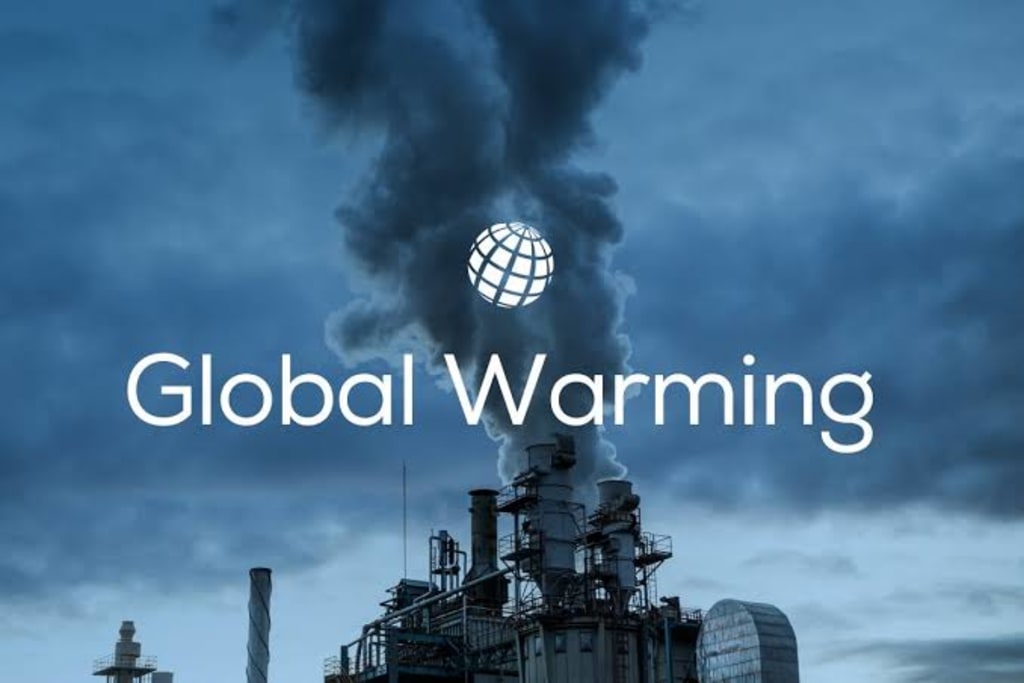
Global Warming: A Comprehensive Overview
Global warming refers to the long-term rise in the Earth's average surface temperature due to the accumulation of greenhouse gases (GHGs) in the atmosphere. It is one of the most pressing environmental issues facing humanity and the planet today, with far-reaching impacts on ecosystems, weather patterns, sea levels, biodiversity, and human health.
---
Causes of Global Warming
The primary cause of global warming is the greenhouse effect, a natural process where certain gases in Earth's atmosphere trap heat, keeping the planet warm enough to support life. However, human activities have significantly amplified this effect, leading to excessive warming.
Key Contributors:
1. Carbon Dioxide (CO₂): Released from burning fossil fuels such as coal, oil, and natural gas for energy and transportation.
2. Methane (CH₄): Emitted from agriculture (especially livestock), landfills, and oil and gas extraction.
3. Nitrous Oxide (N₂O): Produced by agricultural practices and industrial activities.
4. Chlorofluorocarbons (CFCs): Industrial compounds used in refrigeration and aerosol sprays, though largely banned now, have long atmospheric lifespans.
5. Deforestation: Reduces the planet’s capacity to absorb CO₂, while the burning and decomposition of trees release stored carbon.
---
Evidence of Global Warming
Global warming is supported by an overwhelming body of scientific evidence:
Rising Temperatures: Average global temperatures have increased by more than 1.1°C (2°F) since pre-industrial times, with the last decade being the warmest on record.
Melting Ice: Arctic sea ice, glaciers, and ice sheets in Greenland and Antarctica are shrinking at unprecedented rates.
Sea Level Rise: Thermal expansion of seawater and melting glaciers have led to rising sea levels, threatening coastal communities and ecosystems.
Extreme Weather: An increase in the frequency and intensity of heatwaves, hurricanes, droughts, wildfires, and heavy rainfall.
Ocean Changes: Oceans have absorbed much of the excess heat and CO₂, resulting in ocean warming, acidification, and disrupted marine ecosystems.
---
Impacts of Global Warming
Environmental Impacts:
Loss of Biodiversity: Many plant and animal species are at risk of extinction due to changing habitats and climate conditions.
Coral Bleaching: Warmer oceans have led to widespread coral bleaching, affecting marine life that depends on reefs.
Disrupted Ecosystems: Migration patterns, breeding seasons, and food availability are changing for many species.
Human Impacts:
Health Risks: Increased heat-related illnesses, the spread of vector-borne diseases like malaria and dengue, and food and water insecurity.
Agricultural Challenges: Altered growing seasons, reduced crop yields, and increased pest infestations.
Economic Costs: Damage to infrastructure, increased disaster relief costs, and losses in productivity and property.
Climate Migration: Rising sea levels and extreme weather are forcing communities to relocate, creating climate refugees.
---
Global Response and Mitigation Efforts
Addressing global warming requires a multi-faceted approach involving individuals, governments, and international organizations.
Mitigation Strategies:
Transition to Renewable Energy: Investing in solar, wind, hydroelectric, and geothermal energy.
Energy Efficiency: Enhancing building standards, appliances, and transportation to reduce energy consumption.
Carbon Pricing: Implementing carbon taxes or cap-and-trade systems to incentivize emission reductions.
Reforestation and Afforestation: Planting trees to absorb CO₂ and restore ecosystems.
Sustainable Agriculture: Adopting eco-friendly farming practices and reducing meat consumption.
International Agreements:
Kyoto Protocol (1997): The first international treaty aimed at reducing greenhouse gas emissions.
Paris Agreement (2015): A landmark global pact where nearly every country committed to limiting global warming to well below 2°C, with an ideal target of 1.5°C.
---
Conclusion
Global warming is not just an environmental issue—it is a profound challenge that threatens all aspects of life on Earth. Its consequences are already being felt and will intensify if significant action is not taken. The path forward lies in collective global efforts to reduce emissions, adapt to changing conditions, and transition to a more sustainable, resilient future. Each action taken today will shape the world future generations will inherit.
About the Creator
What Is Halal Food? A Complete Guide to Its Meaning, Benefits, and Global Importance
Halal food follows Islamic law from the Koran for permissibility. The word "halal" comes from the Arabic language, meaning "lawful" or "allowed". Though its origins are religious, halal food today is seen not only within the context of religion but also as a standard for cleanliness, humane treatment of animals, and food quality. Halal food guidelines apply to not only what food is eaten, but how it is sourced, prepared, processed, and served.
By Rohit Shah4 days ago in Earth
Global Markets on Alert as Europe Suspends Approval of US Trade Deal
Global financial markets are on high alert following Europe’s announcement that it will suspend approval of a major US trade deal, a decision that has sent shockwaves across stock exchanges, currency markets, and investment forums worldwide. The move comes amid growing concerns over trade imbalances, regulatory disputes, and geopolitical tensions between the United States and European Union. Economists warn that the suspension could create ripple effects across global supply chains, impacting everything from manufacturing and energy to technology and agriculture. The Trade Deal in Question The US-EU trade agreement, intended to streamline tariffs, boost investment, and harmonize regulations between the two economic powerhouses, had been widely anticipated as a game-changer for transatlantic commerce. Negotiations had taken years, with both sides seeking to protect sensitive industries while opening markets for goods and services. However, Europe’s decision to halt the deal reflects mounting concerns over the potential impact on domestic industries and regulatory standards. EU officials cited the need for further review of compliance with environmental, labor, and consumer protection regulations before giving the agreement a green light. While not a full cancellation, the suspension introduces uncertainty and highlights the fragility of international trade negotiations in the current geopolitical climate. Immediate Market Reactions Financial markets reacted swiftly. Stock indices in Europe, the US, and Asia experienced volatility as investors recalibrated expectations for corporate earnings, trade flows, and economic growth. Commodity markets, particularly oil and agricultural products, also saw price fluctuations as supply chain uncertainties increased. The US dollar strengthened slightly against major currencies, reflecting investor demand for perceived “safe-haven” assets amid uncertainty. Meanwhile, European stock markets experienced moderate declines, particularly in sectors most dependent on transatlantic trade, such as automotive, aerospace, and industrial machinery. Investment analysts caution that this volatility may persist as both sides negotiate next steps. Market participants are monitoring political statements, regulatory filings, and industry responses closely to gauge the potential timing and scope of any eventual agreement. Broader Economic Implications Beyond immediate market movements, the suspension of the trade deal could have broader consequences for global economic growth. Reduced trade flows between the US and EU may affect multinational companies that rely on predictable tariffs and harmonized regulations. Sectors such as technology, pharmaceuticals, and energy could face delays in approvals, increased costs, or regulatory conflicts. Emerging markets may also feel the impact indirectly. Many countries are linked to transatlantic supply chains, exporting components, raw materials, or services to Europe or the United States. Any slowdown in EU-US trade could ripple through global production networks, affecting economic growth and employment in distant regions. Political Dimensions The suspension is not purely economic; it also has significant political implications. EU leaders are facing domestic pressures to safeguard industries, protect workers, and maintain environmental and safety standards. At the same time, US officials are emphasizing the strategic benefits of transatlantic cooperation and the risks of prolonged uncertainty. This tension underscores the broader challenge of balancing national interests with the benefits of globalization. Trade agreements are rarely purely transactional; they carry social, political, and environmental stakes. Europe’s decision to pause approval reflects a cautious approach in a time of global volatility, including ongoing geopolitical conflicts, energy security concerns, and fluctuating financial markets. Expert Analysis Economists and trade experts suggest that while the suspension introduces short-term uncertainty, it does not necessarily mean the collapse of the US-EU trade agreement. “This is a temporary pause,” says Dr. Elena Fischer, an international trade analyst. “Europe wants to ensure that the deal aligns with regulatory and sustainability standards. Once concerns are addressed, there is a strong likelihood that negotiations will resume and the agreement will eventually move forward.” Others, however, warn that delays could embolden protectionist tendencies and encourage other nations to reconsider or renegotiate trade agreements. The current global environment—marked by rising inflation, energy price volatility, and ongoing geopolitical tensions—makes international cooperation more complex than ever. Industry Responses Businesses on both sides of the Atlantic are closely watching the developments. Large multinational corporations have expressed concern about the potential for regulatory divergence, increased compliance costs, and disrupted supply chains. Some industries, such as automotive manufacturers and tech companies, rely heavily on synchronized regulations and predictable tariffs to maintain profitability. Trade associations are urging governments to provide clarity and timelines to prevent prolonged uncertainty. Investors, meanwhile, are adjusting portfolios to hedge against potential volatility, emphasizing sectors that may be less affected by transatlantic trade fluctuations. Potential Next Steps The path forward likely involves further negotiation, regulatory review, and stakeholder consultations. European officials have indicated that they are committed to maintaining high environmental and labor standards, while US negotiators are advocating for rapid approval to support economic growth and stability. Observers expect a period of careful diplomacy, with both sides balancing domestic pressures against broader economic and strategic interests. While the market may continue to experience volatility, experts suggest that clarity will eventually emerge, either in the form of a revised deal or a timeline for approval. Conclusion The suspension of the US-EU trade deal serves as a stark reminder of the delicate balance in global economic relations. Markets respond instantly to news and sentiment, while underlying economic, political, and regulatory considerations unfold more slowly. Investors, businesses, and policymakers must navigate these uncertainties carefully, weighing risks and opportunities in an interconnected world. As Europe pauses to ensure compliance and protect domestic interests, the global community watches closely. The resolution of this trade issue will not only shape transatlantic commerce but could influence global trade norms, investor confidence, and economic growth for years to come. For now, the message is clear: in an era of complex international relationships, vigilance and strategic foresight are paramount for global markets.
By Muhammad Hassan6 days ago in Earth



Comments (1)
read it carefully