
Global Tea Market Size and Forecast 2025–2033: Tradition Meets Innovation in a US$ 122.59 Billion Industry
From ancient rituals to modern wellness trends, the global tea market is evolving into one of the most resilient and dynamic beverage industries of the decade.


Global Tea Market Outlook at a Glance
The global tea market is entering a new era of sustained growth, blending centuries-old traditions with modern health, lifestyle, and sustainability trends. According to Renub Research, the tea market is expected to grow from US$ 69.26 billion in 2024 to US$ 122.59 billion by 2033, registering a compound annual growth rate (CAGR) of 6.55% from 2025 to 2033.
This growth is being powered by multiple forces: rising global population, growing health consciousness, expanding middle-class consumption, and innovation in tea varieties and formats. At the same time, tea-producing nations such as China, India, Sri Lanka, and Kenya continue to strengthen their dominance through production scale, export capacity, and product diversification.
Once regarded as a traditional beverage, tea is now positioned as a functional, premium, and lifestyle-driven product, appealing to both mature consumers and younger generations seeking wellness-focused alternatives to carbonated drinks and coffee.
Global Tea Market Overview
Tea remains one of the most consumed beverages in the world, with deep cultural, social, and economic roots across Asia, Europe, the Middle East, and the Americas. From ceremonial green teas in China and Japan to India’s everyday chai and Britain’s iconic afternoon tea, the beverage has transcended geography and generations.
In recent years, the market has experienced a significant shift toward premiumization and specialization. Consumers are increasingly choosing organic, specialty, herbal, and functional teas, driven by rising awareness of antioxidants, detox benefits, and immune support.
At the same time, innovation has reshaped consumption patterns. Ready-to-drink (RTD) teas, cold brews, flavored blends, and wellness-infused teas are attracting younger demographics and urban consumers. E-commerce platforms and direct-to-consumer (DTC) models are also accelerating global accessibility, allowing brands to reach niche audiences across borders.
Despite challenges such as climate change, labor shortages, and sustainability concerns, the tea industry remains well-positioned for long-term growth, supported by innovation, digital marketing, and changing lifestyle preferences.
Major Growth Drivers Shaping the Tea Market
1. Growing Global Population and Urbanization
Global population growth continues to be a fundamental driver of tea demand. According to the United Nations, the world population is projected to reach 9.7 billion by 2050, adding nearly 2 billion consumers over the next three decades. As populations grow, so does the demand for affordable and widely accepted beverages such as tea.
Urbanization is also changing consumption habits. City dwellers often prefer convenient, health-conscious products, and tea fits seamlessly into this lifestyle. The expanding middle class in developing economies is adopting tea for both social and health reasons, contributing to steady market expansion.
2. Climate-Resilient Agriculture and Technological Progress
While climate change poses risks, technological innovation is helping the tea industry adapt. Precision agriculture, GPS-based farming, IoT-enabled irrigation, and improved fertilizer management are enhancing crop efficiency and yield.
In addition, climate-resilient tea cultivars are being developed to withstand erratic rainfall and rising temperatures. These advancements are stabilizing production and ensuring consistent supply.
According to the Food and Agriculture Organization (FAO), global tea production increased from 4.3 million tons in 2008 to 6.3 million tons in 2020, and this upward trend is expected to continue as technology improves farming resilience.
3. Rising Health Awareness and Wellness Trends
Health consciousness has become one of the strongest demand drivers in the tea market. Tea is widely recognized for its antioxidants, polyphenols, and catechins, particularly in green and herbal varieties.
A survey by Aditya Birla Health Insurance found that 84% of respondents became more health-conscious after the pandemic, accelerating demand for functional beverages. As consumers reduce sugar intake and move away from carbonated drinks, tea is increasingly seen as a clean, natural alternative.
Wellness-focused teas—such as detox, immunity-boosting, digestion-supporting, and stress-relief blends—are gaining popularity globally, expanding the market’s reach beyond traditional consumers.
Key Challenges Facing the Tea Industry
Sustainability and Environmental Impact
Sustainability remains a critical issue. Unsustainable farming practices—such as excessive pesticide use, soil depletion, and deforestation—have environmental consequences. Tea cultivation is also water-intensive, creating challenges in regions facing water scarcity.
In response, many producers are adopting certifications like Rainforest Alliance and Fair Trade, but transitioning to sustainable practices can be costly, particularly for small farmers. Balancing environmental responsibility with profitability remains a key challenge.
Quality Control and Authenticity Issues
With rising demand for premium and organic teas, quality consistency and authenticity have become major concerns. Variations in climate, soil, and processing methods make standardization difficult.
Moreover, fraudulent labeling and false organic claims threaten consumer trust. Implementing traceability systems and certification processes is essential but can be expensive, especially for small-scale producers.
Regional Market Insights
United States Tea Market
The U.S. tea market is growing steadily, driven by rising demand for health-oriented beverages and flavored tea varieties. Green, herbal, and functional teas are particularly popular among health-conscious consumers.
According to the U.S. Census, over 159 million Americans consume tea daily, reflecting a large and stable consumer base. The market has also benefited from the rapid growth of RTD tea products, especially in urban areas.
In 2024, Lipton launched five new flavonoid-rich green teas in the U.S., supported by a 36-week digital and influencer-driven marketing campaign aimed at Gen Z consumers, highlighting how innovation and branding are reshaping tea consumption.
United Kingdom Tea Market
Tea remains a cultural cornerstone in the UK, making it one of the largest tea markets globally. While traditional black tea still dominates, demand for herbal, green, organic, and specialty blends is rising.
Consumers are increasingly seeking ethical sourcing, fair trade, and premium products, while RTD tea and wellness teas are gaining traction. Despite competition from coffee and energy drinks, tea’s cultural significance ensures strong and consistent demand.
India Tea Market
India is both a major producer and consumer of tea, with chai deeply embedded in daily life. The country consumes 15 times more tea than coffee, reflecting its cultural dominance.
Black tea leads the market, but health awareness is driving growth in green and herbal teas, particularly in urban areas. Premium and organic teas from Assam, Darjeeling, and Nilgiri are gaining global recognition, while RTD tea is expanding due to convenience-driven lifestyles.
However, challenges such as supply chain inefficiencies and price sensitivity continue to impact the domestic market.
United Arab Emirates Tea Market
The UAE’s tea market is growing steadily, supported by a diverse expatriate population and strong import infrastructure. Black, green, and herbal teas are widely consumed, while premium varieties from Darjeeling and Ceylon are in high demand in urban centers like Dubai and Abu Dhabi.
The rise of wellness teas and RTD products, combined with the UAE’s role as a regional trading hub, is accelerating market growth, although competition from other beverages and price sensitivity remains a challenge.
Global Tea Market Segmentation
By Product Type
Green Tea
Black Tea
Oolong Tea
Others
By Packaging
Plastic Containers
Loose Tea
Paper Boards
Aluminum Tea
Tea Bags
Others
By Application
Residential
Commercial
By Distribution Channel
Supermarkets & Hypermarkets
Specialty Stores
Convenience Stores
Online Stores
Others
Country-Level Coverage (25 Countries)
The report covers detailed analysis across North America, Europe, Asia Pacific, Latin America, and the Middle East & Africa, including major markets such as the United States, China, India, United Kingdom, Germany, Japan, Brazil, Saudi Arabia, and the UAE.
Company Analysis: Leading Players in the Global Tea Market
The competitive landscape includes global and regional leaders analyzed from four viewpoints—overview, leadership, strategy, and financial insights:
Associated British Foods Plc
Tata Consumer Products Limited (Tata Group)
Unilever
Barry’s Tea
Taetea Group
These companies are investing heavily in product innovation, sustainability, branding, and digital engagement to strengthen their global presence.
Final Thoughts
The global tea market is no longer defined solely by tradition—it is now a dynamic, innovation-driven, and health-oriented industry. With strong growth projected through 2033, tea continues to evolve from a simple beverage into a lifestyle choice aligned with wellness, sustainability, and premium consumption.
As consumers seek healthier alternatives, ethical sourcing, and new sensory experiences, tea is uniquely positioned to meet these demands. Supported by expanding global populations, technological advancements in agriculture, and shifting consumer preferences, the tea industry is set to remain one of the most resilient segments in the global beverage market.
In a world where tradition meets transformation, tea is proving that it can be both timeless and future-ready.
About the Creator
Janine Root
Janine Root is a skilled content writer with a passion for creating engaging, informative, and SEO-optimized content. She excels in crafting compelling narratives that resonate with audiences and drive results.
Keep reading
More stories from Janine Root and writers in Earth and other communities.
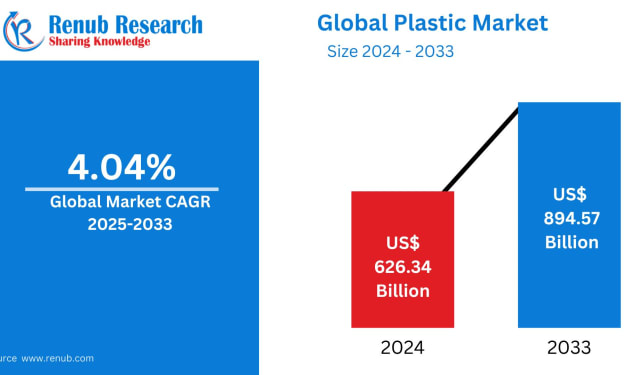
Global Plastic Market Size and Forecast 2025–2033: Innovation, Sustainability, and the Future of a $894 Billion Industry
Introduction: A Market That Touches Every Industry The global plastics industry remains one of the most influential pillars of modern manufacturing, supporting everything from food packaging and construction to healthcare, automotive, and electronics. Despite growing environmental scrutiny, plastics continue to evolve, adapt, and expand—driven by technological innovation, economic growth in emerging markets, and the urgent shift toward recyclable and biodegradable materials.
By Janine Root 2 days ago in Earth
UK Exposed to ‘Serious Harm’ by Failure to Tackle AI Risks, MPs Warn
The United Kingdom is facing growing warnings from Parliament that its approach to regulating artificial intelligence (AI) could leave citizens and the financial system exposed to serious harm. A recent report by the House of Commons Treasury Select Committee criticizes the government for a “wait-and-see” attitude toward AI risks, especially in financial services.
By Aarif Lasharia day ago in Earth
The Dryads Are Calling
Deep within the heart of ancient forests, where sunlight filters through towering canopies and the air hums with life, there exists a world few humans truly understand. It is a world of dryads, the mythical tree spirits of folklore, silently observing, nurturing, and sometimes guiding the creatures that dwell among the trees. Today, their legend continues to captivate the imagination, blending myth, nature, and a touch of magic.
By Aarif Lashari3 days ago in Earth



Comments
There are no comments for this story
Be the first to respond and start the conversation.