
Global science
The newest global technological information


New technology
The world's smallest miniature battery
Nowadays, electronic devices such as computers are becoming smaller and smaller, so there is an urgent need to develop smaller micro-batteries compatible with the devices. At present, the integration of micro-battery mainly uses wet chemical method, in which electrodes, adhesives and other materials need to be treated as mud, and the area of the battery integrated by this method is often more than 1 square millimeter. Recently, a study published in Advanced Energy Materials produced miniature batteries less than 1 square millimeter and smaller than a grain of salt using a method called Swiss roll.
The process of this "Swiss roll" method is simply to roll up miniature current collectors and strips of electrodes. The researchers coated the silicon wafers layer by layer with thin polymers, metals and insulating materials. because of the internal stress in the layered system, the film peeled off to release the stress, and the film curled automatically, thus forming a structure similar to the Swiss coil, which can be self-crimped into a cylindrical miniature battery without external force. In addition, this method is compatible with current chip manufacturing technology, so it is possible to fabricate such micro-batteries on silicon wafers with high throughput. The researchers also found that the rechargeable micro-battery can power microchips of similar size for 10 hours, so micro-batteries smaller than salt grains are expected to be used in future micro-and nano-scale electronic devices.
Surroundings
Antarctic pollutants accelerate snow melting
The researchers collected snow samples from a 2000-kilometer stretch of land in the northern Antarctic Peninsula and measured their black carbon concentrations, covering the most active sites for tourist activities and scientific expeditions, as well as more remote areas. The results show that the snow samples around scientific research facilities and tourist areas contain more black carbon than snow samples in remote areas. It is calculated that black carbon reduces snow cover by 23 millimeters each summer in severely affected areas. The researchers estimate that an average of 53,000 tourists arrive in Antarctica each year in the 2016-2020 tourist season, and believe that the amount of black carbon contributed by each tourist may lead to an average of about 83 tons of snow melting in the summer. Researchers believe that people should reduce the accumulation of black carbon in Antarctica in a variety of ways, such as the use of cleaner energy, the use of hybrid or electric ships and restrictions on the number of tourists, in order to reduce the burden of human activities on the environment in Antarctica.
Neuroscience
"singing neurons" in the human brain
There are parts of the brain that respond to a variety of music, but it is not clear how these regions code the response to music. In a new study, scientists combined different brain activity detection techniques and found an area in the auditory cortex that selectively responds to singing sounds. The study has been published in current Biology.
The scientists first used electrocorticography (electrocorticography) to record the electrical activity of 15 subjects. They asked 15 subjects to listen to 165 different sounds, including speech, music, finger tapping, dog barking, etc., and through algorithm analysis, they found that some clusters of neurons could respond to singing, but the response to speech or pure music was weak. The scientists then combined data collected by functional magnetic resonance imaging (fMRI), which can detect a wider range of brain regions, to locate neuron clusters more accurately. They found that these "singing neurons" were located at the top of the temporal lobe of the brain, close to areas of the brain that selectively respond to language and music, suggesting that these neurons may be able to respond to characteristics such as the mixed effect of words and pitch. The researchers hope to further study the specific aspects of singing that trigger the response of these neurons and the developmental mechanisms of these brain regions.
Scientific event
National Science and Technology Expenditure 970 billion in 2021
On February 22, at a press conference held by the Information Office of the State Council on financial reform and development, Minister of Finance Liu Kun introduced the relevant work of the Ministry of Finance in implementing the innovation-driven development strategy in 2021 and supporting scientific and technological self-reliance. In 2021, national expenditure on science and technology totaled 970 billion yuan, an increase of 7.2 percent over the same period last year. While expenditure at the central level continues to grow negatively in 2021, by adjusting the expenditure structure, the central level's expenditure on science and technology still reached 320.554 billion yuan, with emphasis on basic research, and the central level's expenditure on basic research increased by 15.3%. In 2021, the Ministry of Finance actively improved the central financial management of scientific research funds, expanded the autonomy of project funds management in the field of scientific research, and increased the proportion of indirect expenses based on the actual needs of scientific research work. At present, more than 50% of the funds for scientific research projects are spent on "people", which reduces the routine burden of researchers to a large extent, and creates a good atmosphere for researchers to study hard and produce more high-quality scientific research results. (science and Technology Daily)
Physics
Recently, a study published in Nature Physics used the world's largest X-ray laser and microimaging spectrometer to capture clear images of complex molecules of iodopyridine at the atomic scale. This is the sharpest image ever taken of a complex molecule. These images are important for recording future videos of molecular changes, while high-resolution videos can provide details of chemical or physical changes.
The researchers used a method called Coulomb explosion imaging. High-intensity, ultra-short-wavelength X-ray lasers can "knock out" most of the electrons in the molecule, freeing them from the binding of the molecule. At this point, the electrostatic repulsion between positively charged atoms causes the molecule to explode in femtosecond. Subsequently, the ion fragments separated after the explosion are "guided" by the electric field into the detector to be imaged, and then the images of the fragments are pieced together into molecular images according to the exact location and time of the fragments. Previously, this method was mainly used to image small molecules with no more than five atoms, but now the study breaks through this limit.
Material science
New type of strong and tough elastic material
Ionic gel is a kind of solid mixture material composed of polymer and liquid salt electrolyte (ionic liquid), which has excellent ionic conductivity, thermal stability, electrochemical stability and non-volatility. However, most of the existing ionic gel materials have low strength and toughness, and it is difficult to synthesize. Recently, a new study published in the journal Natural Materials has invented a new type of ionic gel with both toughness and elasticity.
The researchers used ultraviolet light to copolymerize acrylic acid and acrylamide in a 70% ionic liquid solution. The results showed that the average level of the gel was better than that of the above two monomer materials, and it was better than cartilage in terms of toughness. In addition, the ionic gel has the properties of self-healing and shape memory. For example, when it is exposed to 60 ℃, it can return to its original shape in tens of seconds.
About the Creator
Keep reading
More stories from jsyeem shekels and writers in Earth and other communities.
The Reality of the Illusion of Time
Recently, as I strolled along the short stretch to my strength training session, I aimlessly took in the row of tatty shops and shabby buildings along the route and passed an off-street, in which one of my sisters used to live, around thirteen years ago.
By Chantal Christie Weiss3 days ago in Earth
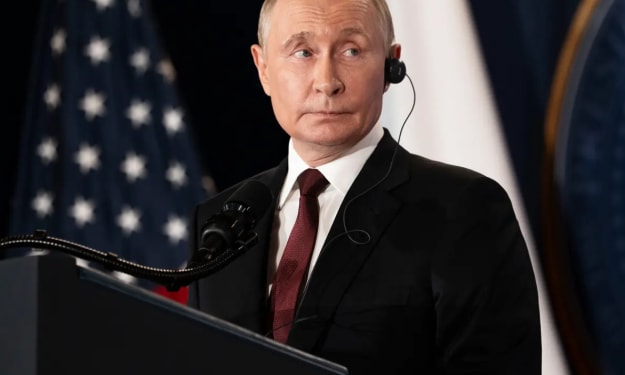
Why Putin Went Quiet When Challenged by Trump Over Venezuela
When U.S. forces captured Venezuelan President Nicolás Maduro in early January 2026, the world was stunned. Venezuela has long been a Russian ally, yet Russian President Vladimir Putin remained almost completely silent when challenged directly by U.S. President Donald Trump. Why would a leader so often outspoken on the world stage hold back in such a dramatic moment? Let’s unpack the story and explore what it means for global politics. A Bold Move That Shocked the World On January 3, U.S. forces executed a daring operation in Venezuela, taking Maduro into custody in New York to face charges including drug trafficking and narco‑terrorism. The operation was framed by the U.S. as a step to enforce justice, but critics saw it as an extraordinary overreach of power. Venezuela is no ordinary country for Russia. Since the days of Hugo Chávez, Moscow has cultivated close ties with Caracas, offering military support, energy deals, and diplomatic backing on the global stage. Past actions included Russian bombers visiting Venezuela and high-profile defense agreements. Given this history, many expected a fiery response from Putin. Yet, the Kremlin remained calm, issuing measured statements rather than sharp threats. Why Silence Was Strategic Experts suggest there are several reasons for Putin’s muted reaction, each revealing the careful calculation behind the Kremlin’s foreign policy. 1. Focus on the War in Ukraine Russia’s primary priority remains Ukraine. Engaged in a high-stakes military and diplomatic battle, Putin cannot afford distractions or new confrontations far from home. Escalating tensions with the United States over Venezuela could jeopardize Moscow’s position in Europe. A New York Times report highlighted that Russia is “subordinating all other interests to the war in Ukraine,” suggesting that even a high-profile ally like Venezuela takes a back seat to Moscow’s strategic goals. 2. Limited Military Options While Russia’s alliance with Venezuela is longstanding, much of the support has been symbolic rather than operational. Defense systems and military cooperation exist on paper, but Russia lacks the immediate ability to counter a U.S. operation thousands of miles away. Putin may have recognized that responding aggressively would be both ineffective and costly, potentially risking military and economic consequences that Moscow cannot afford. 3. Maintaining Diplomatic Channels with Washington With Donald Trump back in the White House since 2025, there has been cautious optimism in Moscow about recalibrating U.S.–Russia relations. Avoiding a dramatic confrontation over Venezuela keeps diplomatic channels open, allowing Russia to negotiate on other high-priority issues like Ukraine and sanctions relief. In other words, silence can be a calculated strategy, signaling restraint rather than weakness. 4. Russia’s Global Influence Is Waning The Maduro episode also highlights a broader geopolitical reality: Russia’s global reach has limits. Since the 2022 invasion of Ukraine, Moscow’s influence in regions like the Middle East and parts of the former Soviet Union has weakened. Venezuela remains one of its few high-profile allies outside Europe, but even there, Russia’s power is largely symbolic. By not escalating, Putin is acknowledging a practical truth: Russia cannot be everywhere at once, and some battles are not worth fighting. 5. Choosing Battles Wisely Some analysts emphasize that Putin’s quiet response is more about strategic prioritization than capitulation. In a world dominated by nuclear powers and volatile global politics, direct confrontation with the United States over Venezuela could spiral into a far larger crisis. By staying silent, the Kremlin may be signaling that it picks its battles carefully, focusing resources on Ukraine, where the stakes are highest. What This Means for the World Putin’s silence sends several messages: Russia is currently stretched, economically and militarily. Moscow is prioritizing Ukraine over symbolic allies. Strategic restraint is sometimes more powerful than public confrontation. The limits of Russian influence are becoming more visible to the world. This episode reflects a new reality in geopolitics: power is as much about choosing when not to act as when to assert force. The Bigger Picture The capture of Maduro is a defining moment not just for Venezuela, but for global politics. It shows the United States asserting power in a way not seen for decades, while Russia’s quiet reaction underscores its current limits and priorities. For observers, Putin’s silence is a lesson in modern geopolitics: even the most assertive leaders exercise restraint when stakes are high and risks are global. In the end, the Maduro affair reminds us that in today’s world, the loudest response is not always the most effective one — sometimes, quiet calculation speaks volumes. Sources and Further Reading The US capture of Maduro reveals Russia’s weakness – Atlantic Council ‘It sends a horrible signal’: US politicians react to capture of Nicolás Maduro – The Guardian Russia slams 'neocolonial threats' against Venezuela – Reuters
By Muhammad Hassan6 days ago in Earth



Comments
There are no comments for this story
Be the first to respond and start the conversation.