
From the Eyes of the Beholder
The Secret Lives of Animals


As an animal lover, I have always been fascinated by the mysterious world of animals. In this story, I will take you on a journey through the secret lives of animals. From their communication and social behavior to their intelligence and emotions, we will explore the fascinating world of animals through the eyes of the beholder.
Animal Communication and Social Behavior
Animals communicate with each other in various ways. Some use sounds, while others use body language or chemical signals. For example, dolphins communicate through a series of clicks and whistles, while chimpanzees use facial expressions and body postures.
Social behavior is also an essential aspect of animal life. Many animals live in groups, and they have complex social structures. For example, meerkats live in groups called mobs, where each member has a specific role to play. Some animals, like wolves, form packs that are led by an alpha male and female.
Communication and social behavior are critical to animals' survival, as they help them to find food, avoid danger, and mate. By studying their communication and social behavior, we can gain insights into their lives and learn how to protect them better.
Animal Intelligence and Problem-Solving Skills
Animals are much smarter than we give them credit for. Many animals have problem-solving skills, and they can use tools to accomplish tasks. For example, chimpanzees have been observed using sticks to extract termites from their nests, while elephants use branches to swat flies.
Some animals also have excellent memories. For example, bees can remember the locations of flowers, while elephants can remember the location of water sources.
Animals' intelligence and problem-solving skills are not just fascinating but also essential to their survival. By studying their intelligence, we can learn how to better protect them and their habitats.
Animal Emotions and Empathy
Animals have emotions just like humans. They can experience joy, fear, anger, and even grief. For example, elephants have been observed mourning their dead, while dogs can experience separation anxiety.
Many animals also have empathy, which means they can understand and share the feelings of others. For example, when one monkey is in pain, other monkeys will comfort it.
Understanding animal emotions and empathy is crucial to their welfare. By recognizing their emotions and empathizing with them, we can better care for them and improve their lives.
Animal Senses and Perception
Animals have a wide range of senses that they use to navigate their environment. Some animals have excellent eyesight, while others have an acute sense of smell or hearing. For example, sharks can detect the tiniest scent of blood from miles away, while bats use echolocation to navigate in the dark.
Animals' senses and perception are critical to their survival. By studying their senses, we can learn how they interact with their environment and how to better protect them from harm.
Animal Sleep, Dreams, and Play
Animals also sleep and dream, just like humans. However, the amount of sleep and the way animals sleep varies by species. For example, dolphins sleep with only half of their brain at a time, while giraffes only sleep for a few minutes at a time.
Many animals also play, which is essential for their development and well-being. For example, young animals like tiger cubs and puppies play to learn important skills, such as hunting and socializing.
Understanding animal sleep, dreams, and play is critical to their welfare. By ensuring they have adequate sleep and opportunities for play, we can improve their lives and promote their well-being.
Animal Adaptations and Survival Mechanisms
Animals have evolved a wide range of adaptations and survival mechanisms to help them survive in their environment. For example, chameleons can change color to blend in with their surroundings, while armadillos can curl up into a ball to protect themselves from predators.
Many animals also have unique features that help them survive. For example, kangaroos have powerful hind legs that allow them to hop long distances, while cheetahs have long legs and a streamlined body that allow them to run at incredible speeds.
Understanding animal adaptations and survival mechanisms is critical to their survival. By studying their adaptations, we can learn how to better protect them and their habitats.
Animal Relationships with Humans
Animals have had a complex relationship with humans throughout history. Some animals, like cats and dogs, have been domesticated and live with humans as pets. Other animals, like cows and chickens, are raised for food.
However, humans' interactions with animals are not always positive. Many animals are subjected to cruelty and exploitation, such as in the case of animal testing and trophy hunting.
Understanding animal relationships with humans is critical to their welfare. By recognizing the impact of our actions on animals, we can work towards a more ethical and compassionate relationship with them.
Endangered Species and Conservation Efforts
Many animal species are endangered due to habitat loss, poaching, and other human activities. Conservation efforts are critical to protecting these species and their habitats.
Conservation efforts can take many forms, such as protecting habitats, breeding programs, and education initiatives. For example, the World Wildlife Fund works to protect endangered species and their habitats, while zoos and aquariums often have breeding programs for endangered animals.
Understanding endangered species and conservation efforts is critical to their survival. By supporting conservation efforts, we can help protect these species and their habitats for future generations.
What we can learn from the Lives of Animals
Animals are fascinating creatures with complex lives. By studying their communication, intelligence, emotions, senses, adaptations, and relationships with humans, we can gain insights into their lives and learn how to better protect them.
Conservation efforts are critical to protecting endangered species and their habitats, and we can all play a role in supporting these efforts. By recognizing the impact of our actions on animals and working towards a more ethical and compassionate relationship with them, we can help ensure their survival for generations to come.
About the Creator
Keep reading
More stories from SK Pindiprolu and writers in Earth and other communities.
The Rise of Dwayne Haskins
As a football fan, I have been following the career of Dwayne Haskins closely ever since he entered the NFL in 2019. Haskins, born and raised in New Jersey, is a talented quarterback who has shown immense potential in his time on the field. In this article, I will take a closer look at Haskins' journey so far, from his college career to his current stint with the Pittsburgh Steelers. I will also examine his strengths and weaknesses as a quarterback, his off-field incidents, and his future prospects in the NFL.
By SK Pindiprolu3 years ago in Gamers
Inside Trump's $11 Billion Health Plan to Replace “Neo-Colonial” USAID
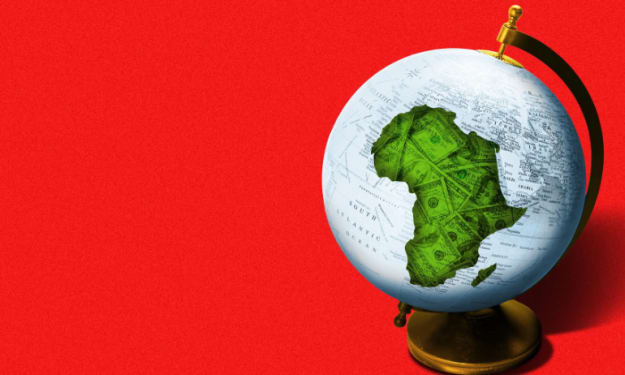
In the landscape of global health aid, few proposals have stirred as much debate as former President Donald Trump’s ambitious plan to restructure American assistance abroad. Dubbed an $11 billion health initiative aimed at replacing USAID’s current framework, the plan seeks to pivot away from what Trump and his allies have criticized as the “neo-colonial” approach of U.S. foreign aid. While the plan promises greater efficiency and impact, experts are split on whether it is a practical solution or a politically driven gamble. Trump’s Critique of USAID The United States Agency for International Development (USAID) has long been a central pillar of American foreign assistance, distributing billions in aid annually to address health crises, food insecurity, and development challenges worldwide. However, Trump’s administration and its supporters have often described USAID’s approach as bureaucratic, inefficient, and reflective of a “neo-colonial” mindset. In public statements, Trump argued that the U.S. was spending taxpayer dollars on programs that benefited foreign governments or contractors more than the intended local communities. Critics of the plan say that while USAID has flaws—as any large bureaucracy does—its extensive networks and decades of experience provide an unmatched capacity to deliver aid efficiently and safely. The Core of the $11 Billion Proposal At the heart of Trump’s proposal is an $11 billion fund designed to consolidate, modernize, and streamline U.S. health aid. Unlike the traditional USAID model, which relies heavily on long-term partnerships with governments and NGOs, the new plan emphasizes: Direct Impact Funding: Allocating resources to frontline health workers and local initiatives rather than intermediaries. Data-Driven Investments: Using real-time health data to target outbreaks and crises more efficiently. Private Sector Partnerships: Leveraging U.S. pharmaceutical companies, tech firms, and healthcare startups to deliver vaccines, treatments, and medical infrastructure. Shorter Program Cycles: Moving away from multi-year funding commitments in favor of more flexible, results-oriented programs. Proponents argue that this approach could reduce bureaucratic overhead and ensure U.S. aid reaches communities faster. By “cutting out the middlemen,” Trump supporters claim, America can avoid the pitfalls of slow-moving aid programs that sometimes fail to adapt to crises. Reactions from the Global Health Community Global health experts, however, have expressed concern about both the logistics and philosophy of the plan. Dr. Melissa Ortega, a senior researcher at the Global Health Policy Institute, explained, “The idea of bypassing established structures like USAID may sound appealing on paper, but in practice, it risks undermining decades of institutional knowledge. Health systems are complex, and short-term projects cannot replace long-term capacity building.” Some critics have also questioned the characterization of USAID as “neo-colonial.” While U.S. foreign aid has historically been tied to geopolitical interests, many programs today are designed collaboratively with recipient countries and local organizations. Reducing oversight could unintentionally increase the risk of misuse, corruption, or health inequities. On the other hand, supporters of Trump’s plan point to examples of inefficiency in USAID programs, citing cases where aid was delayed or mismanaged. By introducing more direct funding models, they argue, U.S. taxpayer dollars could achieve a higher “return on health outcomes.” Political Implications Trump’s health aid overhaul proposal is not just about international development—it is also deeply political. Framing USAID as a “neo-colonial” institution resonates with a populist narrative that America should prioritize its own citizens and assert greater control over how taxpayer money is spent abroad. Domestically, the $11 billion plan faces scrutiny from Congress. Lawmakers from both parties have questioned whether dismantling USAID’s systems could destabilize ongoing health programs in countries where the U.S. has long-term commitments. The potential impact on global health security—including the fight against pandemics like COVID-19—adds another layer of concern. Internationally, U.S. allies and partner nations are watching closely. Sudden shifts in aid delivery could disrupt health programs in low- and middle-income countries, many of which rely on predictable funding cycles to maintain vaccination campaigns, maternal health services, and disease surveillance. Possible Benefits and Risks If executed carefully, the Trump-backed model could bring several benefits: Faster Response Times: Direct funding could accelerate delivery of vaccines, treatments, and emergency support. Innovation Boost: By partnering with private sector companies, the plan could accelerate development of new health technologies. Accountability: With performance-based metrics, the plan may better measure the impact of U.S. aid. However, the risks are equally significant: Disruption of Existing Programs: Abrupt changes could destabilize ongoing health projects. Loss of Expertise: USAID’s decades of experience in navigating local governance, supply chains, and community engagement may be hard to replace. Geopolitical Fallout: Allies accustomed to collaborating with USAID might see the move as destabilizing, reducing cooperation on global health initiatives. Looking Ahead As Trump and his allies continue to advocate for this $11 billion overhaul, the debate over the future of U.S. health aid is intensifying. Proponents view it as a necessary modernization of an outdated system, while critics fear it could undercut decades of carefully built infrastructure and global partnerships. Ultimately, the success of this plan will hinge on its ability to balance efficiency with stability, innovation with oversight, and political objectives with humanitarian needs. For now, the proposal remains controversial, representing a dramatic departure from traditional approaches to U.S. foreign aid. Whether it will reshape global health for the better—or simply create more uncertainty—remains to be seen. In the end, the Trump health plan is as much about ideology as it is about dollars. It challenges the conventional wisdom of international development and asks whether a more streamlined, results-focused approach can truly replace a system built over decades. As the world watches, the stakes could not be higher: the future of U.S. global health aid—and the lives it touches—hangs in the balance.
By Muhammad Hassan4 days ago in Earth
Nitrogen is necessary for young tropical rain forests to combat climate change.
By absorbing carbon dioxide from the atmosphere and storing it in wood, tropical rainforests contribute to the slowing of climate change. Forests that develop quickly are even more important because they absorb carbon more quickly.
By Francis Dami3 days ago in Earth



Comments
There are no comments for this story
Be the first to respond and start the conversation.