
From Ocean to Land
Understanding the Formation and Impact of Hurricanes

One of the most destructive natural phenomena on Earth, hurricanes are vast rotating thunderstorms that act as self-sustaining heat engines. With winds reaching speeds of over 200 miles per hour, these storms can cause devastating consequences when they make landfall. From extreme rainfall to storm surges, hurricanes possess an astonishing power to focus the sun's energy into one destructive package. But what transforms a peaceful patch of ocean into Nature's Most Powerful storm?
Tropical cyclones, as hurricanes are known, vary in nomenclature based on their place of origin. In the Northwest Pacific, they are called typhoons, while in the Indian Ocean and South Pacific, they are known as cyclones. In the North Atlantic and Northeast Pacific, they go by the name hurricanes. The term "hurricane" stems from the language of the Taino, a Caribbean indigenous people, and has made its way into both Spanish and English.
Notable historical figures have left vivid descriptions of the terror hurricanes bring. Alexander Hamilton, who grew up in the Caribbean, compared the noise accompanying a hurricane to something that would astonish even angels. Throughout history, hurricanes have wreaked havoc on coastal communities in their path, leaving behind a trail of destruction. The residents living along the Florida coast are acutely aware of storm warnings, and they diligently prepare for the potential disasters that lie ahead.
So, how do hurricanes actually form? They often start as tropical waves, which are low-pressure areas moving across the Atlantic from Africa. However, several conditions must align for a wave to transform into a hurricane. The sea surface temperature needs to be at least 26.5 degrees Celsius down to a depth of 50 meters, with converging winds forcing air to rise and form storm clouds in the atmosphere.
Low wind shear is crucial to prevent the hurricane from tearing apart, and high relative humidity is necessary from the surface to the mid-levels of the atmosphere. Moreover, the storm must be at least five degrees of latitude from the equator, which roughly translates to 200 miles.
A hurricane's spinning motion is driven by the Coriolis effect, a phenomenon that occurs due to Earth's rotation. This effect can be visualized by imagining a spinning playground roundabout. When a ball is thrown from the middle, it curves to the right. Similarly, on a larger scale, the Coriolis effect gives hurricanes their characteristic twisted form, evident when observed from space. Once the wind speed reaches 74 miles per hour, the tropical storm is officially classified as a hurricane.
Hurricanes concentrate an astonishing amount of the sun's energy, far exceeding the average rate at which the United States utilizes electrical power. The sheer wind speed of a hurricane is not its only weapon; the storm's driving force is warm, moist air releasing its moisture and forming droplets in massive clouds. The resulting precipitation can amount to up to 2 billion tons of rainfall every day. Water is responsible for 90 percent of hurricane-related deaths, with storm surges accounting for almost half of these fatalities.
When a hurricane makes landfall, its powerful winds push the ocean forward, creating a wall of water known as a storm surge. The devastating impact of storm surges is exemplified by the tragedy of Hurricane Katrina, which breached New Orleans' water defenses and caused massive damage.
Additionally, hurricanes can spawn tornadoes due to the disparity in wind speeds between the surface and higher altitudes. Although a hurricane loses its energy source when moving across land and eventually dissipates, the destruction left in its wake can take years to rebuild.
The economic toll of tropical cyclones is staggering, with an average cost of $22.4 billion per storm in the United States alone. This surpasses the financial impact of other extreme weather events such as droughts, which average $11.1 billion per season.
While there is no scientific consensus on whether climate change directly affects hurricane behavior, it undeniably influences the systems that fuel these storms. The warming of oceans due to climate change provides hurricanes with more room to grow and intensify, as warmer air holds more moisture, leading to even more extreme rainfall events.
Hurricane Harvey, which struck Texas in 2017, exemplifies the connection between climate change and extreme rainfall. Considered one of the worst rainstorm events in U.S. history, Hurricane Harvey was approximately three times more likely due to global warming. Sea-level rise, another consequence of climate change, exacerbates storm surge impacts. As sea levels continue to increase, storm surges become more severe and cause greater devastation.
Additionally, studies have shown that hurricanes are moving slower, leading to prolonged periods of high winds and heavy rainfall. Slower-moving hurricanes are even more destructive, as they inflict more damage on human life and infrastructure. As these heat engines intensify their destruction, understanding their connection to climate change and preparing for their landfall become crucial in our battle to adapt to a warming world.
While it is unlikely that global warming will actively reduce hurricane intensity within a human lifespan, hurricanes are a part of our natural system. Protecting ourselves against these storms and adapting to their presence is essential. By staying informed about extreme weather events and climate change, we can equip ourselves with the knowledge and tools necessary to mitigate the impact of hurricanes.
About the Creator
Keep reading
More stories from Myke & Amy and writers in Earth and other communities.
The Mysterious Missing Chapter
Have you ever experienced the frustration of misplacing your car keys or a wallet? Well, imagine losing a billion years of Earth's history. That's right, there's a colossal blank spot in our planet's past, known as the Great Unconformity. In this blog, we'll delve into the intriguing concept of the Great Unconformity, understand how it relates to sedimentary rock layers and fossils, and explore the fascinating theories behind this billion-year gap. Let's embark on a journey to uncover the secrets of Earth's missing chapter.
By Myke & Amy3 years ago in Earth
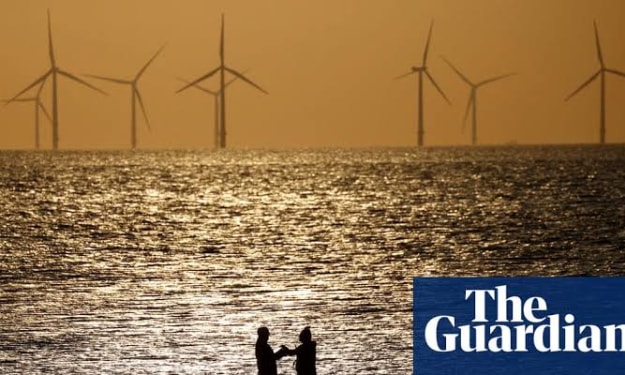
UK must double down on renewables as wars drive up energy costs, experts say
Britain must accelerate its transition toward renewable energy sources as geopolitical conflicts continue to drive global energy prices higher, according to leading energy analysts and climate policy experts. The warning comes as wars and political tensions across key energy-producing regions expose the vulnerability of countries still heavily reliant on imported fossil fuels. In recent years, the United Kingdom has made significant progress expanding renewable energy capacity, particularly in offshore wind and solar power. However, experts argue that the pace of the transition remains insufficient to shield the country from the volatility of international energy markets. Conflicts in the Middle East and Eastern Europe have demonstrated how quickly supply disruptions can translate into rising costs for households and businesses. Energy economists say the lesson from recent global crises is clear: the more dependent a country is on imported oil and gas, the more exposed it becomes to geopolitical shocks. Britain imports a substantial portion of its natural gas and refined fuel products, meaning instability in global supply chains can quickly affect domestic energy bills. During periods of international conflict, oil prices often spike due to fears that shipping routes or production facilities could be disrupted. Even rumors of attacks near key energy chokepoints — such as major pipelines or shipping lanes — can cause markets to react sharply. These fluctuations, analysts say, ultimately filter down to consumers through higher electricity and heating costs. Renewable energy sources offer a potential solution to this problem because they rely on domestic resources such as wind and sunlight rather than imported fuels. Once renewable infrastructure is built, operating costs remain relatively stable because there is no need to purchase fuel on global markets. The United Kingdom already operates some of the world’s largest offshore wind farms, and renewable energy now accounts for a significant share of the country’s electricity generation. Government data indicates that wind power alone has become one of the largest sources of electricity in Britain, particularly during periods of strong weather conditions. Despite this progress, energy specialists argue that further investment is essential. Expanding renewable generation capacity requires not only building more wind and solar farms but also upgrading the national electricity grid. A modernized grid would allow energy produced in remote offshore locations to be transmitted efficiently to cities and industrial centers. Energy storage is another critical piece of the puzzle. Because renewable sources like wind and solar are intermittent, large-scale battery systems or alternative storage technologies are needed to ensure a stable supply of electricity during periods when generation drops. Developing these systems will require both technological innovation and sustained financial investment. Some experts also emphasize the importance of diversifying the country’s renewable portfolio. While offshore wind remains a cornerstone of Britain’s energy strategy, solar power, tidal energy, and green hydrogen could also play important roles in the future energy mix. The government has already announced plans to increase renewable capacity dramatically over the next decade. Officials argue that reducing reliance on fossil fuels will not only strengthen national energy security but also help the country meet its climate targets. However, critics say policy uncertainty and slow planning approvals have sometimes delayed renewable projects. Industry leaders have urged authorities to streamline regulatory processes and provide clearer long-term incentives for investors. For many analysts, the link between energy security and climate policy has never been more obvious. Wars and geopolitical tensions have shown that fossil fuel dependence can create economic vulnerability, while domestically produced renewable energy offers greater stability. “The global energy system is changing,” said one energy policy researcher. “Countries that invest early in renewable infrastructure will be better protected from geopolitical shocks and price spikes.” As international conflicts continue to reshape global energy markets, the debate over Britain’s energy future is likely to intensify. For supporters of renewable power, the current moment represents both a warning and an opportunity — a chance to accelerate the transition toward a more secure and sustainable energy system.
By Fiaz Ahmed 3 days ago in Earth



Comments
There are no comments for this story
Be the first to respond and start the conversation.