
From Despair To Hope
How renewable energy revived a fading community

The town of Oakridge had seen better days. Once a bustling hub of manufacturing and coal mining, it had fallen into disrepair over the years. The factories had closed, and the coal mines had long since dried up. As the jobs disappeared, so did the families that had called Oakridge home for generations. The town’s streets, once alive with the sounds of children playing and neighbors chatting on front porches, had grown eerily silent. Boarded-up windows and "For Sale" signs dotted the landscape, casting a shadow over a community that seemed to be fading away.
Among the few who remained was Sarah Thompson, a single mother raising her two children, Emma and Luke. Sarah had grown up in Oakridge, and despite the town’s struggles, she couldn’t bring herself to leave. Her parents had lived and died here, and this was the only home she knew. But as each day passed, she worried more about her children’s future. With the local school barely staying open and no job prospects in sight, she feared they would have to leave the only place they had ever known.
It was during one of these long, sleepless nights that Sarah heard about a new project being discussed in the town council. A renewable energy company was proposing to build a solar farm on the outskirts of Oakridge. At first, it sounded too good to be true. A few years ago, the idea of Oakridge being powered by clean energy would have seemed like a fantasy. But as the details emerged, it became clear that this project was different. It wasn’t just about electricity; it was about bringing life back to the town.
The proposal included not only the solar farm but also job training programs for locals to work on the project and maintain the facility. It promised new infrastructure, investment in the school, and even the possibility of attracting small businesses to the area again. For the first time in years, there was a glimmer of hope.
Sarah attended every town meeting about the project, her heart pounding with a mix of hope and fear. The debates were heated, with some townspeople skeptical of outsiders coming in with promises that seemed too good to be true. But slowly, the tide began to turn. People began to see that this was an opportunity Oakridge couldn’t afford to pass up.
When the construction began, the town came alive in a way Sarah hadn’t seen in years. Trucks rolled in, bringing equipment and workers who filled the once-empty diner and gas station. As the solar panels started to line the fields where coal had once been king, a sense of pride began to grow in the community. People who had been out of work for years found themselves training for new roles, learning skills they never imagined they would need.
Sarah took a job on the project, helping to coordinate between the company and the local workers. It wasn’t easy work, but it filled her with a sense of purpose she hadn’t felt in a long time. Each evening, she would come home exhausted but content, knowing she was part of something bigger than herself.
The day the solar farm was switched on, the whole town gathered to watch. There were speeches and cheers, but what Sarah remembered most was the look on her children’s faces as they saw the panels light up for the first time. It was a look of awe and wonder, the kind of expression that had been missing from their lives for far too long.
As the months passed, the impact of the project rippled through Oakridge. The school got new books and computers, and a few new families moved into the area, drawn by the promise of steady jobs and a strong community. The grocery store that had been on the verge of closing expanded its hours, and a new café opened on Main Street, run by a young couple who believed in Oakridge’s future.
Sarah knew that not all of the town’s problems were solved overnight. There were still struggles and uncertainties, but there was also hope—something that had been in short supply for too long. She would often drive by the solar farm at sunset, watching the panels reflect the fading light and thinking about how much had changed. Oakridge was still here, still standing, and now it had a future to look forward to.
The transformation of Oakridge wasn’t just about renewable energy. It was about resilience, about a community coming together to seize a second chance. And for Sarah, it was about showing her children that no matter how dark things seemed, there was always the possibility of light.
About the Creator
Keep reading
More stories from writers in Earth and other communities.
The Terrarium Toolkit: AI Helps You Build and Maintain a Miniature World
You assemble layers of earth, carefully position tiny plants, and add decorative stones, culminating in the moment you place the glass lid or front panel. You've created more than a decoration; you've built a miniature, self-contained world. Yet, weeks later, that world can become clouded—literally. Condensation obscures the view, mold appears on the soil, or a once-vibrant plant turns to mush. The delicate balance you sought has tipped.
By Emma Wallace8 days ago in Earth
No, North Carolina Wild Horses Were Not Wrapped in Insulation
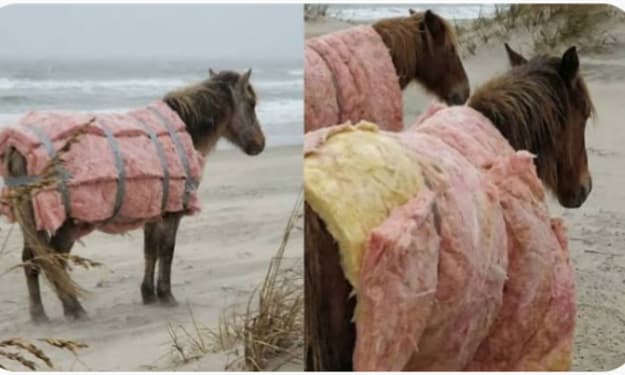
You might have seen some shocking images circulating online: wild horses on a North Carolina beach supposedly wrapped in pink insulation by volunteers trying to “help” them survive the winter. The photos went viral, sparking outrage, concern, and a flurry of social media shares.
By Sajida Sikandar4 days ago in Earth



Comments (1)
Well detailed analysis