
From Chaos to Cosmos: Understanding the Formation of the World
Exploring the Scientific and Religious Theories Behind the Birth of Our Planet

The formation of the world is a fascinating topic that has captivated scientists, philosophers, and ordinary people for centuries. From ancient myths and legends to modern scientific theories, the origins of our planet and the universe have been the subject of much speculation and study.
One of the most widely accepted scientific theories is the Big Bang theory. According to this theory, the universe began as a singularity, a tiny point of infinite density and temperature, about 13.8 billion years ago. At that moment, a massive explosion occurred, known as the Big Bang, which caused the universe to rapidly expand and cool. This expansion caused matter to clump together, eventually forming stars and galaxies.
The Earth, along with the rest of the solar system, formed about 4.5 billion years ago. Scientists believe that the solar system formed from a cloud of gas and dust, known as the solar nebula. Over time, this cloud became denser in certain areas, eventually forming into clumps that would become the Sun and the planets.
The exact formation of the Earth is still a subject of scientific investigation and debate. However, one of the most widely accepted theories is that the Earth formed from the accumulation of smaller, rocky bodies known as planetesimals. These planetesimals collided and merged over time, eventually forming the Earth we know today.
In addition to the formation of the Earth, scientists have also studied the evolution of life on our planet. The first simple forms of life, such as bacteria, are thought to have arisen about 3.5 billion years ago. Over time, life evolved and became more complex, eventually leading to the emergence of human beings.
In conclusion, the formation of the world is a fascinating and ongoing scientific investigation. Through the study of astronomical observations, geological data, and the fossil record, scientists continue to unravel the mysteries of our planet's formation and evolution.
World Formation According to Religious Beliefs
Religion has played a significant role in shaping people's understanding of the world and its origins. Many religious traditions have their own creation stories and theories about the formation of the world, often providing a spiritual or supernatural explanation for the origins of life and the universe.
One of the most well-known religious creation stories is that of Christianity, which is described in the book of Genesis in the Bible. According to this story, God created the world in six days, and on the seventh day, he rested. The story goes on to describe the creation of the first humans, Adam and Eve, and the events that led to the downfall of humanity.
In Hinduism, the creation of the world is described in the Vedas, ancient Hindu scriptures. According to Hindu tradition, the world was created from a cosmic egg and is sustained by the force of Brahman, the ultimate reality and source of all existence.
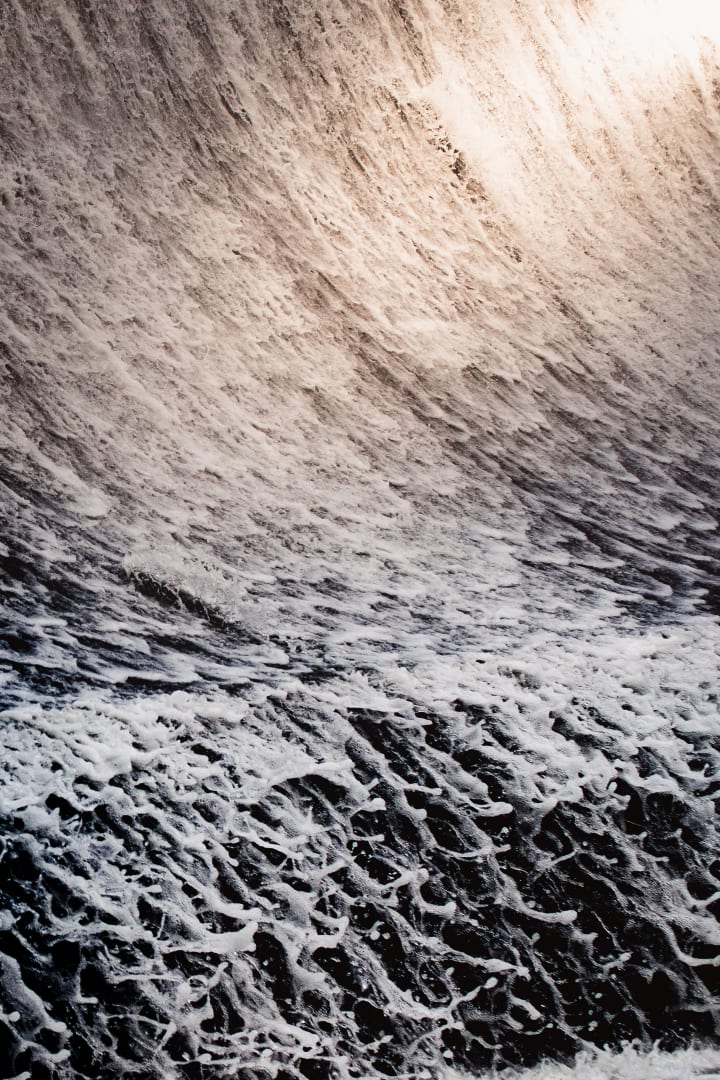
Similarly, in ancient Babylonian religion, the world was thought to have been created from a massive saltwater ocean. The god Marduk is said to have split the saltwater ocean in two, creating the heavens and the Earth.
In Indigenous cultures around the world, creation stories often involve a spiritual connection to the natural world and describe the relationship between humans and the environment. For example, in many Native American cultures, the world is thought to have been created by a divine being or beings, who gave the world its features and provided humans with the resources they need to survive.
In conclusion, religious theories about the formation of the world provide different perspectives on the origins of life and the universe. From creation stories in the Bible and Hindu scriptures to indigenous beliefs about the connection between humans and the natural world, these theories offer a rich and diverse understanding of the world and its origins.

According to the Turkish belief, which is my origin, the formation of the world is as follows.
Ancient Turkish beliefs about the formation of the world have been passed down through generations in the form of myths and legends. One of the most well-known Turkish creation stories comes from the region of Central Asia, where the ancient Turkic peoples lived.
According to this creation story, the world was formed from a great void known as the Ginnungagap. In the void, a giant mythical bird known as the Roc flew over the waters and dropped a pebble that eventually became the Earth. The Roc then breathed life into the Earth, causing plants and animals to grow.
Another ancient Turkish belief about the creation of the world is that it was formed from the union of two gods, Il and Ulgen. Il was the god of light and the sky, while Ulgen was the god of the Earth and darkness. Together, they created the world and all living things on it.
In the mythologies of the Turkic nomads, the sky was seen as a physical object that supported the Earth. It was believed that the sky was held up by a great pillar or tree, which symbolized the connection between the Earth and the heavens.
In conclusion, the ancient Turkish beliefs about the formation of the world are rich and diverse, and are closely tied to the natural world and the relationship between humans and the environment. These beliefs offer a unique perspective on the origins of the world and offer insight into the spiritual beliefs of the ancient Turkic peoples.
About the Creator
Tolga Bozdağ
I am an amateur writer and I share articles about topics that interest me. I hope you enjoy reading it.
Keep reading
More stories from Tolga Bozdağ and writers in Earth and other communities.
The Great Debate: PC vs Console Gaming
Gaming has come a long way since the days of Pong and Space Invaders. Today, there are two main platforms for gaming: PC and consoles. While both platforms offer unique advantages and disadvantages, the debate over which is better has been a long-standing one in the gaming community.
By Tolga Bozdağ3 years ago in Gamers
Asia’s Second-Best Island in DestinAsian Ranking
Vietnam’s largest island, Phu Quoc, has achieved a remarkable milestone in global tourism by being ranked the second-best island in Asia in the prestigious DestinAsian Readers’ Choice Awards 2026, surpassing the world-famous Maldives. The recognition marks a major moment for Vietnam’s tourism industry and highlights the island’s rapid rise as one of the most desirable tropical destinations in the world. 
By Irshad Abbasi 4 days ago in Earth




Comments
There are no comments for this story
Be the first to respond and start the conversation.