

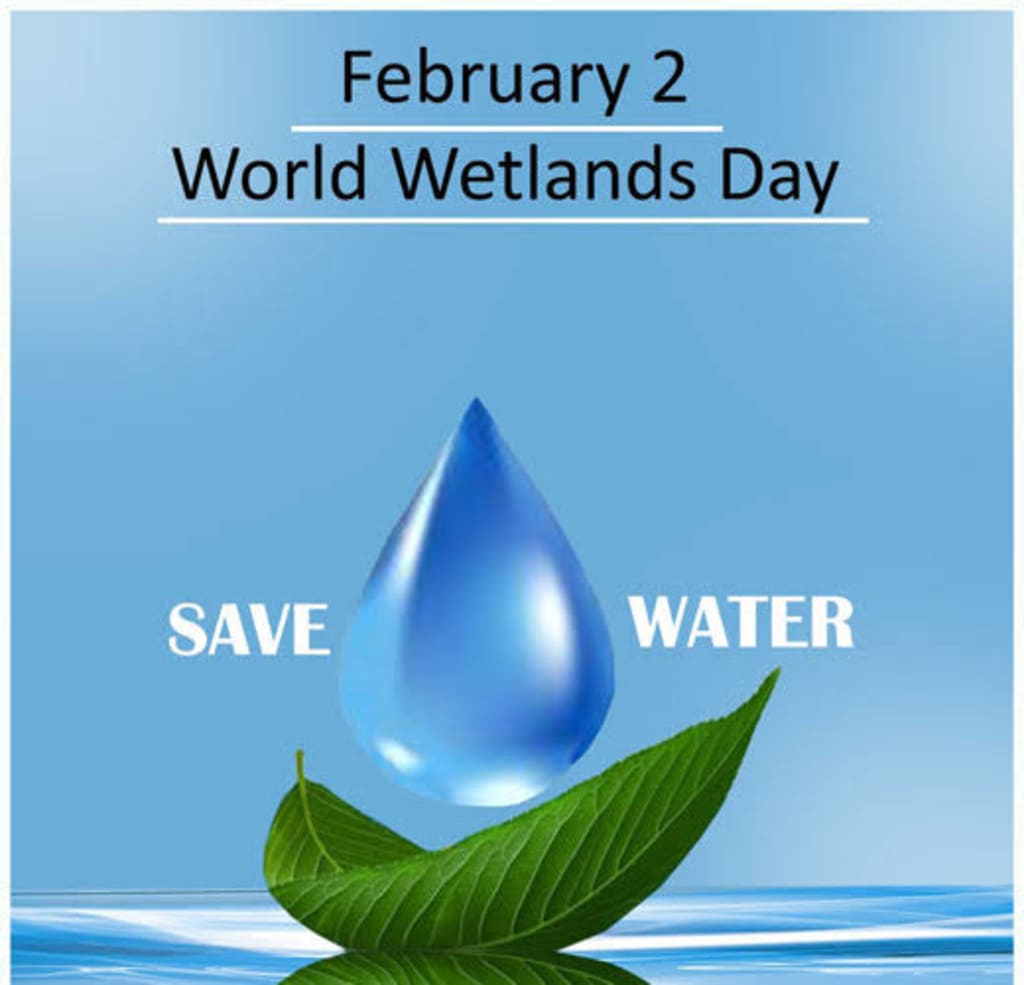
World Wetlands Day
World Wetlands Day is celebrated annually on February 2 to raise global awareness about the importance of wetlands for people and our planet. This day marks the adoption of the Convention on Wetlands on February 2, 1971, in the Iranian city of Ramsar on the shores of the Caspian Sea. The theme of World Wetlands Day 2021 is "Wetlands and Water". This theme emphasizes the vital role of wetlands in the water cycle and in storing and purifying water. It also highlights the interdependence between wetlands and water, and our dependence on wetlands for a range of ecosystem services, including water provisioning, water purification, flood control, and shoreline stabilization. Activities to celebrate World Wetlands Day may include educational campaigns, public events, and the launch of new wetland projects.
What are Wetlands?
A large variety of plants and animals can be found in habitat in wetlands, which are regions of land that are at least seasonally covered by water. Large lakes, marshes, swamps, rivers, and flooded woods are only a few examples of their diverse shapes and sizes. Every year, environmentalists all across the world observe World Wetlands Day to raise awareness of these incredible expanses of land.
Importance of Wetlands
Wetlands serve as crucial habitats for biodiversity and have a wide range of advantages for people as well.
controlling the consequences of climate change and storing carbon
removing contaminants from rivers
lowering flood danger by retaining water
replenishing groundwater resources
supplying food, medication, and supplies
supporting local economies through tourism and fishing
providing chances for leisure activities like boating or birdwatching.
Did You Know?
Though they cover only around 6 per cent of the Earth's land surface, 40 percent of all plant and animal species live or breed in wetlands.Wetlands are disappearing three times faster than forests.
Coastal wetlands sequester and store carbon up to 55 times faster than tropical rain forests.
Rice, grown in wetland paddies, is the staple diet of 3.5 billion people.
World Wetlands Day 2023
Here are some of the reasons why wetlands are so significant for both people and the environment
Except for Antanctica, every continent has wetlands. They range greatly in size, type, and location, and are highly diverse.
While some wetlands are generated through draining or filling, many more are found in the natural world.There are currently 2433 sites totaling more than 250 million hectares on the Ramsar List of Wetlands of International Importance.Wetlands are sometimes referred to as the "kidneys of the landscape" because they purify water by filtering out debris and contaminants.
Floodwaters are slowly released into streams and rivers by healthy wetlands, which act as sponges to absorb the waterWetlands mitigate erosion, offer natural water filtration, and lessen storm damage.Their preservation is essential for maintaining biodiversity.
Why Are They In Danger?
Wetlands are among the ecosystems with the highest rates of decline, loss and degradation. Indicators of current negative trends in global biodiversity and ecosystem functions are projected to continue in response to direct and indirect drivers such as rapid human population growth, unsustainable production and consumption and associated technological development, as well as the adverse impacts of climate change.
Wetlands are disappearing three times faster than forests and are Earth's most threatened ecosystem. In just 50 years - since 1970 - 35% of the world's wetlands have been lost. Human activities that lead to loss of wetlands include drainage and infilling for agriculture and construction, pollution, overfishing and overexploitation of resources, invasive species and climate change.
This vicious cycle of wetland loss, threatened livelihoods, and deepening poverty is the result of mistakenly seeing wetlands as wastelands rather than lifegiving sources of jobs, incomes, and essential ecosystem services. A key challenge is to change mindsets to encourage governments and communities to value and prioritise wetlands.
What Is World Wetlands Day?
World Wetlands Day is celebrated each year on 2 February to raise awareness about wetlands. This day also marks the anniversary of the Convention on Wetlands, which was adopted as an international treaty in 1971.
World Wetlands Day 2023
Why World Wetlands Day?
Nearly 90% of the world's wetlands have been degraded since the 1700s, and we are losing wetlands three times faster than forests. Yet, wetlands are critically important ecosystems that contribute to biodiversity, climate mitigation and adaptation, freshwater availability, world economies and more.
It is urgent that we raise national and global awareness about wetlands in order to reverse their rapid loss and encourage actions to conserve and restore them. World Wetlands Day is the ideal time to increase people's understanding of these critically important ecosystems.
History of World Wetlands Day!
World Wetland Day is observed annually on February 2 to increase awareness of the importance of wetlands for both people and the environment. In Ramsar, an Iranian city on the Caspian Sea shore, the Convention on Wetlands was adopted on this occasion. Although the Ramsar Convention took place in 1971, Wetlands Day was first observed formally in 1997.
Since 1997, governmental institutions, non-governmental organisations, and groups of people from all spheres of society have seized the chance to educate the public about the importance of wetlands in general and the Ramsar Convention in particular.
World Wetlands Day 2023
Theme for World Wetlands Day 2023
Each Year, A New Theme Is Chosen For Wetland Day. In 2023 Theme Is "It's Time For Wetlands Restoration," Which Highlights The Urgent Need To Prioritise Wetland Restoration.
About Wetlands International South Asia
Wetlands International South Asia is a non-government organisation that works for restoring and sustaining wetlands, their resources, and biodiversity in the South Asia region. The organisation provides evidence-based scientific and technical advice to central and state governments, wetland authorities, and civil society on various aspects of wetland management. The Wetlands International South Asia office in New Delhi (India) was established in 1996 as part of the Wetlands International network.
During 25 years of work in India, the organisation has formulated integrated plans for holistic management of several wetlands, conducted training courses for capacity development of wetland managers, undertaken inventory and assessments of wetland biodiversity and ecosystem services, and worked to enhance awareness of wetland values in society
About the Creator
Keep reading
More stories from Jeshurun s and writers in Earth and other communities.
An independent and happy life
An independent and happy life requires taking responsibility for your own choices, setting and achieving your goals, and having the courage to be yourself. It also means having the ability to bounce back from adversity and building strong relationships with those around you.
By Jeshurun s3 years ago in Lifehack
It’s too warm': Greenland’s fishermen are under threat from climate change
Greenland’s traditional fishing communities are facing an uncertain future as the Arctic warms faster than any other region on Earth, dramatically reshaping the landscapes and livelihoods of the semiautonomous Danish territory. Local fishermen, whose lives have long been tied to sea ice and predictable seasonal patterns, are now confronting unpredictable weather, shifting fish populations, and economic pressures that threaten both their culture and the local economy. A Changing Arctic Reality In the small coastal town of Ilulissat, veteran fisherman Helgi Áargil described how climate change has upended his routines. Where once he relied on stable sea ice and consistent fishing grounds, he now finds warmer waters, rainier conditions, and fish moving to deeper, cooler waters. Last year his boat became trapped in ice that calved from a nearby glacier; this year, instead of strengthening ice, it has been unusually wet — making conditions less predictable and incomes more volatile. Fishing accounts for up to 95 percent of Greenland’s exports, with key markets including China, the United States, Japan and Europe. This heavy economic reliance amplifies the impact of climate effects on fish patterns and harvests. Disappearing Ice, Changing Practices Traditional ice fishing — once conducted on sea ice more than a metre thick — has declined sharply. Older generations recall times when they could easily drill holes in stable ice to fish for cod, halibut, shrimp and snow crab. Today, sea ice is retreating earlier and forming later, forcing many fishermen to rely on boats even in the coldest months. While boats allow access to broader waters, they come with higher fuel costs and greater exposure to the elements, challenging sustainability. Karl Sandgreen, head of the Icefjord Center in Ilulissat, noted that ice thick enough to support traditional fishing began disappearing roughly three decades ago. The shift has not only changed how fishers operate but also increased competition and pressure on stocks closer to shore. Ecological and Economic Pressures Warmer conditions are also affecting fish behavior. Many species are moving deeper or into new areas as they seek cooler waters, complicating efforts to maintain stable catches. A warming ocean can temporarily boost plankton growth — potentially increasing some fish stocks — but it also alters ecosystems in unpredictable ways. Experts warn that fish may not behave as they once did, complicating traditional fishing forecasts and practices. The head of Royal Greenland, the territory’s largest employer, has expressed concern about a future with significantly diminished sea ice, which could push more traditional fishers toward larger, commercial fishing operations. However, this transition is not without risks. Increased fishing pressure near shorelines already shows early signs of overfishing; halibut are getting smaller, a classic indicator of stock stress noted by experts. Cultural Identity at Risk Fishing in Greenland is more than an economic activity; it is a cultural bedrock. In towns and villages across the island, harbours where daily catches are unloaded and sold remain central to community life. Many Greenlanders associate fishing with identity and tradition, and climate change is directly threatening these cultural ties as environmental conditions change faster than adaptation measures can keep pace. “You can have too much ice to sail and yet too little to qualify for safe ice fishing,” noted Toke Binzer, describing the paradoxical challenges fishermen now face. The unpredictability makes planning difficult and income erratic — one trip might bring significant earnings, while the next yields little or nothing. Limited Alternatives and Future Paths Beyond fishing, economic alternatives in Greenland remain limited. Tourism is growing but not at a pace that could offset losses in the fishing sector. With a total population barely over 50,000, opportunities outside harvesting marine resources are comparatively sparse. As dog sledding and other ice‑based traditions also diminish due to changing conditions, entire ways of life are under threat. Efforts to support traditional fishers include loans for boats and business assistance, but long‑term resilience will likely require broader strategies. These could involve sustainable fishing quotas, diversification into aquaculture, and investments in climate adaptation infrastructure. Yet many local observers emphasize that meaningful change must also address the root causes of warming — a challenge far beyond Greenland’s shores. A Climate Warning Sign Greenland’s fishermen are becoming a human indicator of rapid Arctic change. The region is warming faster than the global average, reshaping ecosystems and economies alike. As these communities adapt or struggle, their challenges shed light on the broader global consequences of climate change — illustrating how environmental shifts ripple through cultures, industries and livelihoods thousands of kilometres from major industrial centres.
By Fiaz Ahmed 5 days ago in Earth
Silken Chains
Silhouettes of the female form were given flesh and bone. Silken skin glistened under the spotlight. Dry ice rose around our Icons as they danced atop their podiums in the Square. Heralded for their beauty, their movements were slight, powerful, and sensual.
By Paul Stewart3 days ago in Fiction


Comments (1)
Hey!