
Falcon 9 launches NASA astrophysics and heliophysics missions
Falcon 9 Launch

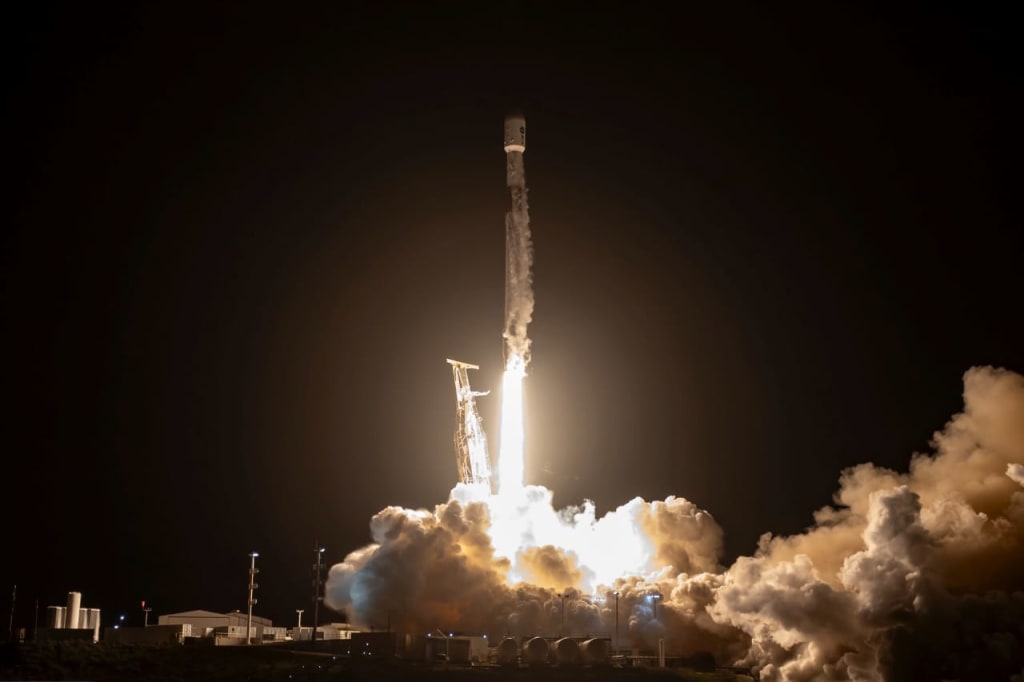
Falcon 9 launches NASA astrophysics and heliophysics missions.
The SpaceX Falcon 9 rocket successfully launched from Vandenberg Space Force Base in California at 11:10 p.m. Eastern carrying two critical NASA missions into space. The payload included the Spectro-Photometer for the History of the Universe Epoch of Reionization and Ices Explorer (SPHEREx) spacecraft and four satellites for the Polarimeter to Unify the Corona and Heliosphere (PUNCH) mission. This launch marked an important step in NASA’s astrophysics and heliophysics research, using a rideshare approach to maximize efficiency. Following deployment all five spacecraft established communication with their respective controllers and were reported to be functioning as expected.
NASA’s Rideshare Approach
NASA’s decision to launch SPHEREx and PUNCH together was driven by efficiency and cost-effectiveness. Originally the Falcon 9 was procured solely for SPHEREx but the excess capacity allowed for PUNCH to be added as both missions were headed to similar orbits. This strategy aligns with NASA’s ongoing efforts to optimize launch opportunities by combining payloads whenever possible. Mark Clampin acting deputy associate administrator for science at NASA emphasized the significance of this change in approach. This is a real change in how we do business he stated during a prelaunch briefing on March 7. We can maximize the efficiency of launches by two payloads at once. SpaceX has long been an advocate of rideshare missions. Julianna Scheiman director of NASA science missions at SpaceX highlighted the company’s enthusiasm for this approach. We at SpaceX are big fans of rideshare she noted. While SpaceX has conducted many commercial rideshare missions this particular launch marked the first under NASA’s Launch Services Program. Furthermore two additional NASA rideshare launches are scheduled for later this year which will include the Interstellar Mapping and Acceleration Probe (IMAP) and the Tandem Reconnection and Cusp Electrodynamics Reconnaissance Satellites (TRACERS) heliophysics missions.
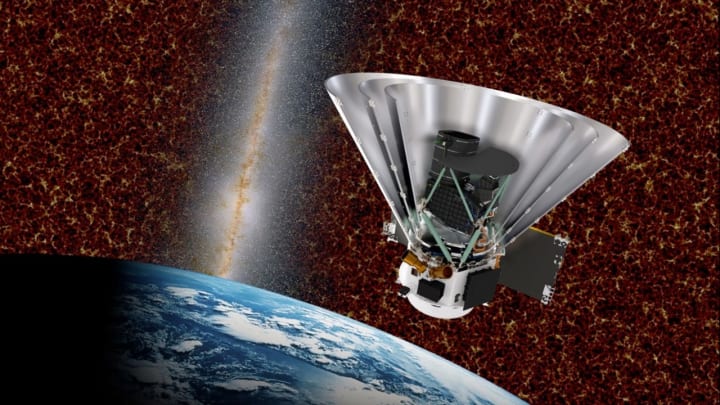
SPHEREx Unlocking the Secrets of the Universe
The SPHEREx mission is a groundbreaking endeavor in astrophysics. It aims to map the entire sky in near infrared light capturing data that will help scientists investigate the origins of the universe the formation of galaxies and the presence of water and organic molecules in interstellar space. SPHEREx will conduct a comprehensive survey measuring the spectra of hundreds of millions of galaxies and providing insights into cosmic inflation the rapid expansion of the universe that occurred moments after the Big Bang. SPHEREx will also play a crucial role in identifying the distribution of ices such as water and carbon based molecules in regions where stars and planetary systems are forming. This will contribute to a deeper understanding of how planetary systems develop and whether conditions suitable for life may exist elsewhere in the universe.
PUNCH: Studying the Sun’s Outer Atmosphere
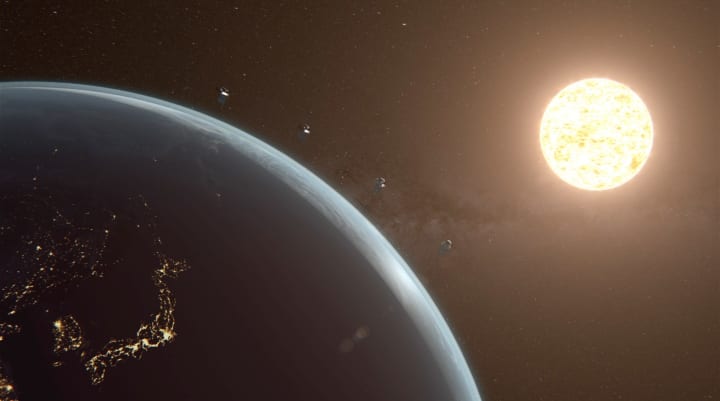
The PUNCH mission consists of four small satellites designed to study the Sun’s corona and how it interacts with interstellar space. By capturing detailed images of the solar wind and coronal mass ejections (CMEs), PUNCH will enhance our ability to predict space weather events that can impact Earth’s technological infrastructure. CMEs, which are massive bursts of solar plasma and magnetic fields, can cause geomagnetic storms that disrupt satellite communications, navigation systems, and even power grids. PUNCH’s observations will help scientists better understand the dynamics of these solar phenomena and improve forecasting models to mitigate potential risks. Unlike traditional solar observatories, PUNCH will use a unique imaging technique to track solar material as it moves away from the Sun. By doing so, the mission will provide a continuous, global view of solar wind structures and their evolution, bridging a critical gap in our understanding of how the Sun influences the space environment around Earth.
Challenges and Delays Before Launch
Although the launch was ultimately successful, it faced nearly two weeks of delays due to technical and logistical challenges. According to Scheiman, a series of integration issues arose during the prelaunch process. One major problem involved an impedance mismatch assembly, a device used to mitigate the harsh launch environment. The issue required new fasteners, which contributed to a significant portion of the delay. Additionally, when the spacecraft were encapsulated in the payload fairing, a leak was discovered in the pneumatic system responsible for separating the fairing in flight. This problem necessitated the removal of the payload fairing for repairs before it could be reinstalled. Weather conditions also played a role in delaying the mission. The transport of the encapsulated payload from the processing facility to the launch pad was postponed due to unfavorable weather, adding further setbacks to the timeline.
A Milestone for NASA and SpaceX
Despite these challenges, the successful deployment of SPHEREx and PUNCH represents another milestone in NASA’s collaboration with SpaceX. The use of rideshare launches demonstrates how space agencies and commercial partners can work together to enhance mission efficiency and cost-effectiveness. With two more NASA rideshare launches scheduled for later this year, this approach is likely to become a standard practice for future missions. By leveraging the capabilities of rockets like the Falcon 9, NASA can continue to explore the universe, study the Sun, and advance scientific knowledge while making efficient use of resources. The launch of SPHEREx and PUNCH aboard a Falcon 9 rocket is a testament to the evolving landscape of space exploration. By adopting rideshare missions, NASA is optimizing costs and maximizing scientific output. SPHEREx will unlock new insights into the early universe, while PUNCH will provide critical data on the Sun’s corona and space weather.
As NASA and SpaceX continue to refine this approach, the future of space exploration looks increasingly collaborative, efficient, and ambitious. The success of this mission sets the stage for further innovations in astrophysics, heliophysics, and beyond.
About the Creator
Adnan Rasheed
Author & Creator | Writing News , Science Fiction, and Worldwide Update| Digital Product Designer | Sharing life-changing strategies for success.
Keep reading
More stories from Adnan Rasheed and writers in Earth and other communities.
Straight Out of Sci-Fi: Earth Receives a Deep-Space Laser Message from 16 Million Kilometers Away.
NASA has achieved a groundbreaking milestone in space communication by successfully transmitting a laser-based message from the Psyche spacecraft to Earth across a staggering 16 million kilometers. This achievement, part of the Deep Space Optical Communications Experiment (DSOC), represents a major leap forward in interplanetary communication, potentially revolutionizing the way data is transmitted through space.
By Adnan Rasheedabout a year ago in Earth


Comments (1)
Hello, just wanna let you know that if we use AI, then we have to choose the AI-Generated tag before publishing 😊