
Facts About Snakes
Learn about the characteristics, behaviors, and cultural significance of these fascinating reptiles.

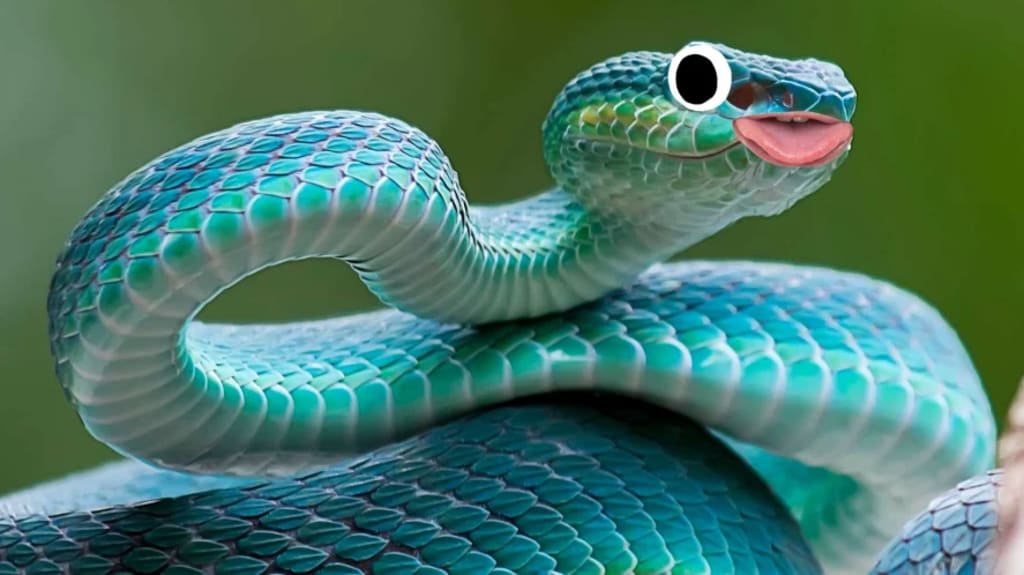
A snake is a type of reptile characterized by a long, slender body, no legs, and scales covering their skin. They are found on every continent except Antarctica and come in a wide range of sizes, from small, harmless species like the garter snake, to large, deadly snakes like the black mamba.
Snakes are carnivores and feed on a variety of prey, including rodents, birds, insects, and other snakes. Some snakes are venomous and use their venom to kill prey and defend themselves from predators, while others are non-venomous and rely on constriction to kill their prey.
Snakes are fascinating creatures and have been the subject of human fascination and fear for centuries. They have been portrayed in art, literature, and mythology throughout human history and continue to capture the imagination of people today.
additional facts about snakes:
Snakes belong to the suborder Serpentes, which is part of the larger order Squamata, which also includes lizards and other reptiles.
The largest snake in the world is the anaconda, which can grow up to 30 feet long and weigh over 500 pounds.
Snakes do not have eyelids and cannot close their eyes, but they do have a transparent scale over their eyes that protects them.
Many snakes are excellent swimmers and can move through water as easily as they move on land.
Some snakes, such as the king cobra, have the ability to "stand up" and raise their upper body off the ground when threatened.
Snakes shed their skin several times a year as they grow, a process known as molting.
In some cultures, snakes are revered as symbols of wisdom, healing, and fertility, while in others they are feared and reviled as symbols of evil and danger.
Many species of snakes are threatened or endangered due to habitat loss, hunting, and other human activities.
Overall, snakes are fascinating and diverse creatures that play an important role in many ecosystems around the world. While some species can be dangerous to humans, many others are harmless and even beneficial, helping to control pest populations and maintain ecological balance.
Snakes can detect prey using their sense of smell and heat-sensing pits located on their faces, which allow them to detect warm-blooded prey even in complete darkness.
Some species of snakes, such as the black mamba and king cobra, are among the most venomous animals in the world and can deliver a lethal bite if provoked.
Despite their lack of limbs, snakes are incredibly agile and can move quickly over a variety of surfaces, including sand, rock, and even water.
Some snakes, such as the garter snake, can give birth to live young, while others lay eggs.
Snakes are cold-blooded, meaning that their body temperature is regulated by their environment, and they rely on external heat sources like the sun to warm their bodies.
In many cultures, snakes are associated with creation, renewal, and rebirth due to their ability to shed their skin and emerge renewed.
Some species of snakes, such as the rattlesnake, use a specialized tail rattle to warn predators or humans of their presence and potential danger.
The study of snakes is known as ophiology or herpetology, and scientists continue to learn new information about these fascinating animals through research and observation.
Overall, snakes are incredible animals with a wide range of fascinating adaptations and behaviors. While they may inspire fear or fascination in humans, they play an important role in many ecosystems around the world and are a vital part of our natural heritage.
Snakes have a unique anatomy that allows them to swallow prey whole, as their lower jaw is not fused together and can expand to accommodate large prey.
Some species of snakes, such as the boa constrictor, suffocate their prey by wrapping their bodies around them and squeezing tightly until the animal can no longer breathe.
Snakes have been the subject of many myths and legends throughout history, such as the story of Medusa from Greek mythology, who had snakes for hair and could turn people to stone with her gaze.
Some species of snakes are able to change color to blend in with their surroundings, which can help them avoid detection by predators or prey.
Snakes have a unique way of moving called serpentine locomotion, in which they use their muscles to push off objects and propel themselves forward.
In many cultures, snakes are associated with wisdom, knowledge, and transformation, and are often depicted as powerful symbols in art, literature, and religion.
Some species of snakes, such as the sea snake, are adapted to life in aquatic environments and can spend their entire lives in the ocean.
While many species of snakes are solitary, some, such as the garter snake, form large communal dens where they hibernate during the winter months.
Overall, snakes are a diverse and fascinating group of animals that have captured the human imagination for centuries. From their unique anatomy and behaviors to their cultural significance, there is always more to learn about these fascinating reptiles.
About the Creator
Birds with Wild Hairdos
Cockatoos are known for their expressive crests, which they raise or lower depending on their mood. The crests can be white, yellow, or pink. These charismatic birds are native to the Australian continent, the islands of the Indo-Australian archipelago, and parts of New Guinea. There are 21 different species of cockatoo, varying in size from the diminutive Galah to the imposing Sulphur-crested Cockatoo. Most cockatoo species are highly social birds, forming strong pair bonds that often last a lifetime. Cockatoos are primarily herbivores, with a diet consisting of seeds, nuts, fruits, roots, and occasionally insects and larvae.
By Rasma Raisters3 days ago in Earth
The timing of Earth's ice ages may be influenced by Mars.
According to recent calculations, Mars may influence the date of ice ages by helping to establish a 2.4 million-year rhythm in Earth's orbit. Recently, researchers investigated the possibility of a tiny planet leaving a discernible imprint in long-term climate records.
By Francis Dami5 days ago in Earth



Comments
There are no comments for this story
Be the first to respond and start the conversation.