
F-35 Fighter Jet Crash at Eielson Air Force Base: An In-Depth Analysis
On January 28, 2025, an F-35A Lightning II fighter jet assigned to the 354th Fighter Wing at Eielson Air Force Base in Alaska experienced an in-flight malfunction during a routine training exercise.
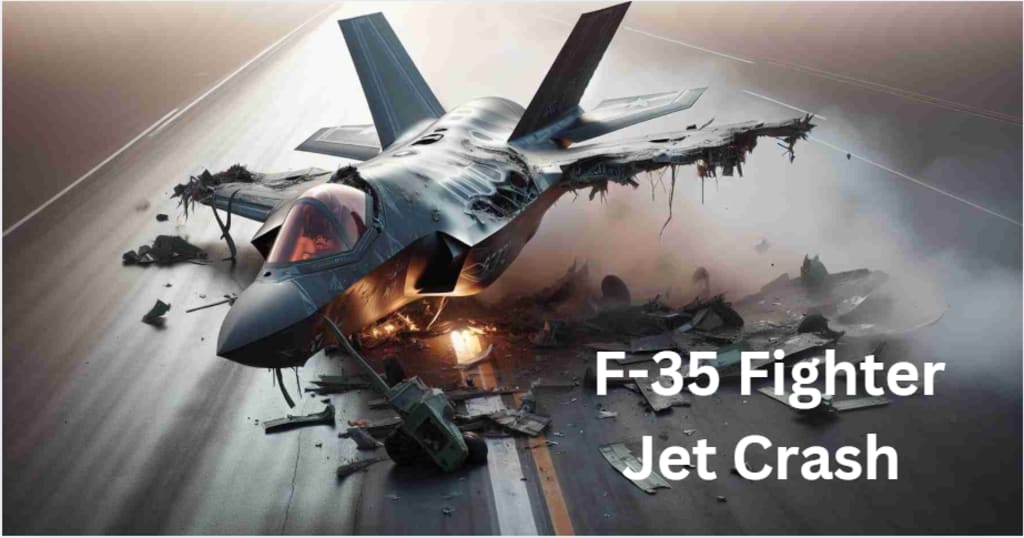
Incident Overview
On January 28, 2025, an F-35A Lightning II fighter jet assigned to the 354th Fighter Wing at Eielson Air Force Base in Alaska experienced an in-flight malfunction during a routine training exercise. The pilot declared an emergency and successfully ejected during the landing phase. The aircraft sustained significant damage upon impact, but the pilot was reported to be in stable condition after evaluation at a medical facility. Read more news on my our site.
Eielson Air Force Base: Strategic Significance
Eielson Air Force Base, located approximately 25 miles south of Fairbanks, was selected in 2016 to host 54 F-35s, leading to a substantial expansion costing over half a billion dollars. This development included the construction of 36 new buildings and numerous housing units, accommodating about 3,500 new active-duty airmen and their families. The base's strategic location enables F-35s to reach nearly any point in the Northern Hemisphere within a single mission, given their capability to fly over 12 hours at a time.
Historical Context: F-35 Incidents
The F-35 program has encountered several incidents since its inception:
June 23, 2014: An F-35A's engine caught fire at Eglin Air Force Base. The pilot escaped unharmed, but the aircraft sustained approximately $50 million in damage. The incident was attributed to a failure in the engine's third-stage rotor.
May 2024: An F-35 fighter jet en route from Texas to Edwards Air Force Base crashed after a refueling stop in New Mexico. The pilot suffered serious injuries during ejection.
September 2023: A Marine Corps F-35B flew unmanned for over 11 minutes after the pilot ejected prematurely due to an incorrect diagnosis of an out-of-control flight emergency. The aircraft eventually crashed in rural South Carolina.
What Caused the F-35 Crash? Possible Factors
The exact cause of the crash is still under investigation, but past incidents involving F-35 jets suggest several potential factors:
1. Mechanical Failure
Engine issues: The F-35’s Pratt & Whitney F135 engine has encountered failures in the past, including overheating and mechanical wear.
Hydraulic system failure: If the aircraft's control systems failed mid-flight, it could have led to pilot ejection.
2. Pilot Error
Ejection decision: If the pilot misinterpreted a system malfunction, it could have led to an unnecessary ejection.
G-LOC (G-force-induced loss of consciousness): A possibility if the pilot encountered extreme G-forces before ejection.
3. Software and Sensor Malfunctions
The F-35’s flight control system relies on advanced software. A failure in these systems could have caused erratic aircraft behavior.
4. Adverse Weather Conditions
Alaska’s cold climate can affect fuel performance, sensors, and avionics systems, potentially leading to malfunctions.
5. External Interference
Though unlikely, the possibility of cyber or electronic warfare interference is considered in military investigations.
Safety Measures and Investigations
Following the recent incident in Alaska, Col. Paul Townsend, commander of the 354th Fighter Wing, emphasized the Air Force's commitment to conducting a thorough investigation to prevent future occurrences. He stated, "Our people are our most important resource, and we are committed to ensuring their safety and security."
Key Details of the Incident:
Date: January 28, 2025
Location: Eielson Air Force Base, Alaska
Aircraft Model: Lockheed Martin F-35A Lightning II
Unit: 354th Fighter Wing
Pilot Status: Ejected safely, stable condition
Damage: Aircraft destroyed on impact
Investigation: Ongoing
The crash occurred within the perimeter of the base, minimizing risk to civilian populations and infrastructure.
Conclusion
The recent F-35A incident at Eielson Air Force Base underscores the inherent risks associated with advanced military aviation. While the pilot's safety is paramount and investigations are underway, the event highlights the importance of continuous evaluation and enhancement of safety protocols to ensure the well-being of military personnel and the operational readiness of advanced aircraft systems.
About the Creator
Keep reading
More stories from William D. Doolittle and writers in Earth and other communities.
Shark Attack Bribie Island: Tragic Story of Charlize Zmuda
The Idyllic Summer That Turned Tragic Bribie Island, a slice of paradise just north of Brisbane, is known for its stunning beaches, crystal-clear waters, and laid-back vibe. For 17-year-old Charlize Zmuda, it was home. This summer, Charlize was living her best life—surfing at sunrise, strumming her guitar by bonfires, and cruising the beach in a jeep loaded with surfboards. Her social media was filled with blissful snapshots of her adventures. But on a fateful Monday afternoon, her life was tragically cut short in a shark attack Bribie Island at Woorim Beach.
By William D. Doolittleabout a year ago in Earth



Comments
There are no comments for this story
Be the first to respond and start the conversation.