
Exploring the Vast Frontiers
Embarking on a Journey through Space
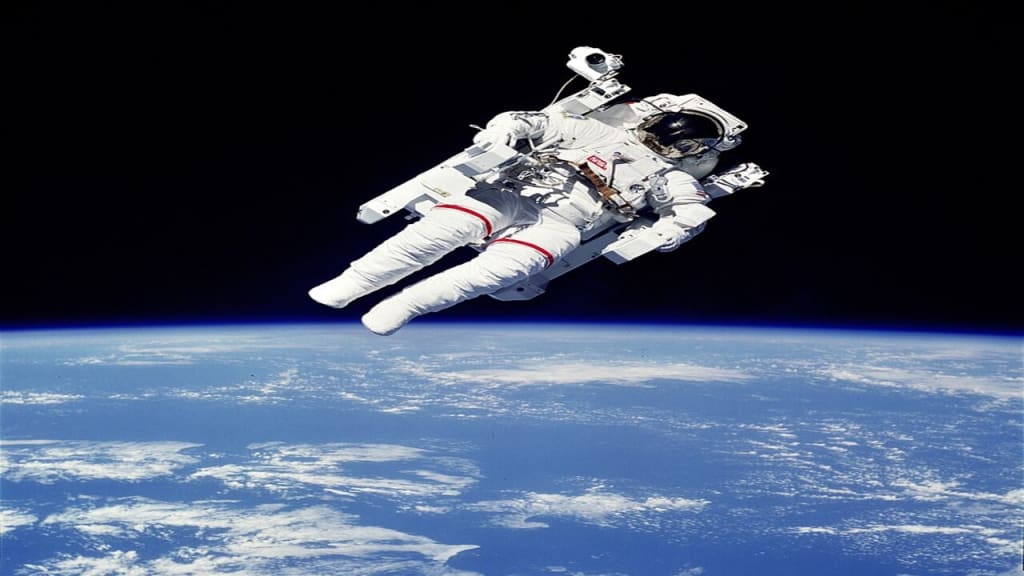
Exploring the Vast Frontiers: Embarking on a Journey through Space
Introduction
Humanity has always been fascinated by the mysteries of the cosmos, and our innate curiosity has propelled us to explore the world beyond our own planet. Space exploration has opened up new horizons, broadening our understanding of the universe and our place within it. In this article, we embark on a thrilling journey through space, delving into the achievements, challenges, and future prospects of human exploration beyond Earth. From the early days of space travel to the latest advancements in technology, let us explore the wonders that await us beyond our home planet.
1. A Historic Journey
The quest to explore space began in the mid-20th century, with landmark achievements such as the launch of the first artificial satellite, Sputnik 1, by the Soviet Union in 1957. This heralded the start of the Space Age and ignited a space race between the United States and the Soviet Union. In 1961, Yuri Gagarin became the first human to orbit Earth, followed by the United States' Apollo program, which successfully landed astronauts on the Moon in 1969.
2. The Age of Robotic Explorers
Robotic spacecraft have played a crucial role in expanding our knowledge of the cosmos. These unmanned missions, equipped with scientific instruments and rovers, have ventured to various celestial bodies, including Mars, Venus, Jupiter, and Saturn. Landmark missions like NASA's Voyager spacecraft, which explored the outer planets and continue to venture into interstellar space, have provided valuable data and stunning imagery, revolutionizing our understanding of the solar system.
3. Human Space Exploration
The pinnacle of space exploration is undoubtedly human spaceflight. The International Space Station (ISS), a collaborative project involving multiple nations, serves as a symbol of human presence in space. Astronauts from different countries have lived and conducted research on the ISS, expanding our knowledge of long-duration space travel, microgravity effects, and the challenges of living in space. Future endeavors, such as NASA's Artemis program, aim to return humans to the Moon and eventually set foot on Mars.
4. Technological Innovations and Challenges
Advancements in technology have been instrumental in enabling space exploration. From the development of powerful rockets to the miniaturization of scientific instruments, progress continues to drive our ability to explore the cosmos. Space telescopes, such as the Hubble Space Telescope and the upcoming James Webb Space Telescope, have revolutionized our understanding of the universe, capturing breathtaking images and unlocking secrets of distant galaxies.
However, space exploration also presents significant challenges. Astronauts face physical and psychological risks associated with extended periods in microgravity, exposure to radiation, and isolation. The immense distances and harsh conditions of space pose engineering and logistical challenges for long-duration missions. Mitigating these risks and developing sustainable solutions are critical for future space exploration endeavors.
5. The Future of Space Exploration
Looking ahead, the future of space exploration holds immense promise. Commercial space ventures are emerging, aiming to make space more accessible and affordable. Private companies like SpaceX and Blue Origin are working on reusable rocket technology and ambitious plans for lunar missions and space tourism.
Moreover, advancements in robotics and artificial intelligence are transforming our ability to explore distant worlds. Autonomous rovers and landers are being developed to investigate celestial bodies, such as Mars and the icy moons of Jupiter and Saturn, for signs of past or present life.
The search for exoplanets—planets orbiting stars outside our solar system—continues to captivate scientists and inspire new missions. Telescopes like NASA's Transiting Exoplanet Survey Satellite (TESS) and the upcoming James Webb Space Telescope will expand our understanding of potentially habitable worlds beyond our own.
Conclusion
As we venture into the vast frontiers of space, our exploration efforts yield profound discoveries and expand the boundaries of human knowledge. From the earliest pioneers of space travel to the visionary missions of today, we continue to push the limits of what is possible. The future holds even greater potential as technology advances, enabling us to explore new worlds, search for signs of life, and deepen our understanding of the universe. The exploration of space unites us in our quest for knowledge and reminds us of the boundless wonders awaiting discovery beyond our home planet.
About the Creator
imran khalil
In a world where words shape our perceptions, ignite our imaginations, and connect us across time and space, article writers play a crucial role in delivering informative and engaging content. Among these skilled communicators,
Keep reading
More stories from imran khalil and writers in Earth and other communities.
Overcoming Adversity
Disasters, both natural and human-made, have the potential to wreak havoc on communities and individuals, leaving behind a trail of destruction and despair. From earthquakes and floods to fires and pandemics, these events test our resilience and challenge us to come together in the face of adversity. In this article, we will explore the impact of disasters, the challenges they present, and strategies for navigating and recovering from these catastrophic events.
By imran khalil3 years ago in Earth
Navigating the Climate Reality of 2050
Climate change is no longer a chapter in a science textbook or a distant warning for "future generations." For today’s students, it is the defining backdrop of their lives—an emotional and intellectual challenge that reshapes how we view our careers, our homes, and our security. To understand the planet in 2050 is to understand a world where the margins of error have vanished, and the need for collective resilience has become our primary survival skill.
By Being Inquisitive5 days ago in Earth
I was in a Toxic Relationship, with my Workplace
“You got that?” My ex yelled. His hands were balled into fists at his side. At six foot three, he towered over me. A normal person would have been afraid, but I looked up a video of George Lopez repeatedly saying, “I got this,” and showed it to him. I had grown used to this treatment, so much so that I didn’t blink when he ripped the phone from my hand and threw it across the room.
By Jade M.a day ago in Confessions


Comments
There are no comments for this story
Be the first to respond and start the conversation.