
Exploring the Rise of Virtual Reality in Gaming and Entertainment
Unlocking New Realms and Boundless Experiences: The Ever-Evolving Landscape of Virtual Reality in Gaming and Entertainment.
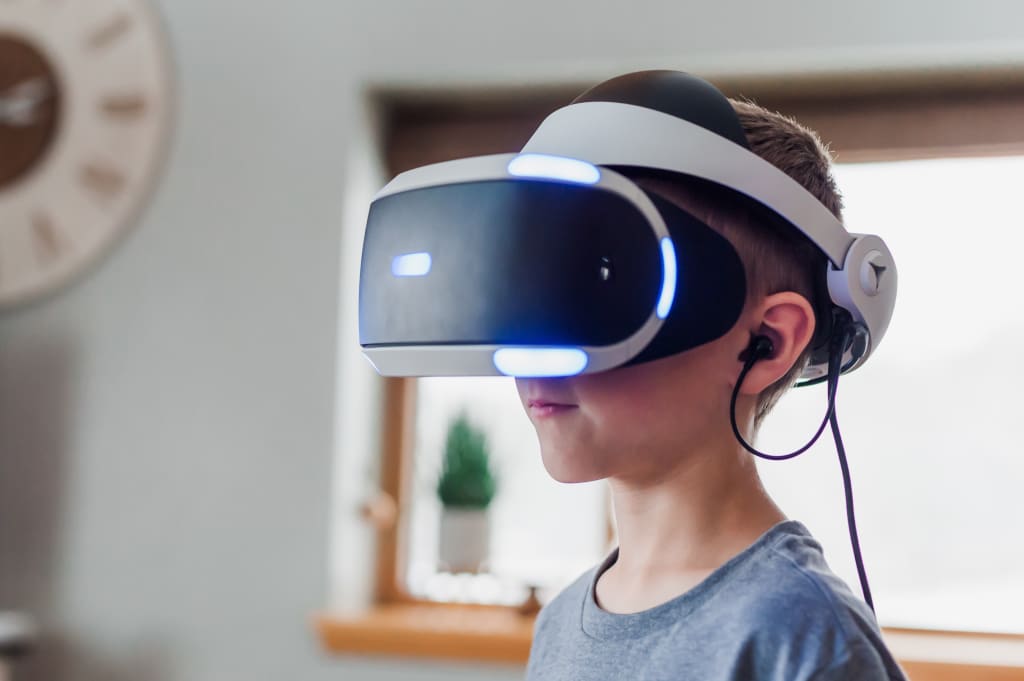
Virtual Reality (VR) has come a long way since its inception, transforming the way we experience gaming and entertainment. What was once considered a futuristic concept has now become a tangible reality, captivating audiences worldwide. In this article, we will delve into the rise of virtual reality and explore how it has revolutionized the gaming and entertainment industries. From immersive gaming experiences to interactive storytelling, VR has opened up a world of possibilities for both developers and consumers alike.
The Evolution of Virtual Reality
Virtual Reality has a rich history that dates back several decades. The concept was first introduced in the 1960s, but it wasn't until the 1990s that VR technology started gaining traction. Early iterations of VR focused on creating immersive environments through the use of bulky headsets and rudimentary graphics. However, with advancements in computing power and display technologies, VR has evolved into a more sophisticated and realistic medium.
Today, VR headsets such as the Oculus Rift, HTC Vive, and PlayStation VR offer high-resolution displays, precise motion tracking, and immersive audio, enabling users to step into virtual worlds like never before. The introduction of hand controllers and haptic feedback devices has further enhanced the sense of presence and interaction, making VR experiences more engaging and immersive.
Immersive Gaming Experiences
One of the primary areas where virtual reality has made a significant impact is gaming. VR gaming takes players beyond the traditional screen and controller setup, plunging them into fully immersive digital environments. Whether it's exploring fantastical realms, battling enemies in first-person shooters, or participating in intense sports simulations, VR gaming offers an unparalleled level of immersion and interactivity.
With VR, players can physically move, duck, and dodge within the game world, creating a heightened sense of realism and presence. The ability to look around and interact with virtual objects using hand controllers adds a new dimension to gameplay. These immersive experiences have captivated gamers and have become a driving force behind the rise of virtual reality in the gaming industry.
Virtual Reality and Entertainment
Virtual reality has not only revolutionized gaming but has also had a profound impact on the entertainment industry as a whole. From movies and documentaries to live events and theme park attractions, VR is changing the way we consume and engage with entertainment content.
In the realm of cinema, VR allows viewers to become active participants rather than passive observers. Virtual reality films place users in the center of the action, allowing them to look in any direction and explore the narrative from multiple perspectives. This immersive storytelling technique opens up new possibilities for filmmakers, enabling them to create unique and compelling experiences that blur the line between the real and virtual worlds.
Beyond traditional filmmaking, VR has also found its place in the world of live events. Virtual concerts, for example, have gained popularity, providing fans with the opportunity to experience live music performances from the comfort of their homes. VR technology enables users to feel as if they are present in the concert venue, interacting with other virtual attendees and even getting up close to their favorite artists.
The Impact on Industries
The rise of virtual reality has not only impacted the gaming and entertainment industries but has also influenced other sectors. Education, healthcare, and training are just a few examples of fields that have embraced the potential of VR.
In education, VR offers immersive learning experiences that transport students to historical events, scientific simulations, or virtual field trips. This technology provides a more engaging and interactive way to educate, allowing students to explore and interact with subjects in a way that traditional methods cannot replicate.
In healthcare, VR is being used for pain management, therapy, and training healthcare professionals. It allows patients to distract themselves from discomfort by immersing them in virtual environments. Surgeons can also use VR to practice complex procedures and enhance their skills in a risk-free virtual setting.
The rise of virtual reality in gaming and entertainment has transformed the way we experience digital content. From immersive gaming experiences to interactive storytelling in films, VR has opened up new frontiers of entertainment. Its impact extends beyond these industries, permeating fields like education and healthcare, where it enhances learning and improves patient care.
As technology continues to advance, virtual reality is expected to become even more accessible, affordable, and realistic. The potential for innovation and creativity in this space is limitless, and the possibilities for VR's future are incredibly exciting. Whether it's through exploring fantastical game worlds or experiencing virtual concerts, virtual reality has proven itself to be a game-changer in the realm of gaming and entertainment.
About the Creator
Keep reading
More stories from Samuel Aballa and writers in Earth and other communities.
The Future of Artificial Intelligence: Transforming Technology as We Know It
Artificial Intelligence (AI) has emerged as one of the most transformative technologies of our time, promising to revolutionize various industries and reshape the way we live and work. With recent advancements in machine learning, deep learning, and neural networks, AI has gone beyond its initial hype to become a practical and powerful tool with widespread applications. As we look ahead, it is evident that AI will continue to push the boundaries of technology and reshape our world in ways we can only begin to imagine.
By Samuel Aballa3 years ago in Earth
Without Democracy, Donald Trump’s Venezuelan Oil Quest Will Fail
Donald Trump’s renewed interest in Venezuelan oil may seem, on the surface, like a hard-nosed geopolitical calculation. Venezuela holds the world’s largest proven oil reserves, and amid global energy uncertainty, access to those resources is undeniably tempting. But history, economics, and politics all point to the same conclusion: without democratic reform in Venezuela, any attempt by a Trump-led US administration to secure reliable Venezuelan oil will ultimately fail.
By Aarif Lashari4 days ago in Earth
So You Decided To Become a Nurse Practitioner:
So you decided to become an "Advanced Practice" nurse. Congratulations!... is what I would say if this was a good idea. Grad school? In this economy? What were you thinking? Likely it was something along the lines of either 1) “I've seen these other chucklefucks do it— Why can't I?” or even 2) “I've got a nice career, I should shake it up. I miss feeling like I have no clue what I'm doing.”
By Sandor Szaboa day ago in Fiction




Comments
There are no comments for this story
Be the first to respond and start the conversation.