
Exploring the Possibility of a Third World War: A Complex Landscape of Global Geopolitics
Should we be worried?
Introduction:
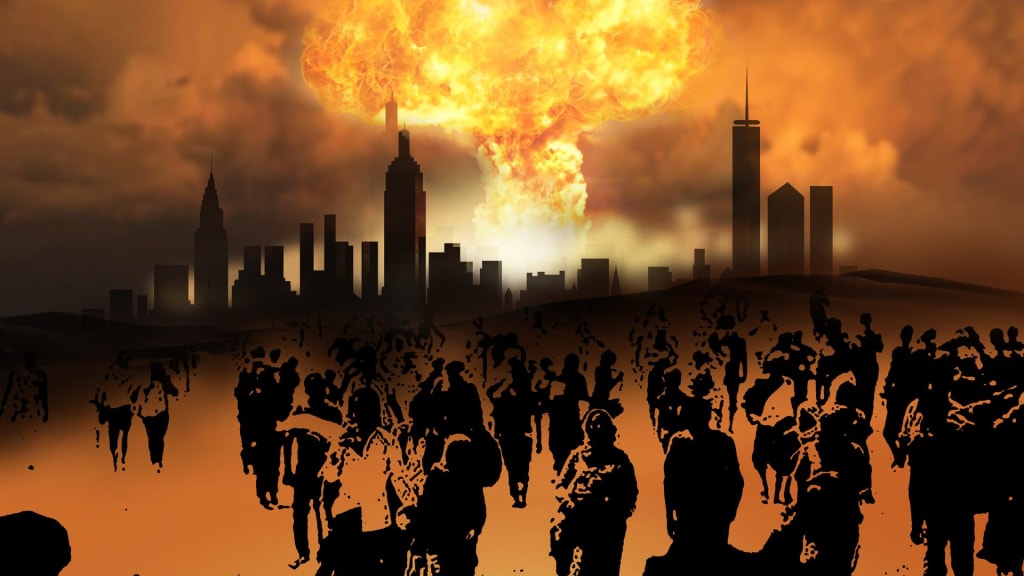
The concept of a Third World War is a topic that elicits concern and speculation, given the potential catastrophic consequences it could bring to humanity. While the world has made significant strides in maintaining peace and preventing large-scale conflicts, it is crucial to examine the factors that contribute to the possibility of a Third World War. This essay aims to explore the complex landscape of global geopolitics and discuss some key factors that could influence the likelihood of such a conflict.
Changing Power Dynamics:
One significant factor in assessing the potential for a Third World War is the shifting power dynamics among nations. The emergence of new global powers and the realignment of existing ones can lead to competition, rivalries, and geopolitical tensions. Conflicting interests, resource scarcity, and territorial disputes have historically been triggers for conflicts, and the rise of new power centers may heighten these risks.
Regional Conflicts and Proxy Wars:
Regional conflicts and proxy wars, often fueled by major powers' involvement, have the potential to escalate and draw in other nations, ultimately spiraling into a global conflict. The complex web of alliances, interventions, and the pursuit of strategic interests can inadvertently create conditions that contribute to an escalation of hostilities, making the outbreak of a Third World War more plausible.
Weapons Proliferation and Technological Advancements:
The proliferation of advanced weaponry, including nuclear, biological, and cyber weapons, introduces a dangerous dimension to the possibility of a global conflict. As technology advances, the risk of these weapons falling into the wrong hands or being used in miscalculated scenarios becomes a matter of concern. The potential for unintended consequences and the rapid dissemination of destructive capabilities amplifies the potential for a Third World War.
Resource Scarcity and Climate Change:
The scarcity of vital resources, exacerbated by climate change, can heighten tensions and trigger conflicts among nations. Competition for limited resources, such as water, food, and energy, can lead to regional and global confrontations. The impacts of climate change, including displacement of populations, environmental degradation, and increased resource competition, pose significant challenges that could escalate into large-scale conflicts.
Economic Interdependence and Trade Wars:
In an interconnected global economy, economic tensions and trade disputes have the potential to escalate and spill over into broader conflicts. The disruption of global supply chains, the imposition of tariffs, and the erosion of economic interdependence can strain international relations and create conditions conducive to geopolitical rivalries and, ultimately, the outbreak of a Third World War.
Diplomacy and International Cooperation:
While the factors mentioned above contribute to the possibility of a Third World War, it is crucial to recognize the significance of diplomacy and international cooperation in preventing such a catastrophe. Diplomatic efforts, multilateral institutions, and dialogue play vital roles in mitigating tensions, resolving conflicts, and promoting peaceful resolutions to disputes. Strengthening these mechanisms and fostering a culture of diplomacy are essential in reducing the risk of global conflicts.
A Few Additional Points:
Technological Interdependence and Cyber Warfare: The interconnectedness of global systems and reliance on technology present new vulnerabilities. Cyber warfare, including hacking, sabotage, and information warfare, has the potential to destabilize nations and escalate tensions. As countries become more reliant on digital infrastructure, the risk of cyber conflicts, either independently or as part of a larger conflict, increases.
Nationalism and Populist Movements: The rise of nationalism and populist movements in various parts of the world can exacerbate geopolitical tensions. Policies driven by nationalist agendas may fuel rivalries, protectionism, and exclusionary ideologies, further polarizing nations and increasing the risk of conflicts.
Disintegration of International Institutions: The erosion or disintegration of international institutions designed to foster cooperation and resolve conflicts, such as the United Nations, can create a power vacuum and diminish diplomatic avenues for conflict resolution. The weakening of these institutions may lead to a more volatile and unpredictable global environment.
Proxy Conflicts and Superpower Rivalries: The rivalry between major powers, such as the United States, China, and Russia, has the potential to manifest in proxy conflicts in various regions. Proxy conflicts occur when larger powers support opposing factions or engage in indirect confrontations in smaller, politically volatile countries. These conflicts can quickly escalate and draw in additional actors, heightening the risk of a global conflict.
Ideological Clashes and Extremism: Ideological clashes between different political, religious, or cultural groups can create fertile ground for conflicts. Extremist ideologies and radicalization pose risks not only within individual countries but also in terms of spillover effects and potential regional or global destabilization.
Nuclear Weapons and Deterrence: The possession of nuclear weapons by multiple countries adds an element of deterrence but also increases the stakes in potential conflicts. The risk of accidental or deliberate use of nuclear weapons, particularly during periods of heightened tensions, underscores the importance of arms control agreements and non-proliferation efforts.
Changing Global Dynamics: Rapid shifts in global power dynamics, such as economic growth, demographic changes, and technological advancements, can unsettle the existing international order and create conditions ripe for conflicts. The redistribution of influence and resources among nations may lead to power struggles and increased competition, potentially escalating into a global conflict.
Conclusion:
The possibility of a Third World War is a topic of concern that warrants careful examination of the complex factors at play in today's global landscape. Shifting power dynamics, regional conflicts, weapons proliferation, resource scarcity, and economic tensions all contribute to the potential for a global conflict. However, it is crucial to remember that the path to peace lies in fostering diplomacy, promoting international cooperation, and addressing the root causes of conflicts. The collective efforts of nations, guided by a commitment to dialogue, peacebuilding, and shared interests, can help prevent the devastating consequences of a Third World War and shape a more stable and secure world for future generations.
About the Creator
Keep reading
More stories from Váradi Ákos and writers in Earth and other communities.
Embracing Diversity and Equality: The Importance of Gay Pride
Introduction: Gay Pride, an annual celebration of the LGBTQ+ community, holds profound significance in the ongoing fight for equality and acceptance. This essay delves into the importance of Gay Pride events, exploring their historical context, societal impact, and the vital role they play in fostering inclusivity, visibility, and empowerment for LGBTQ+ individuals worldwide.
By Váradi Ákos3 years ago in Pride
Landscape Beneath Antarctica's Icy Surface Revealed in Unprecedented Detail
For decades, Antarctica has been the Earth’s ultimate mystery — a vast expanse of ice covering almost 14 million square kilometers, hiding secrets beneath its frozen surface. Now, thanks to advanced radar technology and satellite mapping, scientists have produced the most detailed map yet of the continent’s hidden landscape, revealing mountains, valleys, subglacial lakes, and river systems that were previously invisible. This discovery is more than just a scientific curiosity. Understanding Antarctica’s topography beneath the ice is critical for predicting ice sheet stability, global sea-level rise, and climate change impacts. The new data could also shed light on Earth’s geological history and the ways in which life may survive in extreme environments. How Scientists Mapped the Hidden Terrain For years, researchers have relied on a combination of methods to peek beneath the ice: Ice-penetrating radar: Devices mounted on aircraft or satellites send radio waves through ice layers, which bounce back when they hit bedrock, revealing contours beneath kilometers of frozen water. Satellite gravimetry: Small variations in Earth’s gravitational field help infer the presence of mountains, valleys, and subglacial lakes. Seismic surveys: Explosions or controlled vibrations allow scientists to detect underground structures by measuring the way seismic waves travel through different materials. Using these techniques, a consortium of international researchers created a high-resolution map of Antarctica’s sub-ice topography, revealing features that rival the landscapes of continents that have been visible for millions of years. What’s Beneath the Ice? The map reveals a striking variety of features: Mountain ranges: Peaks rise more than 4,000 meters above the surrounding terrain, hidden beneath miles of ice. Some of these ranges may be older than the Rockies or the Alps. Deep valleys: Vast troughs and gorges, carved by ancient rivers or tectonic activity, provide clues about how the continent evolved over millions of years. Subglacial lakes: Scientists have identified hundreds of liquid water lakes trapped beneath the ice, including the famous Lake Vostok. These lakes remain liquid due to pressure and geothermal heat and may host microbial life isolated for millions of years. Subglacial river networks: Surprisingly, water flows beneath the ice in channels and rivers, slowly carving pathways that affect ice sheet movement. This intricate landscape challenges the perception of Antarctica as a flat, featureless ice sheet. Instead, it is a dynamic and complex environment, where hidden topography influences everything from ice flow to global sea levels. Why This Discovery Matters The importance of understanding what lies beneath Antarctica’s ice cannot be overstated: Predicting Ice Sheet Stability: Ice sheets move more quickly over smooth surfaces than over rugged terrain. Knowing where mountains and valleys lie helps scientists predict which areas of ice may collapse first, potentially raising sea levels faster than anticipated. Climate Change Models: Subglacial lakes and water channels lubricate the ice from below, influencing melting rates. Incorporating these features into models improves accuracy in forecasting future sea-level rise. Earth’s Geological History: The newly revealed landscape offers a window into Antarctica’s past — from tectonic shifts to ancient rivers and climates. This data helps reconstruct how continents drifted and climates evolved over millions of years. Search for Extreme Life: Subglacial lakes may harbor microbial life isolated for millions of years, providing insights into life in extreme environments, potentially even on other planets. Global Implications Antarctica may feel distant, but its ice sheets hold the key to global sea-level stability. Even small changes beneath the ice can have profound consequences for coastal cities around the world. With melting accelerated by climate change, understanding the terrain under the ice is crucial for planning and mitigation. Governments, scientists, and environmental organizations are now using this information to: Improve climate models for sea-level rise predictions Identify vulnerable regions of the ice sheet Guide future research missions to subglacial lakes and mountains The discovery also strengthens the case for continued international collaboration in Antarctica, where research and environmental protection are governed by treaties emphasizing peaceful scientific study. Challenges Ahead Mapping Antarctica is far from complete. Extreme weather, thick ice sheets, and logistical difficulties make the continent one of the hardest places to study. While radar and satellite technologies have advanced, field validation and deeper exploration remain difficult and expensive. Researchers also face ethical and environmental concerns. Drilling into subglacial lakes to sample microbial life, for instance, must be done carefully to avoid contamination. Antarctica’s fragile ecosystem demands that scientific progress balances discovery with protection. Looking to the Future The detailed map of Antarctica’s hidden landscape opens new possibilities for exploration and understanding: Ice Flow Predictions: With accurate topography, scientists can model how ice sheets will respond to warming climates more precisely. Resource Insights: While exploitation is restricted by international agreements, understanding subglacial mineral deposits can inform potential future uses. Extreme Environment Biology: Studying subglacial lakes could reveal new species adapted to cold, dark, and high-pressure environments, broadening our understanding of life on Earth. The data also strengthens international scientific cooperation, as multiple countries share findings and resources to better understand a continent that belongs to no single nation. Final Thoughts Antarctica’s ice may appear static and endless, but beneath it lies a vibrant and rugged landscape filled with mountains, valleys, lakes, and rivers. The new detailed mapping of this hidden world is a landmark achievement in Earth science, combining advanced technology, international collaboration, and the human drive to explore. By uncovering what lies beneath the ice, scientists are not just satisfying curiosity — they are equipping humanity with the knowledge to protect our planet, anticipate climate challenges, and understand the deep history of Earth itself. Antarctica’s secrets, once locked beneath kilometers of ice, are finally being revealed, and what we learn could reshape our understanding of the planet and our place within it.
By Muhammad Hassan3 days ago in Earth


Comments
There are no comments for this story
Be the first to respond and start the conversation.