
Global Economy Must Move Beyond GDP to Prevent Planetary Disaster
Why the UN Chief Says It’s Time to Rethink How We Measure Progress
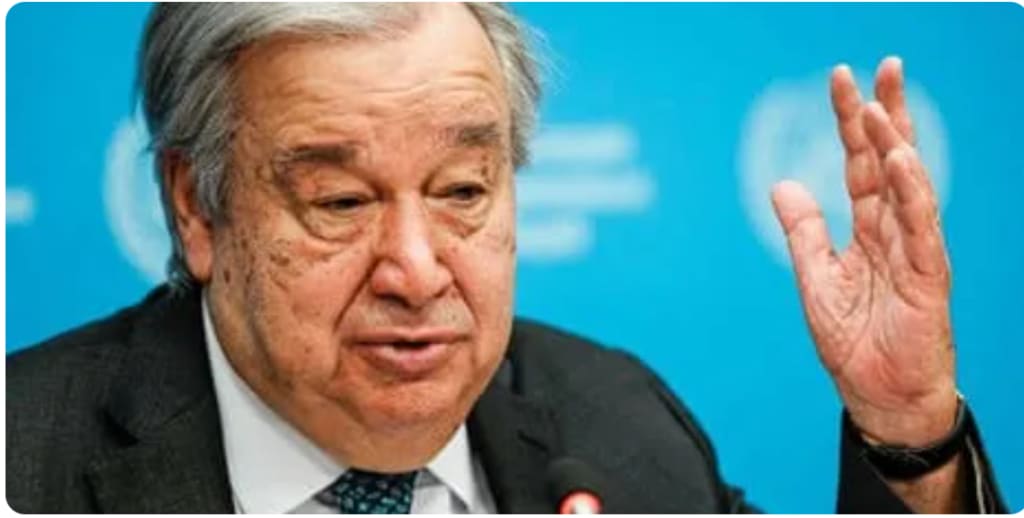
When we hear about the global economy, one number usually dominates the conversation: GDP, or gross domestic product. For decades, it has been the gold standard for measuring economic success. But according to United Nations Secretary-General António Guterres, this single-minded focus on GDP is not only outdated—it’s dangerous.
At a recent UN summit with leading economists, Guterres delivered a sobering message: if we continue to prioritize GDP above all else, we are steering humanity toward a planetary disaster. The UN chief’s warning couldn’t be clearer: it’s time to rethink what progress really means.
Why GDP Isn’t Enough
GDP is simple. It measures the total value of goods and services produced in a country. But its simplicity is exactly the problem. It counts economic activity without asking whether that activity is good or bad for people or the planet.
Consider this: cutting down a forest or overfishing might increase GDP, even though these actions damage ecosystems and deplete natural resources. On the other hand, caring for the environment or investing in community wellbeing might not add much to GDP at all.
“We must place true value on the environment and go beyond GDP as a measure of human progress and wellbeing. Let us not forget that when we destroy a forest, we are creating GDP. When we overfish, we are creating GDP,” Guterres said.
In other words, GDP can make harmful actions look profitable while ignoring activities that genuinely improve human life and protect the planet.
The Limits of Economic Growth
The world’s obsession with GDP growth has long overlooked the fact that we live on a planet with finite resources. Climate change, biodiversity loss, and pollution are all byproducts of growth-driven economies. Yet GDP fails to account for them.
Relying solely on GDP is like reading only the price tag on a product without knowing if it’s safe or sustainable. We can grow rich on paper while simultaneously destroying the natural systems that make life possible.
Economists argue that this approach is unsustainable. In a world where climate disasters are becoming more frequent and severe, continuing to prioritize GDP growth above all else could have catastrophic consequences.
A New Way to Measure Progress
To address this challenge, the UN has launched a task force of economists—including Nobel laureates—to develop alternatives to GDP. The goal isn’t to discard GDP entirely but to complement it with a “dashboard” of indicators that reflect environmental sustainability, social equity, and human wellbeing.
Imagine a world where a country’s success isn’t just measured by how much it produces, but by how healthy its citizens are, how fair its society is, and how well it protects its ecosystems. This kind of holistic framework would encourage policies that reward sustainable practices rather than just economic expansion.
Metrics like education quality, health outcomes, income equality, and ecological integrity could finally give leaders a more accurate picture of national progress.
Rethinking Growth for a Sustainable Future
Some economists argue that technology and innovation can decouple economic growth from environmental harm—a concept called “green growth.” But others warn that no amount of technological improvement can fully counteract the impact of endless growth on a planet with limited resources.
This has led to discussions about “steady-state” or “degrowth” economies, where prosperity is measured by wellbeing and ecological balance rather than endless expansion. While this may sound radical, proponents say it’s the only way to ensure that economic systems don’t push humanity past planetary limits.
Guterres emphasizes that GDP-driven growth has also worsened inequality and fostered international competition over cooperation. Nations chasing higher GDP numbers often do so at the expense of citizens’ wellbeing and environmental stability.
Lessons from Recent Crises
The urgency of moving beyond GDP has been made even clearer by recent global crises. The COVID-19 pandemic, geopolitical tensions, and climate-induced disasters have exposed the vulnerabilities of economies built on constant growth.
Reports show that traditional economic models underestimate the risks posed by climate change. Without major changes, global GDP could shrink dramatically due to climate-related shocks—disrupting supply chains, displacing communities, and straining public finances.
These challenges highlight the need for a paradigm shift: one that aligns economic priorities with human and planetary health.
What the Future Could Look Like
Shifting beyond GDP won’t be easy. Political systems, financial institutions, and public perception are all deeply tied to traditional measures of growth. But the potential benefits are enormous.
A more holistic approach would encourage investments in renewable energy, healthcare, education, and ecological restoration. It would help societies prioritize long-term wellbeing over short-term profit. And importantly, it could foster international collaboration to tackle global problems that no single nation can solve alone.
Public engagement is key. If citizens begin to demand that governments measure success by wellbeing and sustainability rather than just money, transformative change becomes possible.
The Takeaway
UN Secretary-General António Guterres’s warning is more than rhetoric—it’s a call to action. The global economy cannot continue to chase GDP without considering its impact on people and the planet.
Moving beyond GDP doesn’t mean abandoning economic growth altogether. It means redefining what progress means. It means valuing life, health, equity, and the environment alongside production and profit.
How the world responds to this challenge could determine not just economic outcomes, but the very future of life on Earth.
About the Creator
Keep reading
More stories from Aqib Hussain and writers in Earth and other communities.
Australia Wildfires Burn Nearly 900,000 Acres
Australia is no stranger to wildfires, but the latest blaze tearing through the country’s southeast has once again pushed communities, ecosystems, and emergency services to the brink. Nearly 900,000 acres of land have burned as intense heatwaves and dry conditions fueled fast-moving fires across parts of Victoria and New South Wales. For many Australians, this disaster feels like a painful reminder that wildfire seasons are becoming longer, more intense, and far less predictable.
By Aqib Hussainabout a month ago in Earth
Flooding wetlands in an effort to combat climate change could backfire.
Despite making up a fairly small portion of the planet's surface area, wetlands store a disproportionate amount of carbon on land. Wetland soil disturbance can release massive volumes of greenhouse gases, which is why they are at the centre of climate debates.
By Francis Dami7 days ago in Earth



Comments
There are no comments for this story
Be the first to respond and start the conversation.