
Exploring the Enigma of Dark Matter: Unveiling the Universe's Hidden Secret
Dark matter illustration
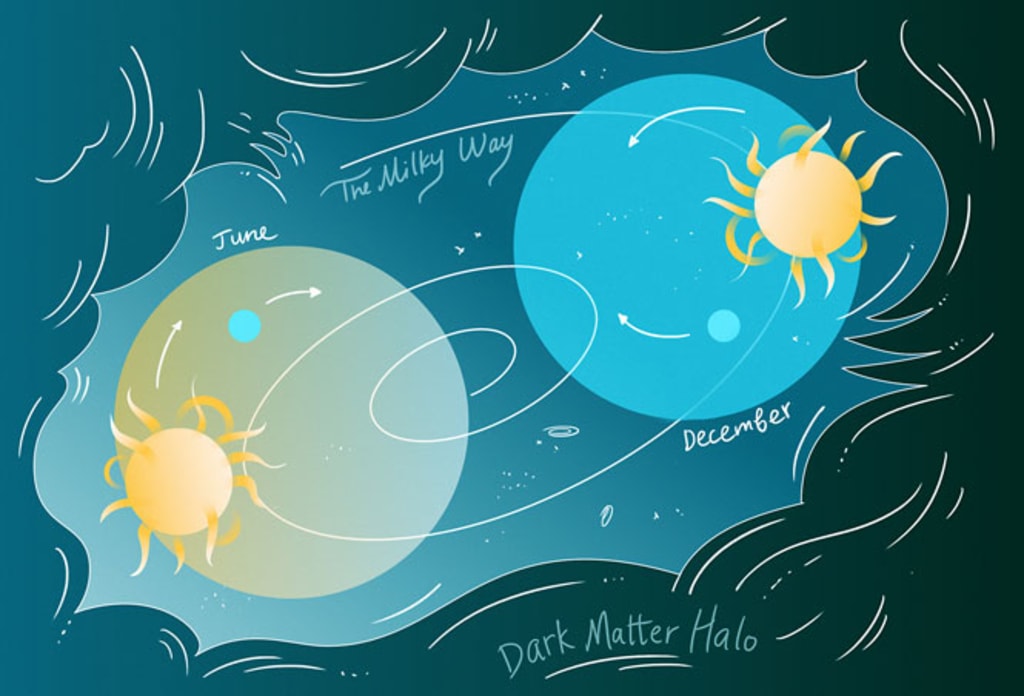
The universe, with its countless galaxies, stars, and planets, is a realm of boundless wonder and mystery. Yet, amidst the celestial splendor, a profound enigma remains, captivating the minds of physicists and astronomers alike: the riddle of dark matter. This mysterious substance, imperceptible to our senses, is believed to constitute a significant portion of the cosmos, yet its nature and properties remain tantalizingly elusive.
Dark matter's existence first came to light through the observations of Swiss astronomer Fritz Zwicky in the 1930s. Zwicky noticed that galaxies within the Coma Cluster were moving at unexpectedly high velocities, defying the laws of gravity as predicted by visible matter alone. This discrepancy led him to propose the presence of an invisible form of matter, now known as dark matter, which exerts gravitational forces but does not interact with light or other electromagnetic radiation.
Subsequent observations and studies, such as the rotation curves of galaxies and the behavior of galaxy clusters, provided further evidence for the existence of dark matter. One of the most iconic pieces of evidence is the Bullet Cluster, where the separation of visible matter (hot gas) and dark matter during a collision of galaxy clusters showcases their distinct natures.
Yet, despite its inferred prevalence, the nature of dark matter remains an open question. Various hypotheses have been proposed to explain its composition. One prevailing theory suggests that dark matter is composed of Weakly Interacting Massive Particles (WIMPs), hypothetical particles that interact weakly with regular matter and each other, making them difficult to detect. Experiments conducted in deep underground laboratories, like the Large Underground Xenon (LUX) and the Cryogenic Dark Matter Search (CDMS), aim to capture the rare interactions between WIMPs and ordinary matter. However, as of now, no definitive evidence has been found.
Other theories speculate that dark matter could be composed of primordial black holes, hypothetical particles called axions, or even new forms of matter that exist beyond the standard model of particle physics. The search for dark matter involves both theoretical exploration and experimental ingenuity, often requiring cutting-edge technology and innovative approaches to unlock its secrets.
The implications of understanding dark matter extend beyond astrophysics and into fundamental physics. Solving the mystery could shed light on the fundamental nature of space, time, and the universe itself. It could also bridge the gap between general relativity and quantum mechanics, two cornerstone theories of modern physics that have yet to be reconciled.
While the quest to unravel the enigma of dark matter continues, recent advancements have sparked renewed hope and enthusiasm within the scientific community. The upcoming launch of the James Webb Space Telescope (JWST), often dubbed "the next Hubble," promises to explore the universe in unprecedented detail and might provide new insights into dark matter's distribution and behavior.
Intriguingly, a growing field known as modified gravity theories suggests an alternative to dark matter by tweaking the laws of gravity on cosmic scales. While these theories challenge the conventional paradigm, they highlight the dynamic nature of scientific inquiry and the necessity of exploring diverse avenues of thought.
The allure of dark matter lies in its profound ability to transform our understanding of the universe. It beckons us to embrace the unknown, question our assumptions, and venture into uncharted territories of science. As technology advances and our understanding deepens, the answers to this cosmic riddle may emerge, unraveling the veil that cloaks one of the universe's most captivating mysteries. Until then, the journey to comprehend the elusive dark matter remains one of the most enthralling quests in modern science, inviting us to peer beyond the limits of our current understanding and glimpse the hidden truths that shape the cosmos.
About the Creator
Keep reading
More stories from Noor-ul-Ain Iftikhar and writers in Earth and other communities.
Quirky Chronicles: Exploring the Unconventional and Hilarious
Introduction In a world often characterized by routine and predictability, the allure of the unconventional and hilarious is simply irresistible. From peculiar inventions that defy logic to unexpected anecdotes that leave us in stitches, the quirks of life never fail to capture our imagination and tickle our funny bones. This article embarks on an intriguing journey, delving into some of the most captivating and amusing topics that celebrate the delightful eccentricities of our world.
By Noor-ul-Ain Iftikhar2 years ago in Humor
The Plant That Thrives Without Water, Loves Heat, and Turns Any Yard Into a Butterfly Haven
As climate change reshapes weather patterns and water scarcity becomes a growing concern, gardeners around the world are rethinking what they plant. The era of thirsty lawns and delicate flowers is slowly giving way to a new generation of resilient, eco-friendly greenery. Among these standout survivors is a remarkable plant that thrives without regular watering, flourishes in intense heat, and transforms ordinary yards into vibrant butterfly sanctuaries. This plant is commonly known as butterfly weed (Asclepias tuberosa), a hardy native species that is redefining sustainable gardening. Built for Heat and Drought Butterfly weed is naturally adapted to harsh conditions. Native to dry prairies and open grasslands, it has evolved deep roots that allow it to access moisture far below the surface. Once established, it requires little to no supplemental watering, even during prolonged heatwaves. Unlike traditional garden plants that wilt under the sun, butterfly weed actually thrives in full sunlight. Temperatures that scorch lawns and stress ornamentals are exactly what this plant prefers. Its thick, narrow leaves minimize water loss, while its sturdy stems resist wind and heat damage. For homeowners living in drought-prone or arid regions, this makes butterfly weed an ideal solution—beautiful without being demanding. A Magnet for Butterflies and Pollinators What truly sets butterfly weed apart is its powerful role in supporting pollinators. Its bright orange, yellow, or red flower clusters are rich in nectar, attracting a wide range of butterflies, bees, and other beneficial insects. Most notably, butterfly weed is a critical host plant for monarch butterflies. Monarchs lay their eggs exclusively on milkweed species, and butterfly weed provides both food and shelter for their caterpillars. With monarch populations declining due to habitat loss and pesticide use, planting butterfly weed can make a real difference. Beyond monarchs, the plant also draws swallowtails, painted ladies, and native bees, turning even a small yard into a buzzing ecosystem. Low Maintenance, High Impact One of the biggest appeals of butterfly weed is how little effort it requires. After the first growing season, maintenance is minimal. It doesn’t need frequent pruning, fertilizing, or pest control. In fact, overwatering or rich soil can actually harm it. It grows well in poor, sandy, or rocky soil—conditions that many gardeners struggle with. Once planted, it establishes itself slowly but steadily, returning year after year as a reliable perennial. This makes it perfect for busy homeowners, beginners, or anyone looking to reduce water bills and gardening workload without sacrificing visual appeal. Beauty With a Purpose Butterfly weed proves that sustainable gardening doesn’t mean compromising on aesthetics. Its vivid flowers bloom for weeks during summer, creating bold color contrasts in landscapes that might otherwise look dry or dull. It pairs well with ornamental grasses, lavender, and other drought-tolerant plants, making it a favorite in modern xeriscaping designs. Whether planted in borders, wildflower gardens, or urban yards, it brings both structure and color. Unlike invasive ornamentals, butterfly weed coexists peacefully with native plants, strengthening local ecosystems rather than disrupting them. A Climate-Smart Choice As heatwaves become more frequent and water restrictions more common, plants like butterfly weed represent the future of gardening. They reduce dependence on irrigation, support wildlife, and help landscapes remain resilient under changing conditions. By choosing drought-tolerant, native species, gardeners can actively participate in climate adaptation—one plant at a time. Butterfly weed, in particular, shows how small choices can have wide-reaching environmental benefits. How to Grow It Successfully Growing butterfly weed is straightforward. It prefers full sun and well-drained soil. Seeds can be sown directly in the ground, though patience is key—the plant focuses on root development in its first year before producing abundant blooms. Once established, it requires little care. Avoid fertilizers and heavy mulching, and let nature do the rest. In return, the plant will reward you with years of color and life. Final Thoughts The plant that thrives without water, loves heat, and turns any yard into a butterfly haven is more than just a gardening trend—it’s a symbol of a smarter, more sustainable relationship with nature. Butterfly weed proves that beauty and resilience can go hand in hand. In a world facing rising temperatures and shrinking resources, it offers a hopeful reminder: sometimes, the toughest plants create the most vibrant life.
By Fiaz Ahmed Brohiabout 21 hours ago in Earth
TODAY’S WEATHER NEWS ACROSS THE UNITED STATES WHAT AMERICANS SHOULD EXPECT RIGHT NOW
TODAY’S WEATHER NEWS ACROSS THE UNITED STATES WHAT AMERICANS SHOULD EXPECT RIGHT NOW Weather conditions continue to be one of the most discussed daily topics across the United States, especially as seasonal transitions bring noticeable changes in temperature, storms, and regional weather patterns. Today’s weather reflects a mix of warming trends, lingering cold pockets, and active systems affecting different parts of the country. From the West Coast to the East Coast, Americans are paying close attention to how temperatures will feel, whether rain or snow is expected, and how conditions may impact daily routines.
By America today a day ago in Earth


Comments
There are no comments for this story
Be the first to respond and start the conversation.