
Exploring Innovative Methods to Predict Lava Flow Using DIY Experiments and Scientific Insight
Exploring Innovative Methods to Predict Lava Flow Using DIY Experiments and Scientific Insight

Introduction
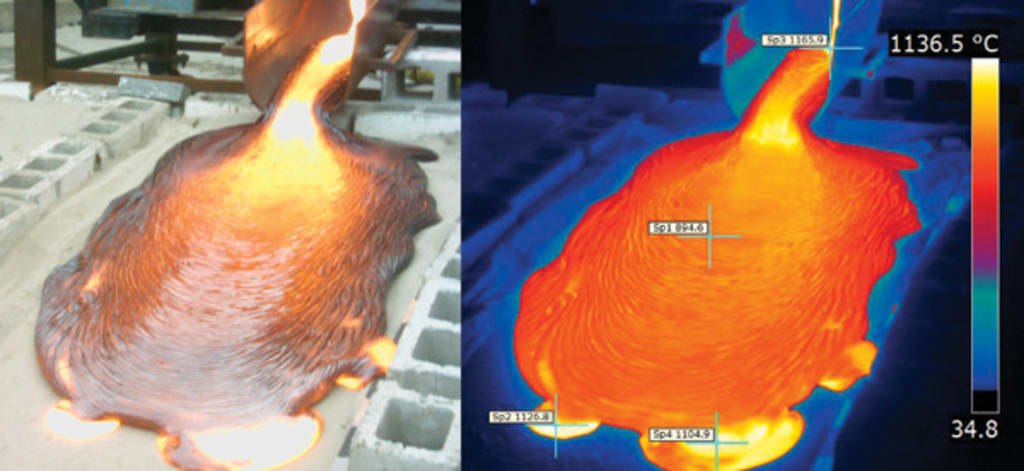
Lava flow prediction is a critical aspect of volcanic hazard management, helping to mitigate risks to life and property. The unpredictable nature of volcanic eruptions poses significant challenges to scientists working to develop more accurate and effective forecasting methods. Recent advancements in the field have introduced innovative approaches to understanding lava flow behavior, blending traditional scientific research with do-it-yourself (DIY) experiments. Researchers at Syracuse University have been at the forefront of these efforts, exploring new methods of predicting lava flows through both laboratory experiments and field studies. This combination of scientific insight and practical experimentation offers valuable tools for improving volcanic risk assessment worldwide.
The Science Behind Lava Flow Prediction
Lava flow prediction involves understanding several factors, such as the lava’s composition, temperature, viscosity, and the terrain over which it flows. Typically, lava behaves in a complex, non-linear manner, and predicting its movement is difficult. However, researchers have found that by studying how lava interacts with different surfaces and observing its flow patterns under varying conditions, they can predict its behavior with greater accuracy.
Key variables in lava flow prediction include:
- Viscosity – The thickness or stickiness of lava affects its speed and flow distance.
- Topography – The shape and slope of the land determine how lava moves downhill.
- Temperature – The hotter the lava, the more fluid it is, allowing it to flow faster.
- Composition – The chemical makeup of lava influences its viscosity and solidification rate.
Through experiments and modeling, researchers can simulate these factors and apply them to real-world scenarios.
DIY Lava Flow Experiments
Syracuse University researchers, in collaboration with other academic institutions, have been working on a series of DIY experiments designed to improve lava flow predictions. These experiments typically involve creating small-scale lava flows using materials such as cornstarch and water to mimic the flow of molten rock. By adjusting the proportions of these materials and varying other conditions such as slope and temperature, scientists can observe how the mixture behaves and apply their findings to actual lava behavior.
One experiment involves creating a miniature lava fountain using a mixture of materials like baking soda and vinegar to simulate gas expansion and eruption dynamics. This DIY model helps illustrate how pressure and temperature changes influence lava flow and eruption speed.
Other DIY experiments replicate the cooling process of lava by using wax or gelatin, materials that solidify upon cooling and behave similarly to lava in terms of flow and texture. By manipulating the cooling process in controlled conditions, researchers can observe how the solidification of lava impacts its flow rate and form.
These experiments provide valuable insights into lava behavior, offering a hands-on approach that can be done without access to complex scientific equipment. DIY lava flow experiments also serve as an educational tool for students and the general public, fostering a greater understanding of volcanic processes.
Advanced Modeling Techniques at Syracuse University
In addition to DIY experiments, Syracuse University researchers use advanced computational models to predict lava flow behavior with greater precision. Using detailed field data, laboratory results, and simulations, they can create predictive models of lava flow patterns that account for the various physical factors influencing the movement of lava.
One such method is the computational fluid dynamics (CFD) model, which simulates the flow of lava over different surfaces. By inputting factors such as lava viscosity, terrain slope, and temperature, the model can predict where and how far lava will flow in a given volcanic eruption. This tool allows scientists to assess potential danger zones, advising local governments on evacuation plans and infrastructure protection.
Researchers also use real-time monitoring data from active volcanoes, including satellite imagery and ground sensors, to refine these models. By integrating live data, scientists can adjust predictions as lava flows develop, improving their ability to respond to changes in real time.
Impact of Syracuse University’s Research on Lava Flow Prediction
Syracuse University’s research in lava flow prediction has led to several breakthroughs in volcanic hazard mitigation. By combining traditional geophysical methods with innovative DIY experiments, the researchers have developed more accessible and cost-effective techniques to monitor and predict lava behavior.
The development of simple, low-cost models enables broader communities, including local authorities and emergency responders, to engage with the science of lava flow prediction. In addition to direct applications in volcanic risk management, the work contributes to a better understanding of planetary volcanism, benefiting fields like planetary science and the study of volcanic activity on other celestial bodies, such as Mars and Venus.
The findings from these research efforts are being integrated into volcanic eruption forecasting systems, enhancing the global ability to predict lava flows and reduce the risks they pose to human life and infrastructure.
Conclusion
Innovative methods of predicting lava flow, combining both DIY experiments and advanced scientific research, are revolutionizing the field of volcanology. Syracuse University’s pioneering research into these techniques has provided valuable insights into the behavior of lava and how it interacts with its environment. By enhancing predictive capabilities and improving understanding, these advancements contribute significantly to volcanic hazard assessment and disaster preparedness. The integration of hands-on experiments and cutting-edge modeling will continue to play an essential role in minimizing the dangers posed by volcanic eruptions, ultimately saving lives and protecting communities at risk.
About the Creator
Ninette Ferriera
This page will transform your life through medicine, technology, and space exploration, improving healthcare, communication, and transport while advancing sustainability. It will shape your future and unlock endless possibilities
#Subscribe
Keep reading
More stories from Ninette Ferriera and writers in Earth and other communities.
The Missing Pieces in the 6th Mass Extinction
Earth has experienced five mass extinctions over the past 500 million years, each wiping out a significant percentage of species due to natural disasters such as asteroid impacts, volcanic eruptions, and rapid climate changes. However, scientists now warn that a sixth mass extinction is underway, driven not by nature, but by human activity. Deforestation, pollution, climate change, and overexploitation of species are accelerating biodiversity loss at an unprecedented rate. Yet, despite mounting evidence, critical gaps remain in our understanding of this crisis. These missing pieces make it difficult to predict the full impact of the sixth extinction and identify the most effective solutions.
By Ninette Ferriera 12 months ago in Earth
Exclusive: Amazon Plans Thousands More Corporate Job Cuts Next Week, Sources Say
Amazon, one of the world’s largest e-commerce and technology companies, is reportedly planning to announce thousands of additional corporate job cuts next week, according to sources familiar with the matter. This latest round of layoffs is part of a broader trend of corporate restructuring at the company, which has seen waves of job reductions in recent months.
By Muhammad Hassanabout 5 hours ago in Earth
Trump Slams UK Deal to Hand Over Chagos Islands After Previously Backing It
If you thought politics couldn’t surprise you anymore, Donald Trump just proved otherwise. In a dramatic U-turn, the former U.S. president criticized the United Kingdom’s decision to transfer sovereignty of the Chagos Islands to Mauritius—a deal he had previously backed. What was once considered a solution to a decades-long dispute has now become a hot topic, sparking debates about strategy, diplomacy, and international trust.
By Muhammad Hassan3 days ago in Earth



Comments (1)
Nice work, loved the ending!