
Exploring Antarctica's extremes
A place like none other!
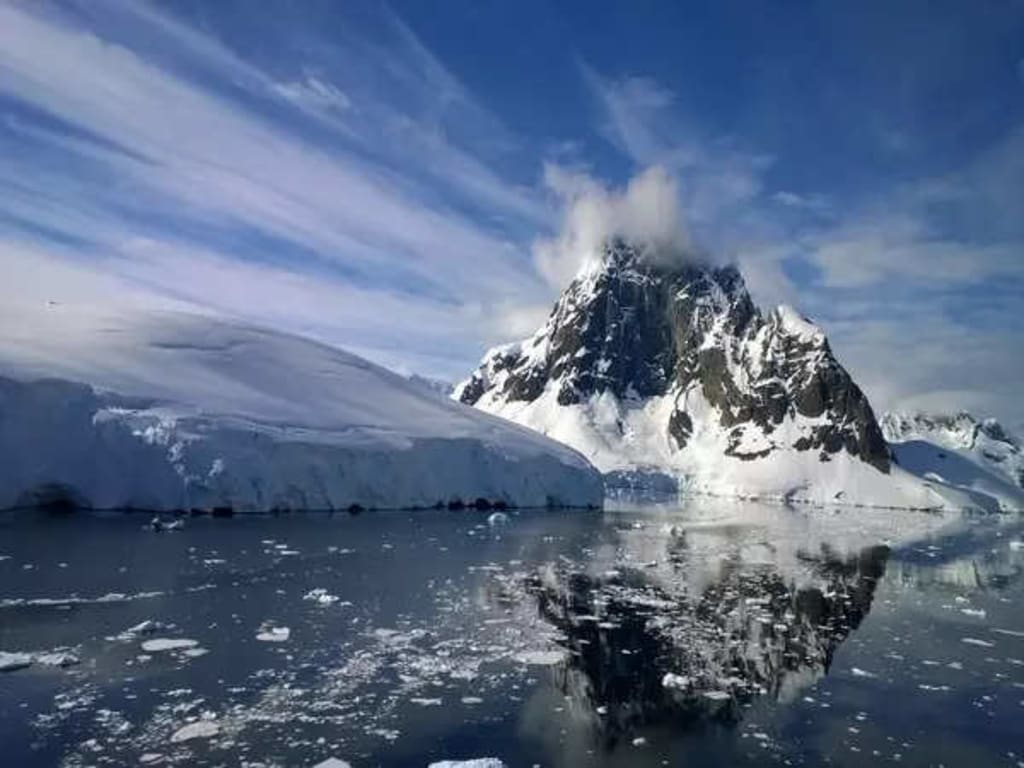
In case you want to study the earth's past present and future Antarctica is the best place to go, bon voyage!
One thing that amazes me is these giant ping pong balls, also known as snow, the beautiful landscapes, glaciers, and its incredible snow mountains, also I learned that it has a very simple ecosystem which means it's easy to notice even its small changes that occur for example glacier melting which can cause immense changes in earth climate.
Antarctica, the world's coldest and driest continent, is a desolate place that has captured the curiosity and fascination of scientists, explorers, and adventure-seekers alike. Known as the land of extremes, Antarctica holds several records for its extreme weather conditions making it a unique and challenging environment for those who dare to venture into its frozen landscapes. Antarctica's freezing temperatures are unlike anywhere else on the planet. With the recorded lowest temperature of -89.2°C (-128.6°F) and it's the only place that couldn't sustain the human population so I guess that's the reason why it remains one of the most beautiful places on the planet. Antarctica is a bone-chilling realm where only the hardiest creatures can survive.
Some cool facts about Antarctica are that it holds 90% of the world's freshwater mostly in the form of ice and only 1% is ice-free but do you also know that it's a desert?
yes, it's because it experiences very less rainfall.
Antarctica, in particular, experiences some of the most extreme conditions on the planet, making its snow cover even more remarkable. With its high albedo and low thermal conductivity, the expansive snow cover in Antarctica contributes significantly to the planet's energy balance and atmospheric circulation. This is because the white surface of the snow reflects about 90% of the incoming solar radiation back into space.
The formation of ice on the seabed, known as "anchor ice," plays a crucial role in shaping the biota in the coastal fringes of the continental Antarctic. Snow and ice cover 98% of all surfaces in Antarctica, making it the largest ice sheet in the world. Antarctica's snow cover is thought to have formed during the early Tertiary period when the continent attained a polar position and a cooling climate allowed for the development of a permanent snow cover. Antarctica, the frozen continent at the bottom of the world, is known for its extreme conditions and unique wildlife. The harsh and unforgiving environment of Antarctica is home to a surprising amount of diverse wildlife. Despite the extreme cold and harsh conditions, animals have adapted to survive on this frozen continent. From majestic and iconic creatures like penguins and seals to lesser-known species such as sea spiders and nematodes, Antarctica's animal kingdom is both fascinating and resilient. These animals have developed unique adaptations to cope with the harsh Antarctic environment.
In Antarctica, the land of ice and snow, penguins reign supreme. These charismatic creatures have adapted to survive in one of the harshest environments on Earth, where temperatures plummet to unimaginable lows and winds howl relentlessly across the icy terrain. While weather forecasting is vital for human activities and safety, it also plays a crucial role in the lives of the Antarctic's unique inhabitants - the penguins. Penguins play a crucial role in the ecosystem of Antarctica and the sub-Antarctic islands. As one of the few species that have survived on Earth for over 60 million years, penguins have adapted to the harsh and extreme conditions of the southern hemisphere. In the vast expanse of the Antarctic, a place of extreme cold and stunning beauty, there still exists life!
About the Creator
Keep reading
More stories from mmindspeaks and writers in Earth and other communities.
The purest way to nourish the soul: Music!
Music is the only thing we can't see with our naked eyes but can touch our souls. It truly has a power like none! Listening to music has always been a popular way to relax, unwind and enjoy. The art of music not only helps reduce your stress but it also connects people from all over the world irrespective of their caste, religion, etc, it brings people together and brings a stronger and deeper connection to form within them. Everyone from different parts of the world may vibe to the same sound and rhythm and go in the flow. Music also brings out you from you! meaning you can express yourself through music as there are no limits and truly makes you feel ethereal. Music comes along with a wide range of emotions and also scientifically proven that it cures the soul and the body inside out. It can be a medicine for us and keep us happy and feel full. Music has the power to unlock memories, be a safe place, and offer solace for people with dementia.
By mmindspeaks3 years ago in Art
It’s too warm': Greenland’s fishermen are under threat from climate change
Greenland’s traditional fishing communities are facing an uncertain future as the Arctic warms faster than any other region on Earth, dramatically reshaping the landscapes and livelihoods of the semiautonomous Danish territory. Local fishermen, whose lives have long been tied to sea ice and predictable seasonal patterns, are now confronting unpredictable weather, shifting fish populations, and economic pressures that threaten both their culture and the local economy. A Changing Arctic Reality In the small coastal town of Ilulissat, veteran fisherman Helgi Áargil described how climate change has upended his routines. Where once he relied on stable sea ice and consistent fishing grounds, he now finds warmer waters, rainier conditions, and fish moving to deeper, cooler waters. Last year his boat became trapped in ice that calved from a nearby glacier; this year, instead of strengthening ice, it has been unusually wet — making conditions less predictable and incomes more volatile. Fishing accounts for up to 95 percent of Greenland’s exports, with key markets including China, the United States, Japan and Europe. This heavy economic reliance amplifies the impact of climate effects on fish patterns and harvests. Disappearing Ice, Changing Practices Traditional ice fishing — once conducted on sea ice more than a metre thick — has declined sharply. Older generations recall times when they could easily drill holes in stable ice to fish for cod, halibut, shrimp and snow crab. Today, sea ice is retreating earlier and forming later, forcing many fishermen to rely on boats even in the coldest months. While boats allow access to broader waters, they come with higher fuel costs and greater exposure to the elements, challenging sustainability. Karl Sandgreen, head of the Icefjord Center in Ilulissat, noted that ice thick enough to support traditional fishing began disappearing roughly three decades ago. The shift has not only changed how fishers operate but also increased competition and pressure on stocks closer to shore. Ecological and Economic Pressures Warmer conditions are also affecting fish behavior. Many species are moving deeper or into new areas as they seek cooler waters, complicating efforts to maintain stable catches. A warming ocean can temporarily boost plankton growth — potentially increasing some fish stocks — but it also alters ecosystems in unpredictable ways. Experts warn that fish may not behave as they once did, complicating traditional fishing forecasts and practices. The head of Royal Greenland, the territory’s largest employer, has expressed concern about a future with significantly diminished sea ice, which could push more traditional fishers toward larger, commercial fishing operations. However, this transition is not without risks. Increased fishing pressure near shorelines already shows early signs of overfishing; halibut are getting smaller, a classic indicator of stock stress noted by experts. Cultural Identity at Risk Fishing in Greenland is more than an economic activity; it is a cultural bedrock. In towns and villages across the island, harbours where daily catches are unloaded and sold remain central to community life. Many Greenlanders associate fishing with identity and tradition, and climate change is directly threatening these cultural ties as environmental conditions change faster than adaptation measures can keep pace. “You can have too much ice to sail and yet too little to qualify for safe ice fishing,” noted Toke Binzer, describing the paradoxical challenges fishermen now face. The unpredictability makes planning difficult and income erratic — one trip might bring significant earnings, while the next yields little or nothing. Limited Alternatives and Future Paths Beyond fishing, economic alternatives in Greenland remain limited. Tourism is growing but not at a pace that could offset losses in the fishing sector. With a total population barely over 50,000, opportunities outside harvesting marine resources are comparatively sparse. As dog sledding and other ice‑based traditions also diminish due to changing conditions, entire ways of life are under threat. Efforts to support traditional fishers include loans for boats and business assistance, but long‑term resilience will likely require broader strategies. These could involve sustainable fishing quotas, diversification into aquaculture, and investments in climate adaptation infrastructure. Yet many local observers emphasize that meaningful change must also address the root causes of warming — a challenge far beyond Greenland’s shores. A Climate Warning Sign Greenland’s fishermen are becoming a human indicator of rapid Arctic change. The region is warming faster than the global average, reshaping ecosystems and economies alike. As these communities adapt or struggle, their challenges shed light on the broader global consequences of climate change — illustrating how environmental shifts ripple through cultures, industries and livelihoods thousands of kilometres from major industrial centres.
By Fiaz Ahmed a day ago in Earth
Rachel Reviews: Lakefront Wolves by Joseph Deegan
Meet Finn. He's an 18 year old kid who has potential. He's bright with great school scores and he's also an athlete, a footballer of some prowess. He has it all going for him, it would seem, and yet, he's determined to send what could be a well-planned, stable existence firmly off the rails. He drinks, he smokes, he takes drugs, he has violent tendencies and he's in danger of losing not only his mind but all that he holds dear.
By Rachel Deeming5 days ago in BookClub



Comments
There are no comments for this story
Be the first to respond and start the conversation.