
Europe’s Bold Move Toward Circular Packaging
What You Need to Know About the EU Packaging and Packaging Waste Directive
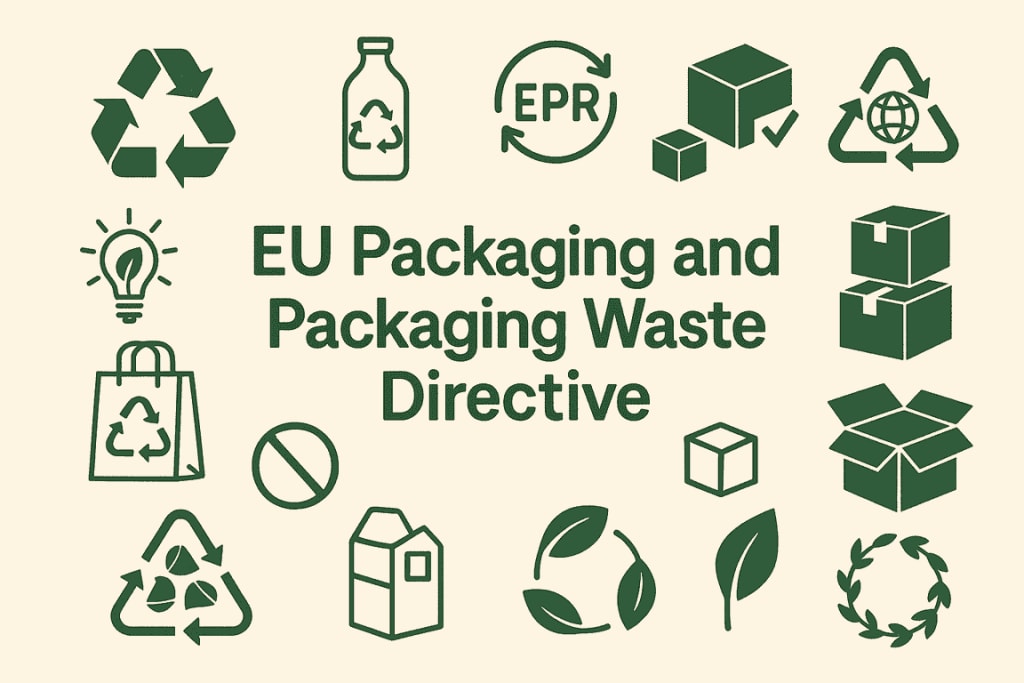
In an era where environmental sustainability has become more urgent than ever, the European Union (EU) is taking bold steps to regulate packaging waste across the continent. If your business is involved in manufacturing, distributing, or selling packaged goods in Europe, you’ll want to understand the EU Packaging and Packaging Waste Directive—what it is, why it matters, and how it’s evolving.
Let’s unpack the essentials.
What Is the EU Packaging and Packaging Waste Directive?
Originally introduced in 1994 as Directive 94/62/EC, the Packaging and Packaging Waste Directive (PPWD) is one of the EU’s key tools to fight pollution and promote a circular economy. Its main goal? To reduce the environmental impact of packaging throughout its entire lifecycle.
This directive affects all types of packaging—from plastic bottles to cardboard boxes—regardless of the material used. It applies not only to producers but also to importers and retailers placing packaging on the EU market.
What Does the Directive Cover?
The PPWD targets three categories of packaging:
1. Primary packaging – Directly contains the product (e.g., a cereal box)
2. Secondary packaging – Groups products together (e.g., shrink wrap for cans)
3. Tertiary packaging – Used for transport and logistics (e.g., pallets)
It covers all materials, including:
- Plastic
- Glass
- Metal
- Paper and cardboard
- Wood
- Composites
This inclusive scope ensures no packaging type is left behind.
Key Targets and Legal Obligations
Over the years, the EU has tightened recycling and recovery targets through updates like the 2018 Circular Economy Package. Current goals include:
- 65% of packaging waste will be recycled by 2025
- 70% by 2030
Material-specific targets (by 2025) include:
- Plastic: 50%
- Wood: 25%
- Ferrous metals: 70%
- Aluminum: 50%
- Glass: 70%
- Paper/cardboard: 75%
Extended Producer Responsibility (EPR)
One of the most impactful concepts under the directive is Extended Producer Responsibility (EPR). Under EPR, producers must take responsibility—both financially and operationally—for the waste they generate.
That means:
- Funding collection and recycling systems
- Labeling packaging for recyclability
- Potentially paying eco-modulated fees based on environmental impact
This shifts the burden from consumers and governments to those creating the waste.
Eco-Design and Waste Prevention
The directive doesn’t stop at managing waste—it aims to prevent it altogether.
Businesses are encouraged to:
- Minimize packaging volume and weight
- Design for recyclability
- Eliminate hazardous substances
- Incorporate recycled content
These measures align with the EU Waste Framework Directive, which promotes waste prevention as the top priority in the waste hierarchy.
From Directive to Regulation: What’s Changing?
In 2022, the EU proposed upgrading the PPWD to a full regulation, known as the Packaging and Packaging Waste Regulation (PPWR). Unlike a directive, a regulation is immediately binding across all member states.
If adopted, the PPWR will:
- Set mandatory reuse targets
- Require digital product passports
- Ban unnecessary single-use packaging
- Demand minimum recyclability criteria
- Require recycled content in plastic packaging
The transition from directive to regulation represents a major shift—one that businesses should prepare for now.
Why This Matters for Businesses
If your company exports to the EU, ignoring this directive is not an option. Compliance means:
- Registering packaging data
- Joining national EPR schemes
- Reporting annually
- Redesigning packaging when needed
Yes, the requirements may seem complex, but early compliance can lead to:
- Improved brand reputation
- Access to eco-conscious markets
- Material cost savings
- Better supply chain resilience
Final Thoughts
The EU Packaging and Packaging Waste Directive is more than a set of legal rules—it's a blueprint for sustainable innovation. With the upcoming PPWR, businesses have a unique opportunity to embrace circular practices and lead the way in responsible packaging.
About the Creator
Keep reading
More stories from Mahgol Nikpayam and writers in Earth and other communities.
F-Gas Compliance
When we think of climate change, carbon dioxide (CO₂) is usually the first culprit that comes to mind. However, it is far from the only greenhouse gas contributing to global warming. One category of particularly potent gases is fluorinated gases, or F-gases—a group of synthetic compounds commonly used in industrial and commercial equipment. Although less talked about, F-gases have a global warming potential (GWP) that can be thousands of times greater than CO₂. Because of their significant environmental impact, F-gases are now heavily regulated, especially in the European Union (EU). Businesses that manufacture, import, or distribute products containing F-gases need to stay informed and compliant—or risk facing penalties and damaging their brand reputation.
By Mahgol Nikpayam6 months ago in Earth
Trump’s Plan to Own the Western Hemisphere and Greenland Is Not What Americans Want
Donald Trump’s foreign policy ambitions have always made headlines, but in early 2026, the conversation took a new turn — one that’s making Americans sit up and take notice. From proposals to dominate the Western Hemisphere to floating ideas about acquiring Greenland, Trump’s rhetoric has been bold, controversial, and, for many, out of step with what the public actually wants. While these ideas might energize parts of the political base, polls and public opinion suggest most Americans are skeptical, even alarmed, about using the military or U.S. influence to expand territory. Let’s break down what’s happening and why the majority of Americans are not on board. The “Don‑roe Doctrine” and a Bold Vision Trump’s team has revived the Monroe Doctrine — the 19th-century policy that told European powers to stay out of the Western Hemisphere — but with a modern twist. Some have jokingly dubbed it the “Don‑roe Doctrine”, emphasizing America’s supposed right to dominate the region and block rivals like China and Russia from gaining influence. In recent statements, Trump and his advisers have stressed that the Western Hemisphere should be under U.S. control, signaling a willingness to increase American power in Latin America. While rooted in history, this rhetoric goes far beyond traditional diplomacy, suggesting active intervention or oversight in neighboring countries’ affairs. Greenland: The Arctic Gambit If dominating the hemisphere wasn’t ambitious enough, Trump has also made headlines with Greenland, the world’s largest island and an autonomous territory of Denmark. Trump has suggested that the U.S. should explore acquiring Greenland, citing strategic national security reasons. The White House went even further, confirming that “a range of options” is on the table — including military involvement if negotiations fail. This statement made global headlines, sparking criticism not just from Denmark but from European leaders across the board. It’s an idea that would have seemed unthinkable a decade ago, and it raises serious questions about international law, diplomacy, and the U.S.’s reputation abroad. Why Americans Aren’t Buying It You might assume bold expansionist rhetoric would excite a nationalist base, but surveys and polls tell a different story. Only about 11% of Americans support purchasing or annexing Greenland. A majority of respondents oppose it outright, including many Republicans. Most Americans prefer a focus on diplomacy, domestic issues, and practical governance, rather than acquiring distant lands. There’s also a strong sense of military fatigue. After decades of overseas interventions, many Americans are wary of costly and risky military actions that may not directly protect U.S. interests. International Pushback Trump’s Greenland idea hasn’t just been controversial domestically — it’s caused outrage abroad. Denmark, the sovereign nation over Greenland, made it clear that the island is not for sale. European leaders have voiced strong support for Greenland’s autonomy and warned that any U.S. attempt to take control could strain alliances, including NATO. Even countries in the Western Hemisphere are cautious. Many Latin American leaders view heavy-handed U.S. influence as unwelcome, highlighting the risks of a foreign policy focused on territorial dominance. The Public Sentiment Gap The contrast between Trump’s ambitions and American public opinion is stark: Sovereignty matters: Most Americans recognize that countries, including Greenland, have the right to self-govern. Military intervention fatigue: There’s little appetite for new foreign conflicts, especially for reasons seen as symbolic or expansionist. Focus on domestic priorities: Healthcare, the economy, education, and infrastructure consistently outrank foreign conquest in Americans’ list of priorities. In short, the public is telling leaders that the future of U.S. influence lies in cooperation, not domination. Why This Matters Trump’s rhetoric has drawn global attention, strained alliances, and created diplomatic tensions. But beyond the headlines, it’s also a reminder of the limits of foreign policy that ignores public opinion. Americans want their leaders focused on practical issues — and most see territorial expansion or hemispheric control as a distraction at best, a liability at worst. The Greenland debate, in particular, highlights the potential clash between ambitious political theater and real-world consequences. While Trump’s ideas make for sensational headlines, they don’t reflect the priorities of everyday Americans. Final Thoughts Donald Trump’s vision of owning the Western Hemisphere and potentially acquiring Greenland is bold — some might even call it audacious. But boldness alone doesn’t win hearts and minds. In fact, Americans are largely rejecting expansionist rhetoric, favoring diplomacy, alliances, and domestic problem-solving over territorial ambition. In a world that is interconnected and wary of unilateral power grabs, the public seems to be sending a clear message: power is important, but consent, cooperation, and practicality matter even more. As Trump continues to push these ideas, he faces the reality that public opinion, international norms, and global diplomacy may be the real limits on his ambitions — not headlines or political theatrics.
By Muhammad Hassan6 days ago in Earth
BRICS Wargames: Why They Matter — And Why India Chose to Sit Out
BRICS — the economic and political bloc comprising Brazil, Russia, India, China, and South Africa — has long been seen as a counterweight to Western-dominated global institutions. Over the years, it has expanded its influence in finance, trade, and diplomacy. Yet, in recent times, BRICS has begun exploring another domain that grabs headlines and sparks speculation: military cooperation, including large-scale wargames. These exercises are designed to simulate joint operations, test interoperability, and send a signal of strength. For members like Russia and China, wargames serve as both a show of force and a tool to deepen military collaboration within the bloc. However, India’s decision to opt out of recent BRICS wargames has raised questions: why does this matter, and why is India taking a different path from its BRICS partners? The Rise of BRICS Military Exercises Historically, BRICS has been portrayed as primarily economic, focused on initiatives like the New Development Bank (NDB) and trade agreements aimed at reducing Western dominance. But recent years have seen an evolution. Military drills among BRICS members are increasingly prominent, especially in the context of global tension and regional conflicts. These wargames are about more than just tactical drills. They serve multiple purposes: Strategic signaling: By conducting joint exercises, BRICS countries demonstrate unity and military capability to the rest of the world. Operational readiness: Countries test their ability to coordinate in complex scenarios, from humanitarian missions to potential combat operations. Diplomatic leverage: The exercises send subtle messages to other global powers, indicating that BRICS members can collaborate beyond economic forums. For nations like Russia, recently facing sanctions and international scrutiny, these exercises are particularly important. They showcase the ability to maintain partnerships and project power despite global isolation. For China, it is a way to cement strategic influence in Asia and beyond. Why BRICS Wargames Matter Globally The significance of these exercises extends beyond the bloc itself. Analysts note several key implications: Challenge to NATO and U.S. influence: BRICS wargames signal that alternative power centers exist outside Western-led military alliances. Regional security dynamics: Countries bordering BRICS members, particularly in South Asia, Africa, and Latin America, must monitor these developments carefully. Economic-military linkages: Military coordination among major emerging economies could shape security considerations in trade corridors, energy supply routes, and resource-rich regions. In essence, BRICS wargames are not just about soldiers and tanks, but about the broader geopolitical landscape: signaling, strategy, and shaping perceptions of influence. India’s Calculated Decision to Opt Out While Russia, China, Brazil, and South Africa have shown interest in participating actively, India has strategically chosen to abstain from the most recent wargames. This decision may appear surprising, given India’s economic and political stake in BRICS, but several factors explain it. Geopolitical balancing: India maintains complex relations with both China and Russia. While it has defense and historical ties with Russia, its relationship with China has grown tense due to border disputes and regional competition. Joining a wargame with China could be politically and militarily sensitive. Alignment with Western partnerships: India has strengthened ties with Western-led coalitions, including the Quad (U.S., Japan, Australia, India). Participating in BRICS military drills could conflict with these alliances, potentially sending mixed signals. Strategic autonomy: India has long emphasized a policy of strategic autonomy — making decisions based on national interest rather than bloc pressure. Opting out allows India to maintain flexibility in foreign policy and avoid entanglement in exercises that may not align with its regional objectives. Domestic perception: Indian public opinion and political narratives favor cautious engagement with China and Russia on military matters. Skipping the wargames minimizes domestic criticism of appearing too closely aligned with either of the more assertive BRICS powers. What India Gains by Sitting Out Choosing not to participate does not mean India is disengaged from BRICS. Economically and diplomatically, it remains a key player in the bloc. By skipping the wargames, India can: Maintain regional credibility in South Asia while avoiding the perception of aligning militarily with China. Signal strategic independence, reinforcing its image as a nation that prioritizes national security over bloc politics. Focus on bilateral and multilateral exercises elsewhere, such as those with the U.S., Japan, and Australia, which are more aligned with India’s current security priorities. In short, opting out allows India to navigate the delicate balance between its BRICS commitments and broader global strategic interests. Implications for BRICS and Global Security India’s abstention also reflects broader trends within BRICS: the bloc is not monolithic. While economic cooperation is often strong, military integration faces political and strategic limits. Differing national interests, historical rivalries, and regional tensions prevent uniform alignment. For global observers, this is crucial. It shows that while BRICS wargames are important, they are not necessarily indicative of a fully unified military bloc. The exercises are as much about optics as operations, and India’s absence underscores the challenges of aligning countries with divergent security priorities. Conclusion BRICS wargames matter because they are a window into the bloc’s evolving strategic ambitions. They signal power, test cooperation, and demonstrate emerging global influence. Yet India’s decision to opt out highlights that even within this growing coalition, national interests remain paramount. For India, the choice reflects a calculated approach: engage where it benefits national interest, avoid where risks outweigh gains, and maintain strategic flexibility. For the rest of the world, it is a reminder that BRICS, while increasingly important, is not a military monolith. Ultimately, BRICS wargames are as much about geopolitics and signaling as they are about military maneuvers — and India’s careful stance illustrates how emerging powers navigate this complex global chessboard.Start writing...
By Muhammad Hassan2 days ago in Earth
'20/20'
"Do It Again" the track that would ultimately open the Beach Boys final album on Capitol Records which was released on February 10th 1969 had originally been released as a single in August of 1968. The track was the first of many post-Pet Sounds era throwbacks to the early Beach Boys sound which would become continually more cliched and eventually lead the Beach Boys to the level of self-parody they would eventually succumb to in the 1980s while their closest contemporaries The Beatles nearing the end of their run in 1969 would go on to be viewed as the most influential band of all time. However, the song itself is not bad on its surface, and it opens with a futuristic sounding (for 1969) drumbeat captured by then-Beach Boys engineer Stephen Desper using tape delays on the drums performed by Dennis Wilson and John Guerin. The song has been re-recorded numerous times over the years on various Beach Boys-related projects most notably the 2011 re-recording at Capitol studios featuring the five surviving Beach Boys at the time backed instrumentally by various members of both the Brian Wilson Band and Mike Loves touring "Beach Boys" to promote the then upcoming Beach Boys 50th Anniversary reunion tour in 2012. The hammering and power drill sound at the end of the song was an excerpt from a track called "Workshop" that was to be a part of the uncompleted "SMiLE" album.
By Sean Callaghan7 days ago in Beat



Comments (1)
💯🍃