
Europe Polypropylene Market Size and Forecast 2026–2034
Lightweight, Recyclable, and Industrially Vital: How Polypropylene Is Powering Europe’s Circular Economy


Market Snapshot
The Europe polypropylene market is expected to grow from US$ 39.03 Billion in 2025 to US$ 55.12 Billion in 2034, driven by strong demand from packaging, automotive, construction, and consumer goods industries. Supported by the adoption of lightweight materials, increased utilization of recyclable plastics, further growth in food packaging, and expanding applications of polypropylene in both sustainable and high-performance polymer solutions throughout Europe, the market is set to expand at a CAGR of 3.91% from 2026–2034.
Europe Polypropylene Market Outlook
Polypropylene (PP) is one of the most versatile thermoplastic polymers in industrial use today. Produced through the catalytic polymerization of propylene monomers, it is valued for its light weight, durability, chemical resistance, moisture barrier performance, and cost efficiency. These attributes allow PP to be molded, extruded, and blown into a wide variety of rigid and flexible products used across packaging, automotive, medical devices, textiles, housewares, construction components, and industrial parts.
In Europe, polypropylene enjoys strong adoption because it aligns with both industrial efficiency and sustainability goals. The packaging industry relies on PP for hygienic, lightweight, and moisture-resistant food and beverage applications. Automotive manufacturers increasingly depend on PP to reduce vehicle weight, improve fuel efficiency, and meet strict CO₂ emission standards. Meanwhile, Europe’s commitment to the circular economy promotes recyclable plastics, strengthening polypropylene’s long-term relevance.
Beyond traditional applications, emerging demand in medical, hygiene, and technical materials continues to expand PP consumption. Innovation in bio-based and recycled polypropylene has further reinforced its role as one of the most critical polymers in Europe’s industrial ecosystem.
Growth Drivers of the Europe Polypropylene Market
Strong Demand from Packaging and FMCG Sectors
Packaging remains the largest driver of polypropylene demand in Europe. PP’s combination of low density, stiffness, moisture resistance, and processability makes it ideal for containers, caps, closures, films, and multilayer packaging structures used in food, beverages, personal care, and household goods. FMCG brand owners rely on polypropylene to balance performance, cost efficiency, and shelf appeal in high-volume applications.
Sustainability is also reshaping this segment. In March 2024, GEKA launched the world’s first formulation-compliant post-consumer recycled polypropylene (PCR-PP) for primary cosmetic packaging. Containing at least 95% recycled content, the material reduces CO₂ emissions by 75% while delivering virgin-like appearance and performance. Such innovations highlight how recycled PP is moving from niche to mainstream in European packaging.
Automotive Lightweighting and Durable Components
The automotive sector remains a key consumer of polypropylene in Europe, spanning interior trims, exterior components, and under-the-hood applications. With stricter emission regulations and the accelerating transition to electric vehicles, automakers require lightweight materials that deliver mechanical strength, chemical resistance, and design flexibility.
PP meets these requirements effectively. It is widely used in dashboards, door panels, consoles, battery housings, and structural trims, often compounded with fibers and fillers to improve impact resistance and noise damping. In November 2024, Cooper Standard expanded its portfolio with the FlexiCore Thermoplastic Body Seal—a lightweight, fully recyclable alternative to metal-carrier doorframe seals. This innovation exemplifies the automotive industry’s shift toward polymer-based solutions that enhance sustainability while maintaining performance.
Technological Advancements and Circular Economy Initiatives
Continuous innovation in catalysts, compounding, and processing technologies is improving polypropylene’s clarity, impact strength, heat resistance, and processability. These advancements enable PP to replace more expensive polymers in several technical applications.
Europe’s strong circular economy policies further support market growth. Investments in mechanical and chemical recycling are increasing, while mono-material packaging designs are being promoted to simplify sorting and recovery. In February 2025, Polyvel introduced a new additive for nonwoven polypropylene products that allows the use of commonly available PP resins instead of specialized meltblown grades. The result is lower production costs, greater supply-chain flexibility, and broader access to sustainable PP materials.
Challenges in the Europe Polypropylene Market
Regulatory Pressure and Anti-Plastics Sentiment
Despite its recyclability, polypropylene faces increasing regulatory and public scrutiny across Europe. EU directives on packaging waste, single-use plastics, and recycling targets are forcing manufacturers and brand owners to reassess material choices. Negative consumer perceptions related to marine pollution and microplastics may also accelerate substitution by paper, glass, or biodegradable materials in selected applications.
Volatile Feedstock Prices and Energy Costs
Polypropylene production is closely tied to propylene availability, which depends on crude oil, natural gas markets, and refinery operations. Fluctuating feedstock prices and high energy costs across Europe introduce volatility into production economics. Carbon pricing mechanisms and geopolitical developments further influence operating margins, making cost management a critical challenge for producers.
Segmental Analysis
Europe Homopolymer Polypropylene Market
Homopolymer PP dominates the European market due to its high stiffness, tensile strength, and excellent processability. It is widely used in rigid packaging, housewares, caps and closures, and automotive interior components. Its low density and cost make it particularly attractive for applications requiring dimensional stability rather than low-temperature impact resistance. European producers continue to optimize homopolymer grades for clarity, melt flow, and faster cycle times to support lightweight designs.
Europe Blow Molding Polypropylene Market
Blow-molded polypropylene serves applications ranging from food containers and detergent bottles to automotive reservoirs and technical hollow parts. Its chemical resistance, stiffness, and environmental stress cracking performance make it suitable for packaging chemicals, personal care products, and industrial fluids. Automotive components such as air ducts and tanks also benefit from PP’s lightweight durability. Demand is rising for grades compatible with recycled content, downgauging, and mono-material sustainability strategies.
Europe Extrusion Polypropylene Market
Extrusion-grade PP is used for films, sheets, pipes, and profiles across Europe. CPP and BOPP films dominate flexible packaging for snacks, labels, and laminates due to their transparency, moisture barrier properties, and sealability. Sheets and profiles find applications in stationery, appliances, and construction elements. The shift toward recyclable mono-material packaging is strengthening the role of PP films as alternatives to complex multilayer laminates.
Europe Fiber Polypropylene Market
Polypropylene fibers are widely used in hygiene products, geotextiles, carpets, automotive interiors, and industrial fabrics. PP’s low density, hydrophobic nature, and chemical resistance make it ideal for disposable hygiene articles and filtration media. Meltblown and spunbond nonwovens gained significant importance during health emergencies for masks and medical protective gear. In construction, PP fibers are incorporated into concrete and asphalt for crack control and enhanced durability.
Europe Raffia Polypropylene Market
Raffia-grade polypropylene supports woven bags, tarpaulins, agricultural fabrics, and industrial sacks. Known for high tenacity and environmental stress resistance, these products are used in bulk packaging, fertilizer and feed sacks, and horticultural ground covers. Regulatory pressure on single-use plastics has shifted demand toward reusable woven PP formats that offer longer life cycles and recyclability.
End-Use Industry Analysis
Europe Packaging Polypropylene Market
Packaging remains the largest and most dynamic end-use sector. PP’s toughness, heat resistance, and barrier performance support applications in food containers, trays, closures, and flexible pouches. Microwaveability, hot-fill capability, and resistance to fats and chemicals give PP an advantage over many alternatives. Brand owners are increasingly redesigning packaging to reduce weight, improve recyclability, and incorporate recycled content, further reinforcing polypropylene’s leadership.
Europe Medical Polypropylene Market
Medical and healthcare applications form a smaller but high-value segment. PP is widely used in syringes, IV components, diagnostic devices, laboratory ware, and medical packaging due to its sterilizability and chemical resistance. It withstands steam, ethylene oxide, and gamma sterilization when properly formulated. Rising demand for single-use devices, home healthcare, and diagnostics continues to support growth in medical-grade polypropylene.
Country-Level Insights
Germany Polypropylene Market
Germany is one of Europe’s most advanced polypropylene markets, driven by automotive manufacturing, high-quality packaging, and a strong chemical industry. Demand focuses on high-performance parts, technical films, and engineering components. Sustainability and energy efficiency are major investment themes. In May 2025, Borealis announced a new production line at its Burghausen plant for High Melt Strength (HMS) polypropylene under the Daploy brand, enabling fully recyclable monomaterial solutions for food packaging, reusable cups, and automotive parts.
United Kingdom Polypropylene Market
The UK market is shaped by packaging, consumer goods, construction, and automotive applications. PP is widely used in food containers, caps, films, and household products. Sustainability initiatives and waste-reduction policies are driving innovation in recyclable mono-material packaging and recycled PP integration. In November 2025, Ducor Petrochemicals and Blue Circle Olefins announced a partnership to develop bio-based and carbon-recycled polypropylene for healthcare, automotive, packaging, and household products, reflecting growing demand for sustainable polymer alternatives.
Netherlands Polypropylene Market
The Netherlands serves as both a major consumer and a logistics hub within Europe’s polypropylene landscape. Integrated petrochemical complexes and major ports support regional trade and distribution. Domestic demand centers on packaging, horticulture, and consumer goods. Dutch circular economy policies emphasize recyclability and innovation. In June 2025, Premix, LyondellBasell, and Maillefer collaborated to develop a fully recyclable power cable system using advanced polypropylene materials.
Russia Polypropylene Market
Russia’s polypropylene market is supported by domestic petrochemical capacity and export-oriented production. Demand comes from packaging, construction, fibers, and automotive components. While geopolitical challenges may affect technology access and trade, domestic consumption continues to grow. In July 2025, SIBUR introduced a new polypropylene copolymer grade for hygiene and medical nonwovens, reducing reliance on foreign additives and supporting higher-value applications.
Market Segmentation
By Type
Homopolymer
Copolymer
By Process
Injection Molding
Blow Molding
Extrusion
Others
By Application
Film and Sheet
Fiber
Raffia
Others
By End User
Packaging
Automotive
Building and Construction
Medical
Electrical and Electronics
Others
By Country
France, Germany, Italy, Spain, United Kingdom, Belgium, Netherlands, Russia, Poland, Greece, Norway, Romania, Portugal, Rest of Europe
Competitive Landscape
Major players operating in the Europe polypropylene market include:
BASF SE, China Petrochemical Corporation, Daelim Co. Ltd, Exxon Mobil Corporation, Formosa Plastics Corporation, HPCL-Mittal Energy Limited (HMEL), INEOS, LG Chem Ltd., LyondellBasell Industries N.V., and Sumitomo Chemical Co. Ltd.
All companies are analyzed across five viewpoints: overview, key personnel, recent developments, SWOT analysis, and revenue performance, providing a comprehensive picture of competitive positioning.
Final Thoughts
The Europe polypropylene market stands at a pivotal intersection of industrial performance and sustainability. With market value expected to rise from US$ 39.03 Billion in 2025 to US$ 55.12 Billion by 2034, polypropylene remains indispensable across packaging, automotive, construction, and medical applications. While regulatory pressure, energy costs, and public sentiment toward plastics present challenges, innovation in recycling, lightweight design, and bio-based materials continues to strengthen PP’s competitive position.
As Europe accelerates toward a circular economy, polypropylene’s recyclability, versatility, and evolving material science ensure it will remain a cornerstone of the region’s manufacturing and sustainability strategies throughout the 2026–2034 period.
About the Creator
jaiklin Fanandish
Jaiklin Fanandish, a passionate storyteller with 10 years of experience, crafts engaging narratives that blend creativity, emotion, and imagination to inspire and connect with readers worldwide.
Keep reading
More stories from jaiklin Fanandish and writers in Earth and other communities.
Europe Bioplastic Market Size and Forecast 2025–2033
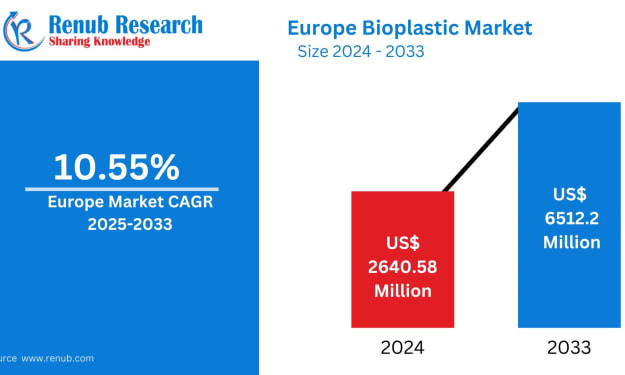
Europe Bioplastic Market Overview The Europe Bioplastic Market is undergoing a transformative phase, driven by a powerful mix of regulatory mandates, sustainability commitments, and changing consumer behavior. According to Renub Research, the market is expected to reach US$ 6,512.20 million by 2033, up from US$ 2,640.58 million in 2024, growing at a robust CAGR of 10.55% from 2025 to 2033.
By jaiklin Fanandish16 days ago in Earth
United States Precision Irrigation Market Size & Forecast 2025–2033
Introduction The United States precision irrigation market is entering a decisive decade as agriculture increasingly turns toward technology-driven water management. According to Renub Research, the market is expected to grow from US$ 2.15 billion in 2024 to US$ 4.72 billion by 2033, expanding at a robust compound annual growth rate (CAGR) of 9.11% during 2025–2033.
By Aaina Oberoi5 days ago in Earth
China’s Top Diplomat Tours Africa With a Focus on Strategic Trade Routes
China’s top diplomat’s latest tour of Africa has sent a clear message to the world: Africa remains central to Beijing’s long-term global strategy. While official statements emphasized friendship, development, and cooperation, the underlying focus of the trip was unmistakable — strategic trade routes, logistics corridors, and economic influence. At a time when global supply chains are under strain and geopolitical rivalries are intensifying, China’s diplomatic outreach across Africa reflects a calculated effort to secure access, stability, and influence along some of the world’s most important commercial pathways. Why Africa Matters to China More Than Ever Africa has long played a crucial role in China’s foreign policy, but its importance has grown significantly in recent years. The continent sits at the crossroads of major maritime and overland trade routes, connecting Asia, Europe, and the Americas. From the Red Sea and the Indian Ocean to Atlantic ports and inland transport corridors, Africa offers strategic access points essential to global commerce. For China, which relies heavily on imports of energy, minerals, and agricultural products — and exports manufactured goods worldwide — secure and diversified trade routes are a strategic necessity. Africa provides not only resources and markets, but also geography that can help reduce China’s dependence on chokepoints dominated by rival powers. The Diplomatic Tour: More Than Symbolism The tour by China’s top diplomat covered several key African nations, many of which already play significant roles in regional trade and infrastructure development. Official agendas highlighted cooperation agreements, development assistance, and political dialogue. However, analysts point out that infrastructure connectivity and trade logistics dominated behind-the-scenes discussions. Key themes reportedly included: Port development and modernization Railway and highway connectivity Industrial zones near transport hubs Digital trade and customs facilitation These projects align closely with China’s broader vision of building integrated trade networks that link African economies to Chinese markets — and, by extension, to global supply chains influenced by Beijing. Strategic Trade Routes at the Center of the Visit One of the most notable aspects of the tour was its focus on transport corridors rather than individual projects. China’s approach has evolved from isolated investments to region-wide connectivity strategies. Ports along the eastern African coast are particularly significant. These gateways handle trade flows between Asia and Africa and sit near vital shipping lanes. By supporting port expansion and associated logistics infrastructure, China strengthens its ability to move goods efficiently and reliably, even during periods of global disruption. Inland routes are just as critical. Railways linking ports to resource-rich interior regions reduce transport costs and stabilize supply chains. For African countries, these investments promise economic growth. For China, they ensure long-term access to raw materials and markets. Economic Cooperation or Strategic Influence? China presents its African engagement as a win-win partnership, emphasizing mutual development and respect for sovereignty. Many African governments welcome Chinese investment, citing faster project delivery and fewer political conditions compared to Western financing. However, critics argue that the focus on trade routes reflects a deeper strategic calculus. Control — or at least strong influence — over key logistics infrastructure can translate into political leverage over time. While China does not officially seek military dominance in Africa, its expanding economic footprint inevitably raises questions about long-term strategic presence, especially as trade routes increasingly overlap with security considerations. Africa’s Perspective: Opportunity and Caution African leaders have largely responded positively to the diplomatic tour. Infrastructure development remains a top priority across the continent, and China’s willingness to finance large-scale projects is attractive. For many African countries, improved trade routes offer: Increased export capacity Job creation and industrial growth Better regional integration Reduced transport and logistics costs At the same time, some policymakers and civil society groups urge caution. Concerns include debt sustainability, local labor participation, and long-term economic dependence. As Africa’s negotiating position strengthens, governments are increasingly seeking balanced partnerships that align with national development goals. Global Competition and the African Chessboard China’s intensified diplomatic engagement in Africa does not occur in a vacuum. The United States, the European Union, and other global powers are also increasing their presence on the continent. Trade routes, once viewed primarily as economic assets, are now recognized as geopolitical tools. Control over ports, shipping lanes, and logistics hubs can shape global trade patterns and influence diplomatic alignments. By reinforcing its partnerships across Africa, China is positioning itself to compete more effectively in this emerging multipolar order. The diplomat’s tour sends a signal not only to African partners, but also to rival powers watching closely. Beyond Infrastructure: Political and Diplomatic Goals Trade routes are only one layer of China’s Africa strategy. Diplomatic engagement also aims to: Secure political support in international forums Promote alternative development models Strengthen South-South cooperation narratives Counter Western influence and criticism African nations hold significant voting power in global institutions. Strong diplomatic ties can translate into valuable political backing on issues ranging from trade rules to human rights debates. Is the Belt and Road Vision Evolving? While China’s Belt and Road Initiative (BRI) remains central, the tone of the African tour suggests an evolution rather than expansion. Instead of announcing massive new projects, the focus appears to be on optimizing existing routes and ensuring long-term viability. This shift reflects lessons learned from earlier investments and growing awareness of financial and political risks. The emphasis now is on strategic consolidation, not unchecked growth. Conclusion: Africa at the Heart of China’s Global Strategy China’s top diplomat’s African tour highlights a simple but powerful reality: trade routes are the arteries of global power. By strengthening partnerships along key African corridors, China is reinforcing its economic resilience and geopolitical reach. For Africa, the challenge — and opportunity — lies in leveraging this attention to advance development goals while safeguarding sovereignty and long-term sustainability. As global competition intensifies, Africa is no longer a peripheral player but a central arena where the future of trade, influence, and diplomacy will be shaped. China’s latest diplomatic push makes one thing clear: the battle for strategic connectivity is well underway.
By Muhammad Hassan4 days ago in Earth


Comments
There are no comments for this story
Be the first to respond and start the conversation.