

In a small town nestled between rolling hills and lush meadows, there was a place few paid heed to. It was a patch of land where wildflowers once danced in the breeze, and ancient oaks stood as sentinels of time. This was a place where the soil held secrets, secrets of a tragedy untold.
Once, this land was a garden of dreams. A place where children's laughter mingled with the songs of birds, and the scent of blossoms hung in the air. The soil, rich and alive, cradled the roots of plants that thrived in harmonious chorus. The town's elders spoke of the garden's magic, a gift from nature itself.
But as years went by, the garden began to wither, its vibrant colors fading to muted hues. The soil, once teeming with life, now bore the scars of neglect. Deep beneath the surface, a silent tragedy was unfolding. Erosion gnawed at the earth's soul, stripping away the layers that nurtured life.
Amidst this quiet suffering, there stood a solitary weeping willow, its graceful branches cascading like tears. The tree bore witness to the unseen tragedy, its roots intertwined with the soil's sorrow. It seemed to mourn for the life that once flourished, for the laughter that had long since faded.
One fateful day, a young girl named Emily stumbled upon the forgotten garden. Her heart, attuned to the whispers of nature, sensed the sorrow that hung heavy in the air. She saw past the faded blooms and sensed the heartbeat of the wounded soil. Determined to uncover the truth, she sought the wisdom of the town's elders.
With furrowed brows and eyes that held the weight of years, the elders spoke of the unseen tragedy. They recounted how progress had cast a shadow over the garden, how the soil, though unseen, bore the scars of a world that had forgotten its roots. They urged Emily to become the voice of the land, to breathe life back into the wounded earth.
Inspired by the elders' words, Emily rallied the townspeople. Together, they worked tirelessly to restore the garden to its former glory. They tended to the soil, nourishing it with love and care. They planted seeds of hope and watched as they sprouted, breathing life back into the wounded earth.
As the seasons turned, the garden began to transform. Vibrant colors returned, and the scent of blossoms once again hung in the air. The weeping willow, once a symbol of sorrow, now stood tall and strong, its branches reaching for the sky. The garden had awakened from its slumber, a testament to the resilience of the earth.
The garden's revival was more than a physical transformation; it was a testament to the power of human connection to the land. It spoke of the unseen tragedy that often unfolds beneath our feet, and the potential for healing when we listen to the whispers of the earth. Through Emily's compassion and the town's collective effort, the garden became a living testament to the resilience of the natural world, reminding all who passed by that even in the face of unseen tragedy, there is hope for renewal and rebirth.
As the garden flourished, a subtle change began to sweep through the town. The air seemed sweeter, and the townspeople's steps felt lighter. The once-neglected garden had become a sanctuary, a place of solace and connection. Families gathered beneath the rejuvenated trees, sharing stories and laughter.
Emily, now a beacon of hope, continued to nurture the garden, her hands tenderly cradling the earth. She felt a profound connection to the unseen tragedy that had unfolded beneath their feet, and vowed to be its steadfast guardian.
Word of the garden's revival spread far and wide. Communities from neighboring towns sought guidance, eager to replicate the transformation in their own forgotten patches of earth. Emily and her fellow townspeople became ambassadors of renewal, sharing their knowledge and passion for healing the land.
With each passing season, the garden's magic grew stronger. Butterflies returned, their delicate wings fluttering in joyous celebration. Bees hummed busily, pollinating the vibrant blooms that now painted the landscape. The weeping willow, once a symbol of sorrow, became a beacon of resilience, its branches swaying in a graceful dance.
Years passed, and the garden's legacy echoed through time. It stood as a testament to what was possible when hearts aligned with the earth's silent cries. Emily, now a wise elder herself, watched as generations of children played amongst the blossoms, their laughter carrying on the winds.
As the years rolled on, the garden's story became woven into the fabric of the town's identity. It served as a reminder of the unseen tragedies that often unfold beneath our feet, urging all who passed by to tread lightly and listen closely. The weeping willow, standing tall and proud, whispered its gratitude to the generations that had cared for it.
The story of the garden was not confined to its borders; it echoed through the hearts of all who had been touched by its transformation. It was a reminder that even in the face of silent tragedies, there is power in collective action, in listening to the whispers of the earth.
And so, the garden's story lived on, a testament to the resilience of nature and the boundless potential for renewal. It stood as a beacon of hope, a living example of what could be achieved when love and care were extended to the unseen tragedies that often go unnoticed. And in its shade, under the watchful gaze of the weeping willow, the town continued to thrive, its roots firmly anchored in the land they now cherished more than ever before.
About the Creator
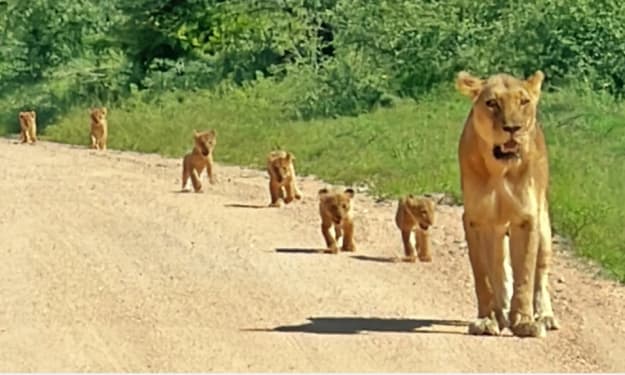
Tiny Lion Cubs Struggle To Keep Up With Mom
In the heart of the African savannah, life is a constant lesson for young animals. Few scenes are as endearing — or as heartwarming — as tiny lion cubs trying to keep pace with their mother. These little bundles of fur face a world full of challenges, from learning to hunt to avoiding dangers, all while depending on the guidance and protection of their experienced mom. Watching cubs wobble and tumble as they attempt to keep up with their mother reminds us that growing up, even in the wild, is a journey full of struggle, determination, and adorable missteps. The Early Days of Lion Cubs Lion cubs are born blind and helpless, usually in litters of two to six. For the first few weeks, they rely entirely on their mother for warmth, food, and safety. Even after opening their eyes and beginning to explore, the cubs are far from independent. The first months are crucial. Cubs learn social cues, hunting basics, and survival skills simply by watching their mother and the pride. But as anyone who has observed them knows, there’s often a huge gap between observation and action. Tiny cubs often struggle to match their mother’s pace, especially when she moves through long stretches of savannah or leads the family on patrols. A Mother’s Role in the Wild For a lioness, raising cubs is a full-time commitment. She hunts, defends her territory, and teaches her young, all while staying alert to predators such as hyenas, leopards, and even rival lions. The cubs, meanwhile, attempt to mimic her every move — often with clumsy yet charming results. A mother lion’s patience is remarkable; she frequently slows down, nudges them along, or stops to ensure no cub is left behind. These moments, while stressful for the tiny cubs, are vital learning opportunities. Struggling to Keep Up: Why It’s So Hard There are several reasons why tiny lion cubs have trouble keeping pace with their mother: Short Legs, Big Steps: Lion cubs’ legs are tiny and their coordination is limited, making it difficult to cover the same distance as an adult lioness. Curiosity: Cubs are naturally curious. A single butterfly or rustling bush can distract them, leaving mom to pause repeatedly. Energy Levels: Young lions tire quickly. Even with frequent naps, the cubs’ stamina is far lower than their mother’s. Learning Through Play: Play is not just fun; it teaches hunting, balance, and social skills. Running off to pounce on a sibling or chase an insect is all part of their education. Despite these challenges, the cubs’ determination to keep up demonstrates their resilience and growing understanding of the wild world. Lessons in Teamwork and Survival Every cub struggling to keep up is also learning crucial survival skills. The journey across the savannah is more than a test of speed — it’s a lesson in: Coordination: Cubs learn how to move efficiently across different terrains. Patience: They begin to understand the rhythms of adult life and the pace required for survival. Social Skills: Staying with the group teaches cubs how to interact with siblings and the pride, which is essential for their future roles. Observation: By following their mother, cubs study hunting techniques, territorial behavior, and predator awareness. Even the moments when cubs stumble or lag behind are essential for their development. These experiences prepare them for independence, which comes sooner than many might expect. The Cutest Moments in the Wild Anyone who has watched tiny lion cubs knows that their struggles are often irresistibly cute. Video clips from wildlife reserves frequently show cubs toddling along, tumbling over each other, or getting distracted mid-step. Observers often comment that these little stumbles reveal personality, determination, and playfulness, making them one of nature’s most heartwarming spectacles. While their mother is serious and focused, the cubs inject a sense of humor and lightness into life on the savannah. Why This Matters The struggles of lion cubs aren’t just adorable — they’re vital for understanding wildlife behavior. Conservationists and animal behaviorists use these moments to study growth patterns, social structures, and survival strategies in lion populations. These observations also highlight the importance of preserving natural habitats. Cubs must learn in a safe environment to survive; habitat loss, poaching, and climate change make these early struggles even more dangerous. Protecting the African savannah ensures that future generations of lions can experience the same lessons and playful tumbles. The Road to Independence Within a year, these tiny cubs will be more agile, faster, and more confident. By the time they reach two to three years old, males may begin to leave the pride, while females often stay and become caretakers themselves. Every misstep, tumble, and lagging moment is part of the journey toward strength, coordination, and independence. Watching them now gives us a glimpse of the challenges they will overcome, and the survival skills they will carry for life. A Celebration of Motherhood Ultimately, these scenes remind us of the incredible bond between mother and cubs. Her patience, vigilance, and teaching are the foundations of their future. The cubs’ struggles highlight the trials of growing up, while their determination showcases the resilience and beauty of wildlife. For those observing, it’s a powerful lesson in care, guidance, and perseverance, not just in lions but in the natural world as a whole. Final Thoughts Watching tiny lion cubs try to keep up with their mother is both entertaining and enlightening. It’s a story of growth, struggle, and resilience — a reminder that even the fiercest creatures start small, learning step by step. These little lions capture hearts while teaching life lessons: patience, determination, teamwork, and the importance of guidance. As they tumble and waddle across the savannah, they show us that growth is a process, one adorable misstep at a time. For wildlife enthusiasts, animal lovers, and anyone enchanted by nature, these tiny cubs are proof that even in the wild, love, care, and persistence are universal truths.
By Aarif Lashariabout 18 hours ago in Earth
Microbiota, microbiome or microflora: how to speak correctly and why it is for health.
You've probably heard the phrase, "We are what we eat." But modern science says more precisely: we are also those who live in us. Until 2016, it was believed that there are many times more bacteria in our body than our own cells. The latest calculations by mathematicians show that we divide the body with our microorganisms by about 50/50: about 30 trillion of our cells versus 38 trillion bacterial ones.
By Yaroslav Gorohov5 days ago in Earth



Comments (1)
Great work! Wonderful!