
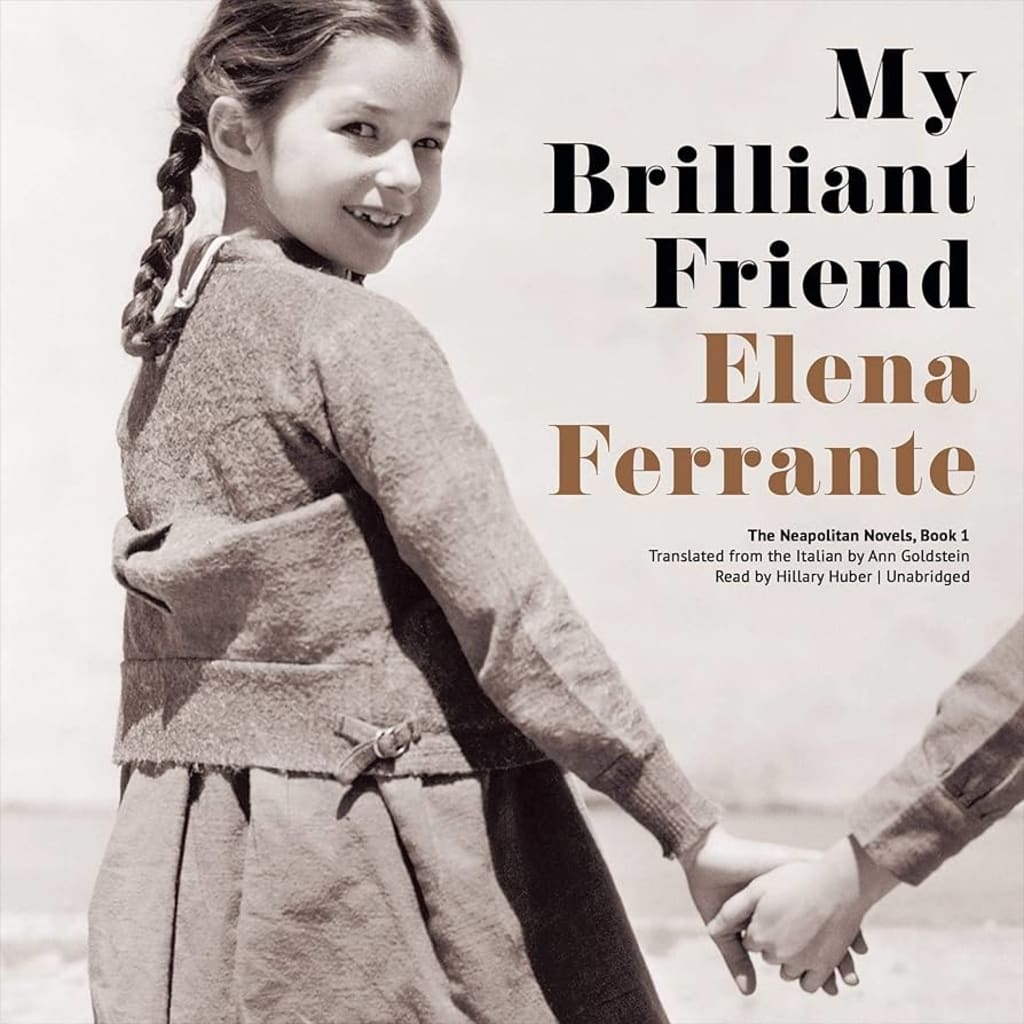
We were twelve when I first noticed the difference. Claudia had already grown into her limbs—tall, sharp-eyed, her hair coiling like black wire around her head. I, on the other hand, remained awkward, pale, still carrying the roundness of childhood on my face. But it wasn’t just about looks. There was a hunger in Claudia, a way she stared at the world as if she was ready to devour it.
We lived in the same block of flats in Naples, our windows facing the same cracked courtyard. Our mothers had known each other since they were girls, though they were never truly friends—just women thrown together by location and circumstance. My mother, quiet and devout, with hands always busy, avoided Claudia’s mother, who laughed too loud, smoked in the stairwell, and called everyone by the wrong name on purpose.
But Claudia and I were inseparable. Every afternoon, after homework and chores, we’d meet in the alley behind the bakery. We spoke of books, dreams, boys, and the future. Claudia always wanted more—more than this city, more than her home, more than even I could offer her. I both admired and feared that in her.
She was the first to fall in love, of course. A boy named Marco, older, with a motorbike and a lazy smile. He never looked at me, not once, not even when I was right beside her. I watched her turn radiant with him, how she held herself taller, how she moved like her skin no longer fit too tightly.
When he broke her heart, she didn’t cry, not really. She lit a cigarette and said, “I always knew I’d leave him before he left me. I was just too slow.” But I saw the way she tore the corner of her math book into tiny pieces for days after, never looking up.
By the time we were seventeen, everything had shifted. I had grown into something softer, maybe prettier, and Claudia… Claudia had grown quieter. We still spent afternoons together, but she was always looking at the horizon now. I’d tell her about the university I wanted to attend, how I might move to Florence. She never said what she wanted anymore. She just nodded and said, “You’ll go. You always were better at escaping.”
But that wasn’t true. Claudia had always been the brave one.
She left first.
No goodbye. No letter. Just vanished—one day there, the next gone. Her mother shrugged when I asked, said something vague about Rome and an internship, and slammed the door.
Years passed. I studied, moved, married. I built a life out of quiet things. I wrote a column, taught literature, had a daughter who looked nothing like me but everything like her father. Sometimes I would see a flash of Claudia in a stranger on the train—a profile, a laugh, the way someone tilted their head—and my breath would catch. Then it would pass.
I didn’t hear from her until I was thirty-four.
A letter, thick with pages, in handwriting I hadn’t seen in over a decade. No return address, only a city: Palermo.
She wrote of her travels—Spain, Morocco, London. Of men she had loved and left. Of jobs she had picked up and discarded. But mostly she wrote about memory. About our street, our mothers, the bakery, and how she dreamed of the smell of yeast and burnt crust every night.
“I was always running away from you,” she wrote, “because you were the only one who ever saw me. And it terrified me.”
I cried when I read that. Not a gentle weep, but the kind that folds you in half, that strips the years back down to the little girl in the courtyard, knees scraped and heart full.
We exchanged letters for years. Never calls. Never visits. She refused. “Words are the only place I feel honest,” she said.
She told me of a novel she was writing. Pages and pages about two girls in Naples, so close they shared the same breath. But one leaves. The other stays. “It’s not about us,” she insisted. But I knew.
One day, the letters stopped.
No warning. No farewell.
I searched. I wrote. I called the last hotel she’d mentioned, a cafe she once described in detail. Nothing.
It’s been eight years.
Sometimes I think she’s still out there, living beneath a false name in a city I’ve never seen. Maybe she’s still writing, telling our story over and over until it becomes fiction. Or maybe she’s gone—truly gone. And all I have left of her are the letters, stored in a wooden box beneath my bed, their edges curling like old bread.
My daughter found them once.
She asked, “Were you in love with her?”
I didn’t answer at first. Then I said, “Yes. But not the way you think.”
There are loves that don’t fit in boxes. Loves that don’t ask to be named. Claudia was my mirror, my shadow, my unfinished sentence. What lived between us was neither friendship nor romance but something sharper, stranger, and more enduring.
Not everything broken needs to be repaired.
Some things are beautiful in their ruin.
About the Creator
Walk the Coast Your Way: A Self-Guided Cape to Cape Experience
The Cape to Cape Track is a stunning walking trail in Western Australia, stretching about 135 kilometres along the Margaret River coastline. The trail passes sandy beaches, rugged cliffs, and peaceful forests, offering a mix of adventure and calm. While guided tours are popular, many walkers prefer a self-guided experience. Walking independently lets you set your own pace, choose when to rest, and spend more time enjoying each view.
By David Jhonabout 4 hours ago in Earth
North America Fertilizer Market Size and Forecast 2025–2033
Introduction: Fertilizer as the Backbone of Modern Agriculture The fertilizer industry remains one of the most critical pillars supporting global food production, and in North America, its importance is growing stronger with each passing year. Fertilizers—whether organic or inorganic—play a vital role in replenishing soil nutrients, improving crop yields, and sustaining long-term soil fertility. As the region faces increasing food demand, climate pressure, and the need for sustainable agricultural practices, fertilizers are becoming more advanced, efficient, and environmentally responsible.
By Aaina Oberoiabout 23 hours ago in Earth



Comments
There are no comments for this story
Be the first to respond and start the conversation.