
Effects of climate change on our communities
The disproportionate impact of climate change on marginalized communities and the need to address systematic inequalities in environmental policies and practices.

The sun was beating down on the small town of New Orleans. The streets were empty, and the only sound was the hum of air conditioning units. The heat was unbearable, and it was only getting worse. The people of New Orleans knew that something had to be done about climate change.
But for the people of New Orleans, climate change wasn’t just an abstract concept. It was something that they felt every day. The city was built on a swamp, and it was sinking into the sea. The rising sea levels were causing more and more flooding, and hurricanes were getting stronger every year.
The people of New Orleans knew that they had to do something about climate change, but they also knew that they couldn’t do it alone. They needed help from the government, but the government didn’t seem to care.
The people of New Orleans were mostly poor and black. They lived in neighborhoods that were already suffering from pollution and environmental degradation. They knew that climate change would hit them the hardest, but they felt powerless to do anything about it.
But then something amazing happened. A group of activists came to New Orleans to help the people fight for their rights. They organized protests and rallies, and they got the attention of the media.
The activists helped the people of New Orleans understand that climate change wasn’t just an environmental issue. It was also an issue of social justice. They showed them how climate change would disproportionately affect poor and marginalized communities.
The people of New Orleans started to demand action from their government. They demanded that their voices be heard and that their needs be taken into account when making environmental policies.
And slowly but surely, things started to change. The government started to listen to the people of New Orleans. They started to invest in renewable energy sources like wind and solar power. They started to address systematic inequalities in environmental policies and practices.
The people of New Orleans felt empowered. They felt like they had a voice in their own future. They knew that there was still a long way to go, but they also knew that they were making progress.
And as they looked out at the rising sea levels and the stronger hurricanes, they knew that they were ready for whatever came next. We all have a part to play in changing our world and one of the major ways we can do that is through the use of renewable energy.
The pace at which the world needs to transition from fossil fuels to renewable energy needs to urgently accelerate as the threat from rising global temperatures increases each day, experts say.
There is a more than 50% chance that temperatures will exceed 2 degrees Celsius unless the ambitious climate pledges made leading up to the 2021 U.N. Climate Change Conference are not strictly adhered to, a study published this month in the scientific journal Nature found.
This increase would push global temperatures past the worst-case scenario outlined in the Paris Agreement and past the point that any human civilization in history has experienced, the study warns. As such, renewable energy will be instrumental in reducing the global reliance on fossil fuels, the leading cause of the greenhouse emissions that are accelerating the warming, the study says. But fossil fuels are deeply embedded in the foundation of the world economy, experts note. The manufacturing of clothes, the growing of crops, and the powering of homes all involve processes that utilize dangerous substances such as crude oil, natural gas, and coal.
Most of the energy services in the world still come from fossil fuels, and global energy consumption has grown tenfold since the turn of the 20th century. Renewable energy is the future of our world and will provide a better and safer environment for all communities including minorities.
About the Creator
Keep reading
More stories from writers in Earth and other communities.
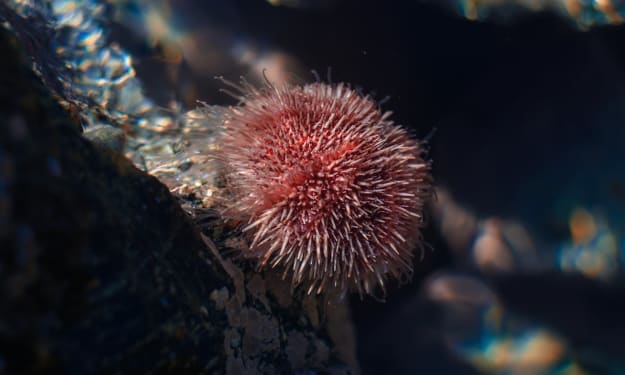
Spotlight on the Risks of An Exploding Sea Urchin Population
The marine ecosystem is a complicated place full of millions of species and hundreds of thousands of critically interdependent relationships. While the decline of some species populations might have only marginal effects on the health of the world’s oceans, others could set off a chain of events that could ultimately be catastrophic.
By Virginia Chipurnoi3 days ago in Earth
Cabin Fever Because of Snow, Sleet, and Freezing Rain That Turned to Icy Roads
What Is Cabin Fever? The short answer is that cabin fever is restlessness from being in a confined area. Cabin fever is the distressing irritability or restlessness experienced when a person or group is stuck at an isolated location or in confined quarters for an extended time. Research shows that prolonged cold, gray skies, and being stuck indoors can trigger mood shifts similar to “winter blues.”
By Margaret Minnicks2 days ago in Humans



Comments
There are no comments for this story
Be the first to respond and start the conversation.