

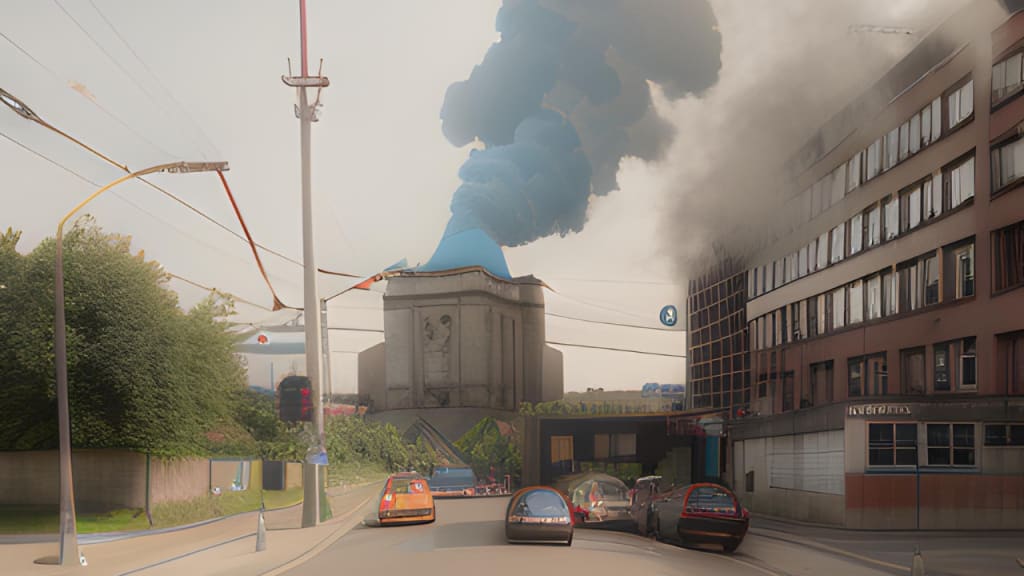
Have you ever considered the number of breaths you take in a day? It's a significant count, roughly around 20 thousand, give or take a few. Throughout the day and night, our bodies are in constant motion, ushering in the beneficial elements while expelling the harmful ones. But despite the crucial role this process plays in our existence, there remains much that we don't quite grasp about the actual composition of the air we breathe.
Most of us lack substantial knowledge about air pollution. We often fail to perceive the invisible link between this pollution and the tangible health issues it causes. Air pollution is responsible for the premature deaths of millions across the globe. The World Health Organization estimates an annual toll of seven million lives, accompanied by an extensive range of illnesses.
Air pollution impacts nearly every biological system within our bodies. Increased levels of pollution correlate with higher rates of heart attacks, strokes, premature births, various types of cancer, Alzheimer's disease, cognitive issues in children, diabetes, obesity, and the list goes on and on. In recent years, scientists have honed in on particulate pollution as the most concerning pollutant. Continuous exposure to such an atmosphere can lead to a buildup of these particles.
These tiny particles, known as PM2.5, have a diameter of less than 2.5 microns, about a thirtieth of the width of a human hair. PM2.5 particles, as well as even smaller ultrafine particles, are so minuscule that they can penetrate deep into the lungs, reaching the small sacs called alveoli, where gas exchange between air and blood occurs. Once in the bloodstream, they can travel throughout the body, affecting various organs.
While many associate air pollution with cities, the reach of air knows no boundaries; it doesn't halt at city limits. These tiny particles can travel thousands of miles. Numerous pollutants are primarily linked to the combustion of substances like oil, gas, diesel, wood, coal, and waste.
Agriculture, surprisingly, also contributes significantly to air pollution. Chemicals released from fertilizers and manure combine with other pollutants in the air. And the odor can pose a real inconvenience to neighbors. So, there's a wide variety of substances in the air, regardless of whether you live near a factory farm or hundreds of miles away from one.
However, this issue is far from evenly distributed. It's not confined to cities; it depends on where you end up living due to lower housing costs. Often, the most heavily impacted neighborhoods are those inhabited by marginalized communities—those with lower incomes, people of color, immigrants, individuals lacking the means to relocate to cleaner areas. These tend to be the places where the most polluting facilities are located. This issue closely follows the fault lines of economic inequality and racial injustice.
When discussing environmental challenges and their solutions, the conversation often revolves around the cost. In terms of public health, productivity, and longer lifespans, the monetary benefits of cleaner air far outweigh the costs. However, the costs must be borne upfront by industries, while society reaps the benefits years later.
The United States has historically been a remarkable global success story in terms of air quality, largely due to the strong and innovative Clean Air Act, supported by both Democrats and Republicans. It started by removing lead from gasoline. Thanks to this law, there's 70 percent less pollution in the air now compared to 1970. The lesson here is that effective solutions exist. This challenge is not insurmountable. Regulations rooted in science and prioritizing public health are effective.
Although the sheer number of illnesses and deaths can be overwhelming, it's also quite inspiring when you consider the progress that has been made. There are also innovative solutions in development to significantly reduce pollutants before they enter our air. Bold ideas steer us away from combustion-based sources and toward cleaner energy. Urban spaces are being reimagined to be more accommodating to cyclists and pedestrians. Shifting to electric vehicles for transportation is another avenue. Such creativity could be the determining factor in breathing polluted air now or enjoying truly fresh air in the future.
About the Creator
GoLow
Delving into Weird Science, Mysteries, and the Unknown. From unexplained phenomena to unsolved mysteries, we'll dive into the fascinating world of the uncharted and unusual.
Could World War III Be Coming Soon?
The idea of World War III often appears in news discussions, political debates, and public imagination. After the devastating impact of World War I and World War II, humanity has become deeply aware of the catastrophic consequences of global war. Today, when international tensions rise, many people wonder whether the world could again face a conflict on such a massive scale. While no one can predict the future with certainty, understanding the current global situation can help us evaluate whether a third world war is truly likely.
By shaoor afridia day ago in Earth
REEEEEEEEE!
I'm on a low road right now. There are a literal million things to do and not one of them worth my time. I would rather sit in place and burn but the orbit takes me on its inevitable route 'round the center; and I a center in my own right, around which others orbit, and so on and so forth, ad infinitum, ad nauseum.
By C. Rommial Butler5 days ago in Poets



Comments
There are no comments for this story
Be the first to respond and start the conversation.