
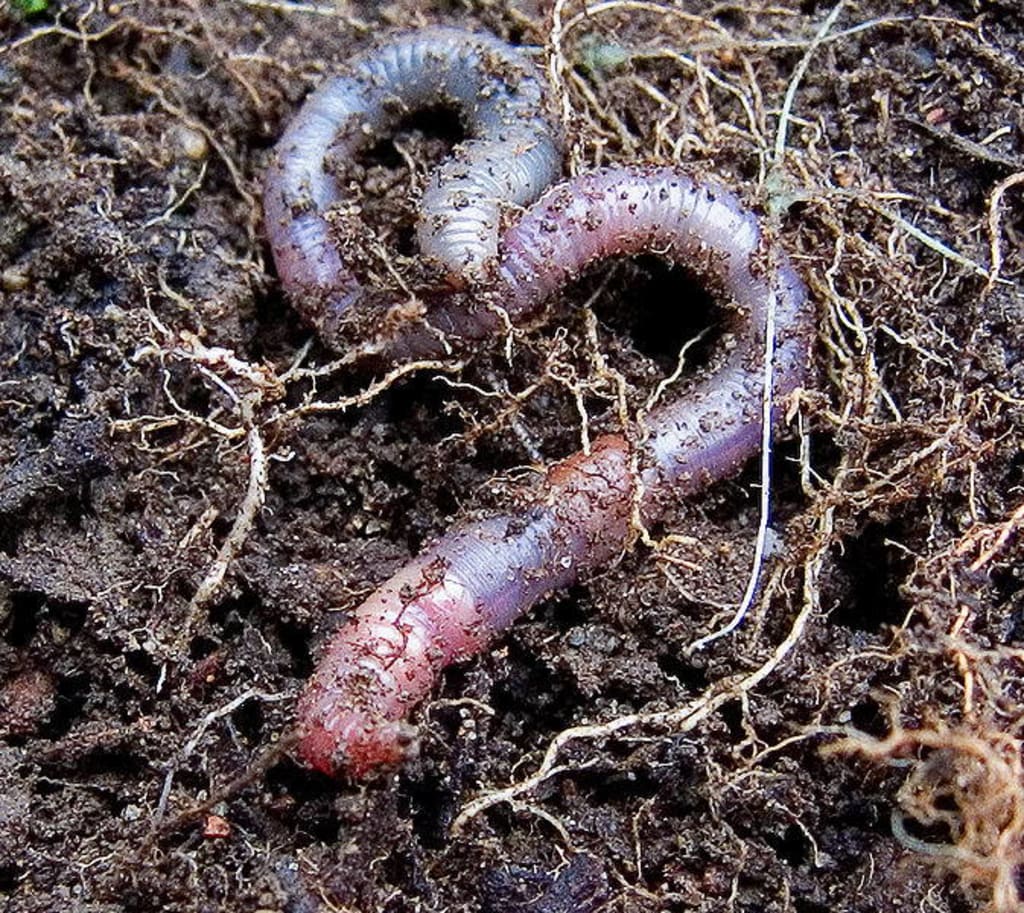
Earthworms are elongated, tube-shaped, segmented worms that are found in soil all over the world. They play an important role in soil health and fertility, as they help to break down organic matter and mix it into the soil. This process, known as burrowing or tunneling, helps to aerate the soil and improve its drainage and nutrient content.
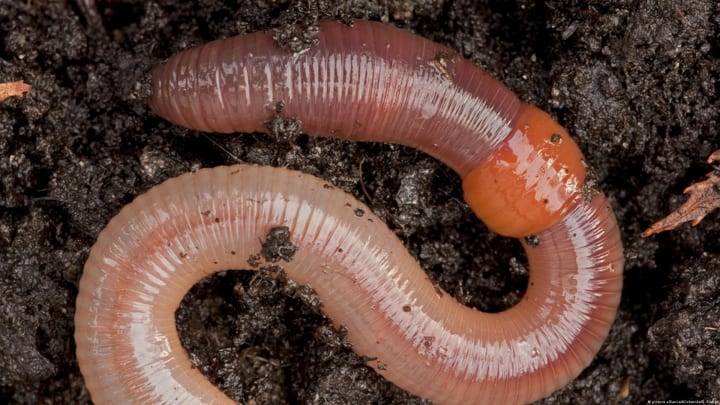
There are many different species of earthworms, but they are generally characterized by their long, cylindrical bodies, which are divided into segments or "rings". Earthworms are typically brown, gray, or reddish in color, and they range in size from just a few centimetres to more than a meter long.
Earthworms are often found in areas with moist, fertile soil, such as gardens, fields, and forests. They are most active at night, when they emerge from their burrows to feed on organic matter and other small organisms in the soil. Earthworms are mainly herbivorous, but they also consume bacteria, fungi, and other small organisms.
In addition to their role in soil health, earthworms are also an important food source for many animals, including birds, mammals, and other invertebrates. Some species of earthworms are also used as bait for fishing.
Overall, earthworms are fascinating and important creatures that play a critical role in maintaining healthy soils and ecosystems. By promoting soil health and biodiversity, we can help to ensure that earthworms and other important soil organisms continue to thrive for generations to come.
There are also some interesting facts about earthworms. For example, they have no lungs, but instead breathe through their skin. This means that they are very sensitive to changes in their environment, such as changes in temperature or moisture levels.
Earthworms are also capable of regenerating their bodies if they are injured. If an earthworm is cut in half, both halves may be able to regenerate into complete worms, depending on the location and extent of the cut.
In addition, earthworms are hermaphrodites, which means that they have both male and female reproductive organs. During mating, each earthworm exchanges sperm with its partner, and both worms may produce fertilized eggs.
Finally, earthworms are also used as indicators of soil health. Healthy soil with high levels of organic matter and good drainage is likely to have a high population of earthworms, while poor soil with low organic matter and poor drainage may have few or no earthworms.
Overall, earthworms are fascinating and important creatures that play a critical role in maintaining healthy soils and ecosystems. By learning more about these remarkable creatures and promoting soil health, we can help to ensure that earthworms and other important soil organisms continue to thrive for generations to come.
There are many ways to promote healthy soil and support earthworms and other soil organisms. One important strategy is to reduce the use of chemical fertilizers and pesticides, which can be harmful to soil life and can degrade soil health over time. Instead, organic farming methods, such as crop rotation, cover cropping, and composting, can help to build soil fertility and support healthy populations of earthworms and other soil organisms.
In addition, it is important to maintain good soil structure and minimize soil compaction, which can limit earthworm activity and reduce soil health. This can be accomplished by avoiding heavy machinery on the soil, minimizing tillage, and maintaining good soil moisture levels.
Another way to support earthworms and other soil life is to plant diverse crops and use diverse plant species in landscaping and gardening. Different plant species support different types of soil organisms, and a diverse array of plants can help to promote healthy soil and support a range of earthworm and other invertebrate species.
Overall, earthworms are fascinating and important creatures that play a critical role in maintaining healthy soils and ecosystems. By promoting soil health and biodiversity, we can help to ensure that earthworms and other important soil organisms continue to thrive for generations to come.
Earthworms also provide numerous ecological benefits beyond improving soil health. Their burrowing and tunneling activity creates channels that allow for better water infiltration and soil aeration. This can help to reduce erosion and runoff, improve plant growth, and mitigate the impacts of flooding and drought.
Earthworms also play a role in mitigating climate change by sequestering carbon in the soil. As they consume organic matter, they release nutrients into the soil that can be taken up by plants, while also breaking down organic matter into simpler forms that are more readily available for other soil organisms. This process helps to build soil organic matter, which is a key component of healthy soils and a critical reservoir for carbon storage.
Overall, earthworms are fascinating and important creatures that contribute to a wide range of ecological and environmental functions. By promoting healthy soils and supporting earthworm and other soil life, we can help to ensure that these remarkable creatures and the ecosystems they support continue to thrive for generations to come.
About the Creator
Keep reading
More stories from Sangeetha S and writers in Earth and other communities.
ECOSYSTEM
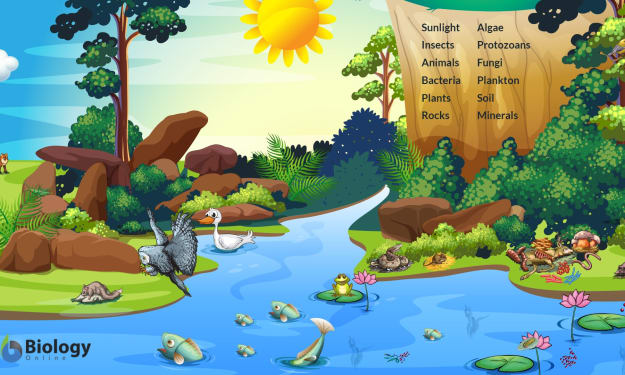
An ecosystem refers to a community of living organisms in a specific geographic area, as well as their interactions with each other and with their environment. This includes not only the plants and animals in an area, but also the physical and chemical components of their surroundings, such as water, soil, and air.
By Sangeetha S3 years ago in Earth
How Much Do You Need in an ISA for a Passive Income That Beats the State Pension?
For many people in the UK, the State Pension is expected to form the backbone of retirement income. But with rising living costs and growing uncertainty about the future, more savers are asking a crucial question: Can I build a passive income that beats the State Pension — and how much would I need in an ISA to do it?
By Aarif Lasharia day ago in Earth
Tiny Lion Cubs Struggle To Keep Up With Mom
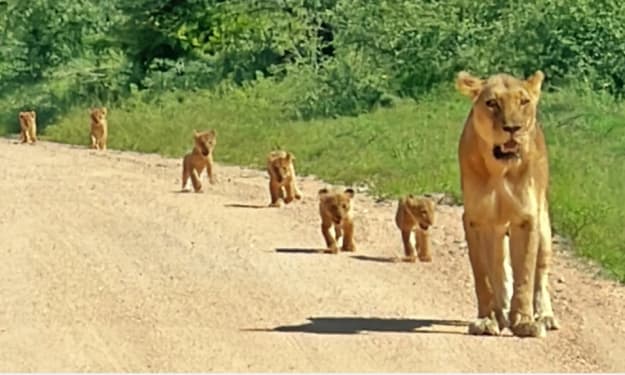
In the heart of the African savannah, life is a constant lesson for young animals. Few scenes are as endearing — or as heartwarming — as tiny lion cubs trying to keep pace with their mother. These little bundles of fur face a world full of challenges, from learning to hunt to avoiding dangers, all while depending on the guidance and protection of their experienced mom. Watching cubs wobble and tumble as they attempt to keep up with their mother reminds us that growing up, even in the wild, is a journey full of struggle, determination, and adorable missteps. The Early Days of Lion Cubs Lion cubs are born blind and helpless, usually in litters of two to six. For the first few weeks, they rely entirely on their mother for warmth, food, and safety. Even after opening their eyes and beginning to explore, the cubs are far from independent. The first months are crucial. Cubs learn social cues, hunting basics, and survival skills simply by watching their mother and the pride. But as anyone who has observed them knows, there’s often a huge gap between observation and action. Tiny cubs often struggle to match their mother’s pace, especially when she moves through long stretches of savannah or leads the family on patrols. A Mother’s Role in the Wild For a lioness, raising cubs is a full-time commitment. She hunts, defends her territory, and teaches her young, all while staying alert to predators such as hyenas, leopards, and even rival lions. The cubs, meanwhile, attempt to mimic her every move — often with clumsy yet charming results. A mother lion’s patience is remarkable; she frequently slows down, nudges them along, or stops to ensure no cub is left behind. These moments, while stressful for the tiny cubs, are vital learning opportunities. Struggling to Keep Up: Why It’s So Hard There are several reasons why tiny lion cubs have trouble keeping pace with their mother: Short Legs, Big Steps: Lion cubs’ legs are tiny and their coordination is limited, making it difficult to cover the same distance as an adult lioness. Curiosity: Cubs are naturally curious. A single butterfly or rustling bush can distract them, leaving mom to pause repeatedly. Energy Levels: Young lions tire quickly. Even with frequent naps, the cubs’ stamina is far lower than their mother’s. Learning Through Play: Play is not just fun; it teaches hunting, balance, and social skills. Running off to pounce on a sibling or chase an insect is all part of their education. Despite these challenges, the cubs’ determination to keep up demonstrates their resilience and growing understanding of the wild world. Lessons in Teamwork and Survival Every cub struggling to keep up is also learning crucial survival skills. The journey across the savannah is more than a test of speed — it’s a lesson in: Coordination: Cubs learn how to move efficiently across different terrains. Patience: They begin to understand the rhythms of adult life and the pace required for survival. Social Skills: Staying with the group teaches cubs how to interact with siblings and the pride, which is essential for their future roles. Observation: By following their mother, cubs study hunting techniques, territorial behavior, and predator awareness. Even the moments when cubs stumble or lag behind are essential for their development. These experiences prepare them for independence, which comes sooner than many might expect. The Cutest Moments in the Wild Anyone who has watched tiny lion cubs knows that their struggles are often irresistibly cute. Video clips from wildlife reserves frequently show cubs toddling along, tumbling over each other, or getting distracted mid-step. Observers often comment that these little stumbles reveal personality, determination, and playfulness, making them one of nature’s most heartwarming spectacles. While their mother is serious and focused, the cubs inject a sense of humor and lightness into life on the savannah. Why This Matters The struggles of lion cubs aren’t just adorable — they’re vital for understanding wildlife behavior. Conservationists and animal behaviorists use these moments to study growth patterns, social structures, and survival strategies in lion populations. These observations also highlight the importance of preserving natural habitats. Cubs must learn in a safe environment to survive; habitat loss, poaching, and climate change make these early struggles even more dangerous. Protecting the African savannah ensures that future generations of lions can experience the same lessons and playful tumbles. The Road to Independence Within a year, these tiny cubs will be more agile, faster, and more confident. By the time they reach two to three years old, males may begin to leave the pride, while females often stay and become caretakers themselves. Every misstep, tumble, and lagging moment is part of the journey toward strength, coordination, and independence. Watching them now gives us a glimpse of the challenges they will overcome, and the survival skills they will carry for life. A Celebration of Motherhood Ultimately, these scenes remind us of the incredible bond between mother and cubs. Her patience, vigilance, and teaching are the foundations of their future. The cubs’ struggles highlight the trials of growing up, while their determination showcases the resilience and beauty of wildlife. For those observing, it’s a powerful lesson in care, guidance, and perseverance, not just in lions but in the natural world as a whole. Final Thoughts Watching tiny lion cubs try to keep up with their mother is both entertaining and enlightening. It’s a story of growth, struggle, and resilience — a reminder that even the fiercest creatures start small, learning step by step. These little lions capture hearts while teaching life lessons: patience, determination, teamwork, and the importance of guidance. As they tumble and waddle across the savannah, they show us that growth is a process, one adorable misstep at a time. For wildlife enthusiasts, animal lovers, and anyone enchanted by nature, these tiny cubs are proof that even in the wild, love, care, and persistence are universal truths.
By Aarif Lasharia day ago in Earth


Comments
There are no comments for this story
Be the first to respond and start the conversation.