
Earthquakes Through Time: From Historic Quakes to Russia’s Recent Tremor
A Look at Earth’s Most Powerful Earthquakes and the Recent Russian Quake That Shook the Nation

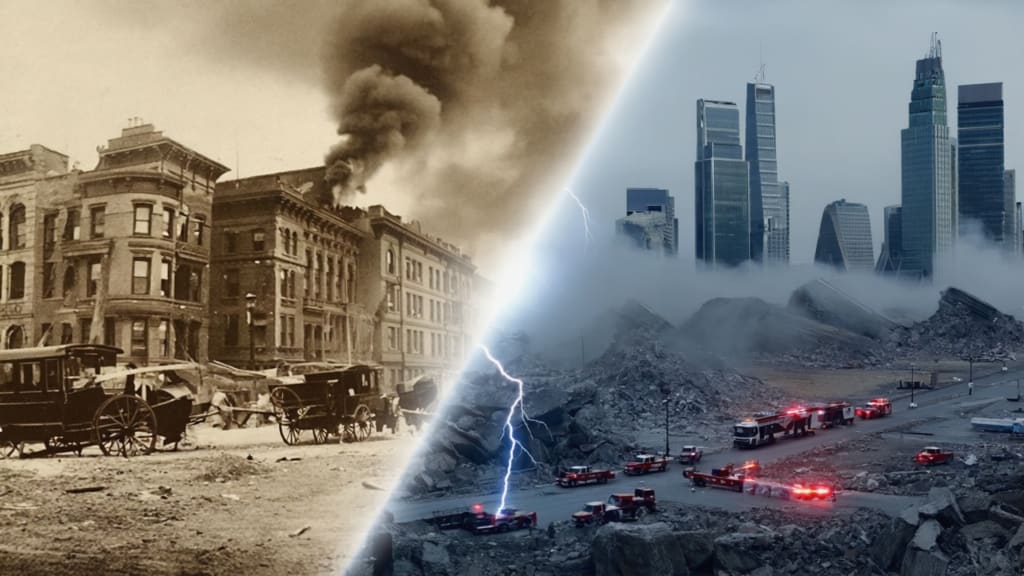
Earthquakes are among the most powerful natural events on our planet. These sudden shifts in the Earth’s crust can level cities, reshape landscapes, and alter the course of history. From devastating historic quakes to recent tremors, such as the one that recently struck Russia, earthquakes continue to remind us of the Earth's unpredictable power. In this article, we’ll explore some of the most significant historical earthquakes and take a closer look at the recent seismic activity in Russia.
What Is an Earthquake?
An earthquake occurs when there is a sudden release of energy in the Earth’s crust, usually caused by tectonic plate movements. This energy release causes the ground to shake, sometimes violently. The point inside the Earth where the quake originates is called the focus, while the point directly above it on the surface is the epicenter
Earthquakes are measured using the Richter scale or the moment magnitude scale (Mw), which classify their intensity. While small quakes are common and usually harmless, major earthquakes can be catastrophic.
A Glimpse at Historical Earthquakes
1. The Great Chilean Earthquake (1960).
The most powerful earthquake ever recorded occurred on May 22, 1960, in Valdivia, Chile. It had a magnitude of 9.5 and resulted in massive tsunamis that struck across the Pacific, including Hawaii and Japan. It killed over 1,600 people, injured thousands, and left more than 2 million homeless.
2. San Francisco Earthquake (1906)
One of the most infamous earthquakes in U.S. history happened on April 18, 1906, in San Francisco, California. With a magnitude of 7.9, it caused massive fires and nearly destroyed the city. The quake killed over 3,000 people and led to significant changes in urban development and building codes.
3. Tangshan Earthquake, China (1976)
Striking the industrial city of Tangshan on July 28, 1976, this earthquake had a magnitude of 7.5 but was one of the deadliest in modern history. It killed approximately 242,000 people, though some estimates are higher. The Chinese government initially downplayed the disaster, but it later became a symbol of national tragedy.
4. Indian Ocean Earthquake and Tsunami (2004)
On December 26, 2004, an undersea earthquake off the coast of Sumatra, Indonesia, with a magnitude of 9.1–9.3, triggered massive tsunamis that affected 14 countries. Over 230,000 people died, mostly in Indonesia, Sri Lanka, India, and Thailand. This event highlighted the global need for a tsunami warning system.
5. Great East Japan Earthquake (2011)
Japan’s Tohoku region was hit by a 9.0-magnitude earthquake on March 11, 2011. It triggered a devastating tsunami that killed nearly 20,000 people and caused the Fukushima Daiichi nuclear disaster. This quake was a wake-up call for earthquake and nuclear safety worldwide.
Recent Russian Earthquake Shakes Siberia
In mid-2025, Russia experienced a notable earthquake that drew international attention. The quake struck near the remote and geologically active region of eastern Siberia, close to Lake Baikal, one of the oldest and deepest lakes in the world.
Key Facts About the Russian Earthquake:
Date: July 2025
Magnitude: 6.8 (preliminary reports)
Location: Near Irkutsk, Siberia
Depth: Approximately 15 kilometers
Casualties: Limited fatalities; some injuries reported
Damage: Structural damage to buildings, roads, and infrastructure
While not as deadly as other historical quakes, the Russian earthquake caused alarm due to its proximity to populated areas. Residents reported strong shaking, and many buildings suffered cracks or partial collapses. Emergency services were quick to respond, and rescue efforts helped prevent a greater disaster.
Why Do Earthquakes Happen in Russia?
Russia is not typically thought of as an earthquake-prone region, but certain areas—especially the Kamchatka Peninsula and parts of Siberia—are seismically active. These regions lie near tectonic boundaries or faults that can produce significant quakes. As urban development spreads into these regions, the risk of damage and casualties increases.
Earthquake Preparedness: What Can We Learn?
The recent Russian earthquake is a reminder that seismic activity can occur in unexpected places. Governments and individuals must invest in earthquake preparedness. This includes:
Strengthening building codes
Educating the public
Having emergency kits ready
Practicing earthquake drills
Developing early warning systems
Final Thoughts
From ancient cities being reduced to rubble to modern metropolises shaken to their core, earthquakes are a powerful part of Earth’s natural processes. While we can’t prevent them, we can prepare for them. The recent earthquake in Russia serves as both a reminder of the planet’s immense forces and an urgent call for readiness.
As our understanding of tectonics improves, so too does our ability to mitigate the damage earthquakes can cause. Let’s learn from history and recent events alike to build a safer, more prepared future.
About the Creator
Solene Hart
Hi, I’m Solene Hart — a content writer and storyteller. I share honest thoughts, emotional fiction, and quiet truths. If it lingers, I’ve done my job. 🖤
Keep reading
More stories from Solene Hart and writers in Earth and other communities.
Stock Market Today: Nasdaq Futures Rise; Oil Skids After Trump Dials Down Iran Tension
If you’ve been following the markets this week, you’ve probably noticed how sensitive traders are to geopolitical headlines. On Thursday, Nasdaq futures rose, while oil prices dropped after U.S. President Donald Trump made remarks that dialed down fears of immediate military escalation with Iran. It’s a classic example of how news can move multiple markets at once — tech stocks climbing while commodities react in the opposite direction. Nasdaq Futures Bounce Back Technology and growth-focused stocks led the recovery in futures trading. Nasdaq futures climbed, signaling that investors are regaining confidence after recent volatility. Many traders have been cautious, with some taking profits from high-flying tech names, but today’s rebound shows that market optimism is returning. Corporate earnings are a big factor here. Several tech giants, including semiconductor and software companies, have beaten analyst expectations in recent weeks. These results support longer-term growth narratives, giving investors confidence that the tech sector can continue to outperform even amid economic uncertainty. For anyone watching the markets, this is a reminder: futures are forward-looking indicators. When traders see signs of stabilization — like reduced geopolitical tension or strong earnings — markets often react positively before the official trading session even begins. Oil Prices Fall Amid Eased Tensions On the flip side, oil prices skidded. The energy market had been pricing in potential supply disruptions due to the tension with Iran, particularly in critical regions like the Strait of Hormuz. But after Trump’s comments, traders interpreted a lower risk of military conflict, and crude futures dropped sharply. West Texas Intermediate (WTI) and Brent crude both saw declines of around 4–5%, as investors adjusted their positions. This shows how geopolitical risk premiums can inflate commodity prices — and how quickly they can disappear once the perceived threat diminishes. Lower oil prices are a double-edged sword. On one hand, cheaper fuel eases costs for consumers and businesses. On the other, energy companies and oil-exporting nations may face pressure on revenue and profits if prices remain soft. Why Geopolitics Moves Markets The Middle East continues to be a major driver of global market sentiment. Even the possibility of conflict in oil-rich regions can make investors nervous, sending equities lower and commodities higher. Conversely, statements that calm these fears can produce quick rebounds in risk assets like stocks and a decline in commodities like oil. This week’s developments show just how reactive the markets have become. A single remark from a world leader — in this case, Trump — can shift risk perception and trigger immediate moves across multiple asset classes. Earnings and Economic Data Still Key While geopolitical headlines dominate daily moves, corporate earnings and economic data remain critical for long-term market trends. Financial giants like Morgan Stanley recently reported results that beat expectations, boosting their stock prices and reinforcing positive sentiment in the sector. Investors are paying close attention to these fundamentals. Earnings reports and macroeconomic indicators provide insight into underlying trends, helping traders separate short-term volatility from sustainable growth. What Investors Should Watch For stock investors: The rebound in Nasdaq futures suggests that growth and technology stocks are finding support, but volatility is still high. Active risk management and portfolio diversification remain essential. For energy markets: Today’s slump in oil prices highlights how commodities react to geopolitical sentiment. Traders should watch for developments in the Middle East, as any escalation could reverse the decline in prices almost immediately. For global markets overall: Investors must balance multiple narratives — geopolitical events, corporate earnings, economic data, and interest rate expectations. This interplay shapes risk appetite and influences how capital flows across sectors and regions. The Takeaway Today’s market action illustrates a broader theme: markets are highly sensitive to shifts in risk perception. When geopolitical tension eases, equities tend to rise, and risk-sensitive commodities like oil fall. But when threats reappear, sentiment can flip, reminding investors that global markets are dynamic and interconnected. This combination of Nasdaq gains and falling oil prices isn’t just about numbers — it’s about investor psychology, risk management, and the speed at which news travels in our global economy. The lesson is clear: staying informed and flexible is more important than ever for anyone participating in today’s markets.
By Muhammad Hassan5 days ago in Earth
1600 People Reported Dead and 12 Homes Collapsed After a 4.7 Earthquake Struck Israe
**1600 People Reported Dead and 12 Homes Collapsed After a 4.2 Earthquake Struck Israel** Reports circulating after a 4.2-magnitude earthquake struck parts of Israel have caused widespread confusion and alarm, particularly claims stating that 1600 people were killed and 12 homes collapsed as a result of the tremor. The earthquake itself was felt across several regions, especially in the south near the Dead Sea and the Negev, prompting emergency alerts and heightened public concern. However, the scale of the reported casualties has raised serious questions, given the relatively moderate magnitude of the quake.
By America today 5 days ago in Earth
The Devil's Cut
“Comrade, finally you’re awake.” The voice was smooth, sensual. A flickering incandescent bar was all that lit the white, sterile room. All Vladimir remembered was everything going black. He tried to move his arms and found them strapped to the gurney.
By Matthew J. Fromm6 days ago in Fiction



Comments
There are no comments for this story
Be the first to respond and start the conversation.