
Earthquakes: Causes, measurement, and impacts
Earthquakes are one of Nature's most powerful and destructive forces

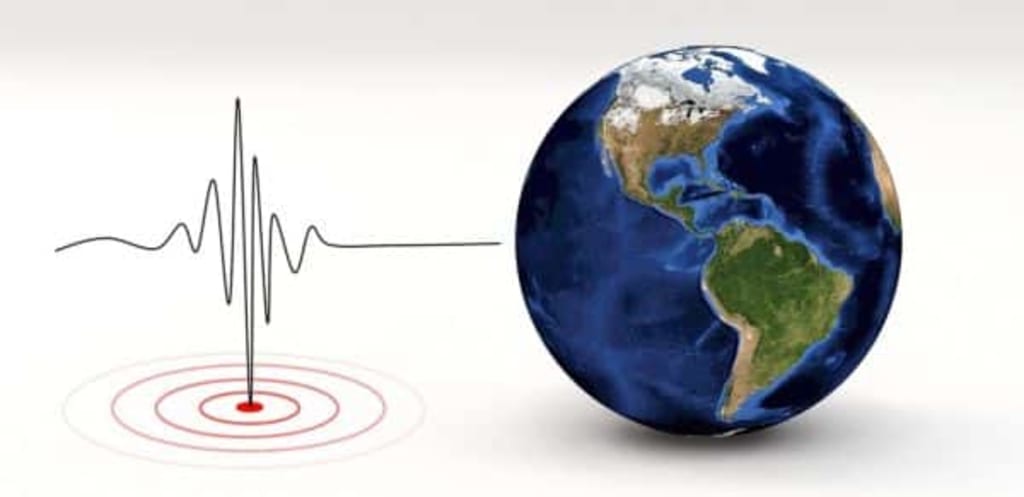
When the Earth's tectonic plates suddenly shift, releasing energy in the form of seismic waves. These seismic waves travel through the Earth, causing the ground to shake. Earthquakes can lead to severe consequences for both human populations and the natural environment. Understanding the causes, how earthquakes are measured, and their impacts is vital for disaster preparedness and response.
Causes of Earthquakes
The primary cause of earthquakes is the movement of tectonic plates beneath the Earth's surface. These plates are large sections of the Earth's lithosphere that float on the semi-fluid asthenosphere beneath them. The movement of these plates is driven by forces such as mantle convection, gravity, and the Earth’s rotation. There are several types of tectonic plate movements that result in earthquakes:
Convergent Boundaries: When two tectonic plates move toward each other, one plate may be forced under the other in a process called subduction. This often occurs in regions like the Pacific Ring of Fire, where powerful earthquakes and volcanic eruptions are common.
Divergent Boundaries: When two plates move away from each other, magma rises from the mantle to fill the gap, creating new crust. This can lead to minor earthquakes, typically occurring along mid-ocean ridges.
Transform Boundaries: At transform boundaries, plates slide past each other horizontally. The friction between these plates can cause them to become "locked," leading to the buildup of stress over time. When the stress is released, an earthquake occurs. A well-known example of a transform boundary is the San Andreas Fault in California.
Intraplate Earthquakes: Although most earthquakes occur along plate boundaries, some happen within a single plate, often due to the reactivation of ancient fault lines. These are less common but can still cause significant damage, as seen in areas are the Midwest of the United States.
Apart from tectonic activity, earthquakes can also be triggered by volcanic activity, human activities such as mining or fracking, and the collapse of underground caverns.
Measuring Earthquakes
Earthquakes are measured in two main ways: magnitude and intensity.
Magnitude: The magnitude of an earthquake is a measure of the energy released during the event. It is usually measured using the Richter scale or the Moment Magnitude Scale (Mw). The Richter scale, developed in 1935, measures the amplitude of seismic waves recorded by seismographs. However, it has limitations, especially for large earthquakes. The Moment Magnitude Scale, which is now more commonly used, measures the total energy released by an earthquake and is more accurate for larger events.
The Richter scale assigns a number to the earthquake, typically between 0 and 10. A magnitude 3 earthquake is minor and usually not felt by humans, while a magnitude 7 or higher is classified as major, potentially causing widespread damage.
Intensity: The intensity of an earthquake refers to the level of shaking experienced at a specific location and the damage caused. It is often measured using the Modified Mercalli Intensity (MMI) scale, which ranges from I (not felt) to XII (total destruction). The intensity can vary greatly depending on the location relative to the epicenter, the depth of the earthquake, and the type of ground and buildings in the area.
Impacts of Earthquakes
Earthquakes can have a wide range of impacts, depending on their magnitude, location, and depth. The most immediate effects include:
Ground Shaking: The shaking of the ground is the most common and noticeable effect of an earthquake. It can cause buildings to collapse, landslides, and the displacement of ground surfaces. The severity of shaking depends on the earthquake's magnitude and the distance from the epicenter.
Tsunamis: Earthquakes occurring underwater or along coastal fault lines can trigger tsunamis. A tsunami is a series of large ocean waves generated by the displacement of the seafloor. When these waves reach coastal areas, they can cause massive flooding and destruction. The 2004 Indian Ocean earthquake and tsunami, for example, caused the deaths of over 230,000 people.
Surface Rupture: When the ground breaks along a fault line during an earthquake, it can create visible surface ruptures. These can damage infrastructure, including roads, railways, and pipelines, disrupting transportation and utility services.
Landslides: The shaking of the ground can cause soil and rock to become unstable, triggering landslides in mountainous or hilly areas. Landslides can bury homes, roads, and other structures, causing additional casualties and damage.
Aftershocks: After the main earthquake, smaller tremors called aftershocks often occur. These can continue for days, weeks, or even months after the initial event, adding to the destruction and hampering recovery efforts.
Economic and Social Impact: Earthquakes can have devastating economic effects, particularly in densely populated areas. The destruction of infrastructure, homes, and businesses can lead to significant financial losses. The social impacts are also profound, as entire communities may be displaced, and the loss of life can be staggering. Additionally, the psychological trauma experienced by survivors can have long-term consequences.
IN THE END
Earthquakes are powerful and unpredictable events that result from the movement of tectonic plates. While it is not possible to prevent earthquakes, advancements in monitoring and measurement techniques, such as the Richter and Moment Magnitude scales, allow us to better understand and predict them. The impacts of earthquakes can be catastrophic, ranging from ground shaking and tsunamis to landslides and surface rupture. By continuing to study earthquakes and improving building infrastructure and early-warning systems, we can minimize their effects and protect lives in vulnerable areas.
About the Creator
Badhan Sen
Myself Badhan, I am a professional writer.I like to share some stories with my friends.
Keep reading
More stories from Badhan Sen and writers in Earth and other communities.
Types of rocks (igneous, sedimentary, metamorphic)
They are classified into three main types based on their formation processes: igneous, sedimentary, and metamorphic. Each type of rock tells a unique story of how it came to be, and their differences are crucial for understanding the Earth's geological history. Below is an overview of each rock type, their formation processes, characteristics, and examples.
By Badhan Senabout a year ago in Earth
Meteorologists Warn of an Unusually Early Arctic Breakdown Forming in February
Meteorologists are raising alarms as an unusually early Arctic breakdown appears to be forming in February, a time when the polar regions are typically stable and cold. This rare phenomenon, which involves a sudden weakening of the polar vortex and an intrusion of warm air into the Arctic, could have far-reaching consequences for weather patterns across North America, Europe, and Asia.
By Sajida Sikandar4 days ago in Earth
Chasing a Frozen World: A New Exoplanet Candidate May Be Colder Than Mars
Astronomers are abuzz with the potential discovery of a new exoplanet candidate that may be colder than Mars — and yet, it’s roughly the size of Earth and orbits a sun-like star. This intriguing finding comes from reanalyzing old data from NASA’s retired Kepler Space Telescope, showing just how much treasure still hides in archival data.
By Ayesha Lasharia day ago in Earth
Our Song
Evening has given way to night. Gently, I settle next to you on the comfortable, old love seat and reach for your hand. You snatch it away, again. It cuts me to the quick, but I hide the pain, understanding that the reaction is but part of your demented state. Since the accident, your presence here in our cozy home has been clouded by a haze I can't see. Nevertheless, I feel the frigidity of your expressions and it serves as an excruciating reminder of the immeasurable distance between us.
By Dana Crandell3 days ago in Fiction


Comments
There are no comments for this story
Be the first to respond and start the conversation.